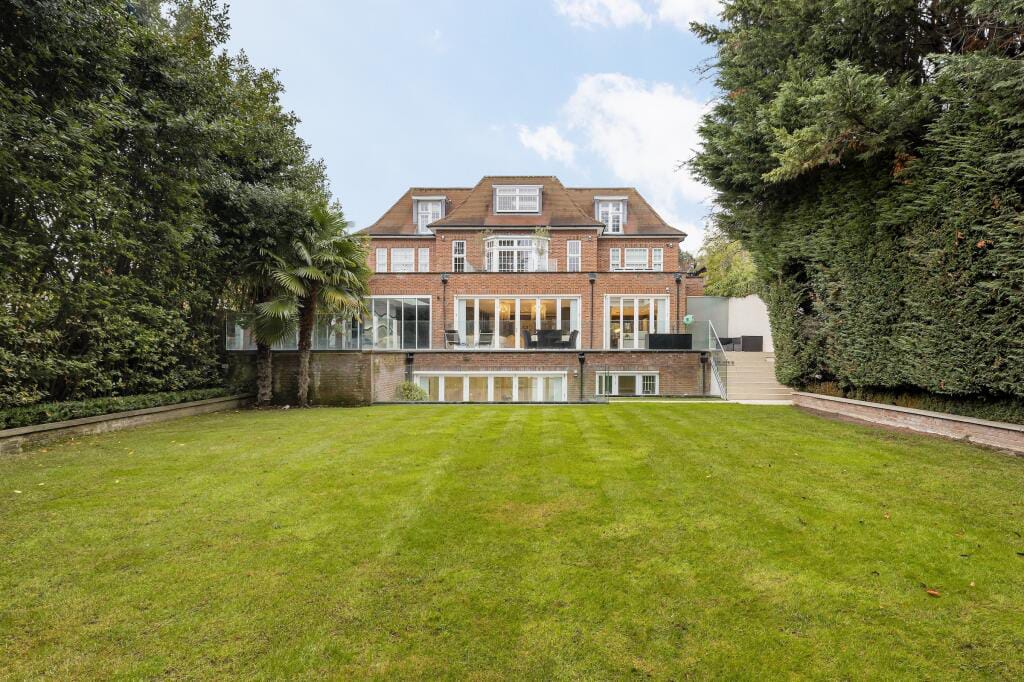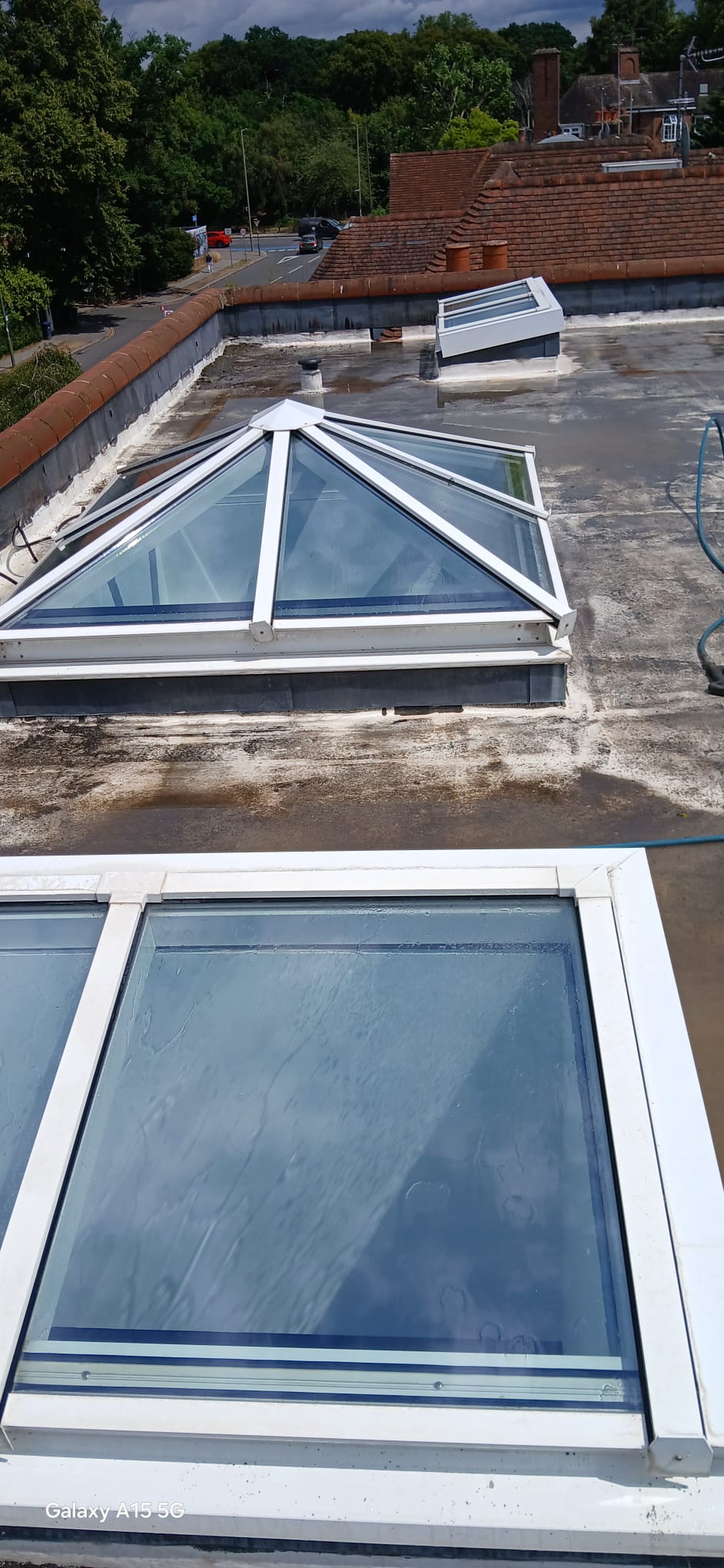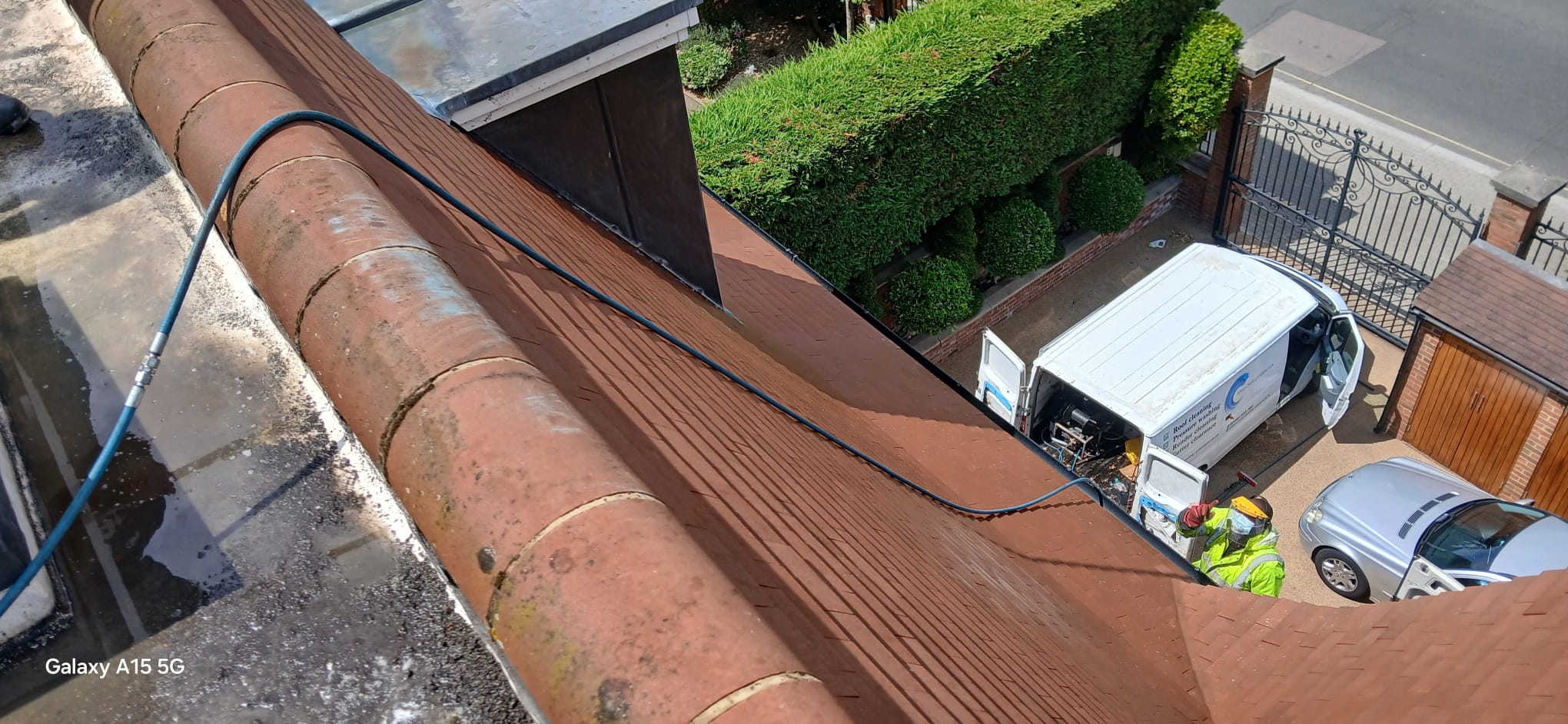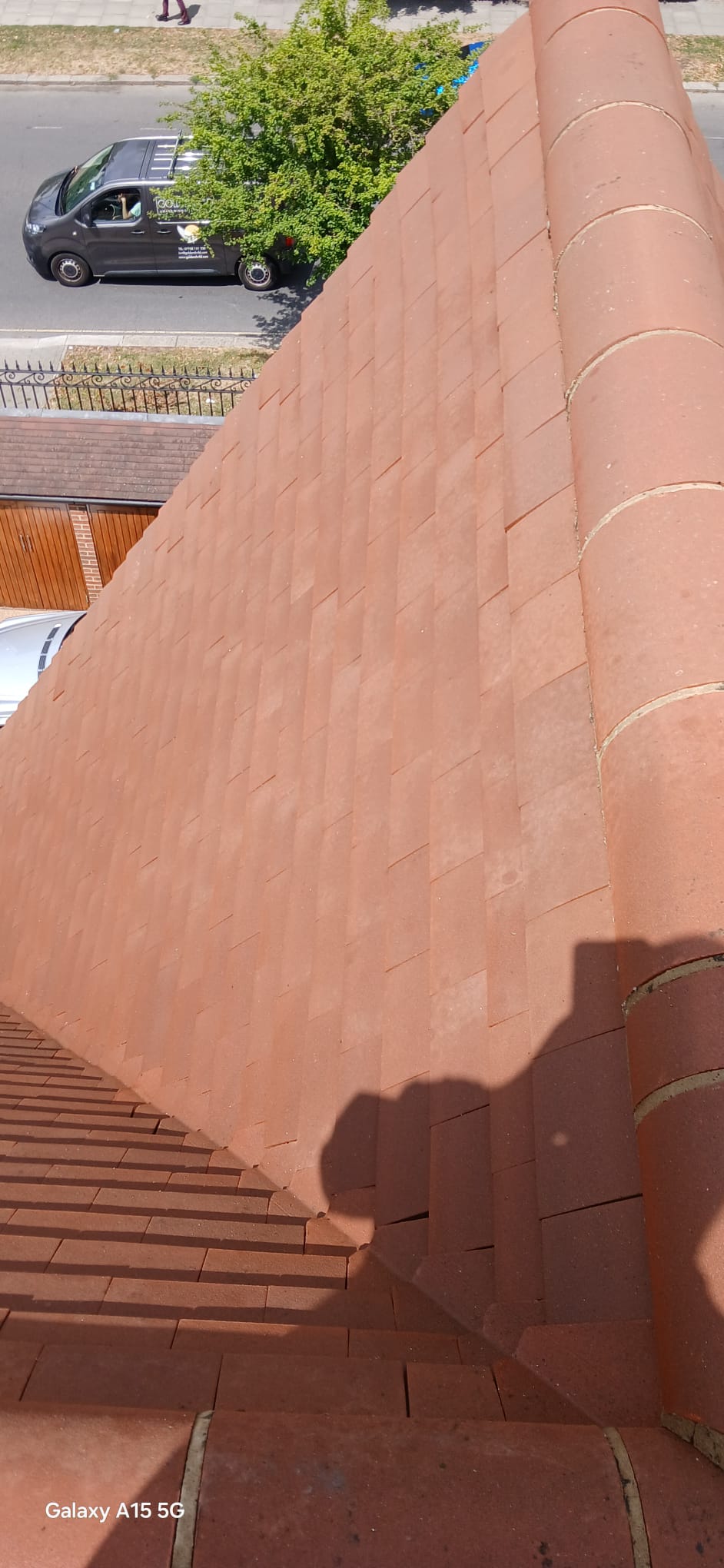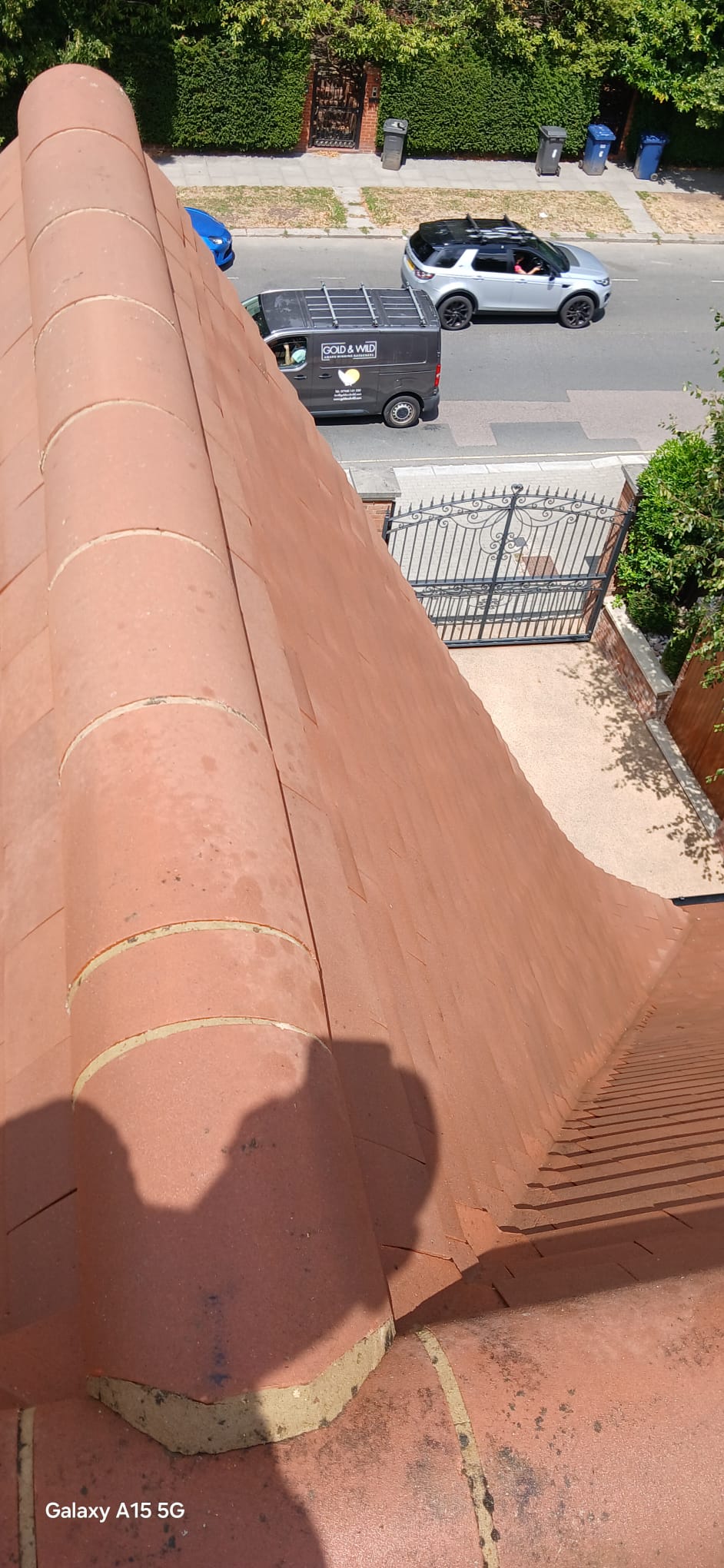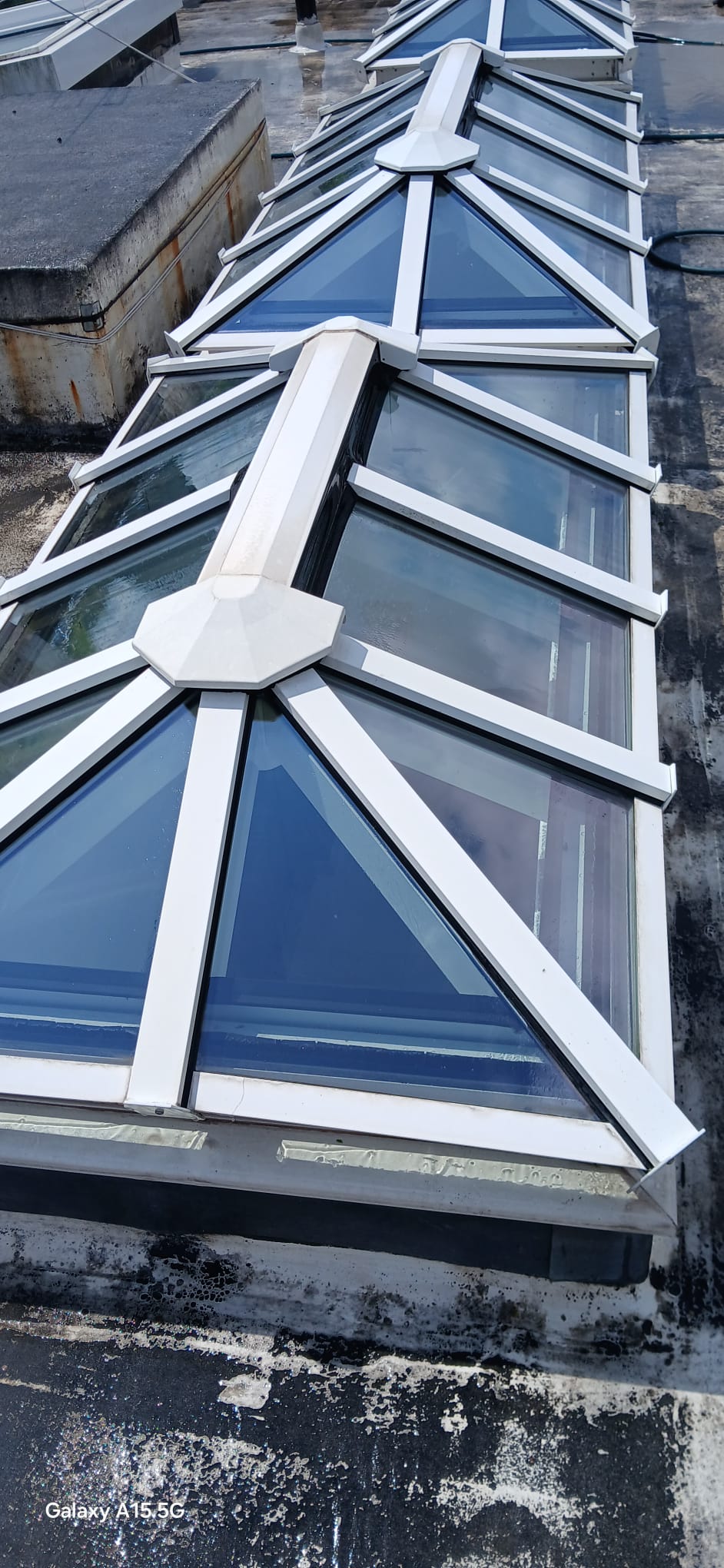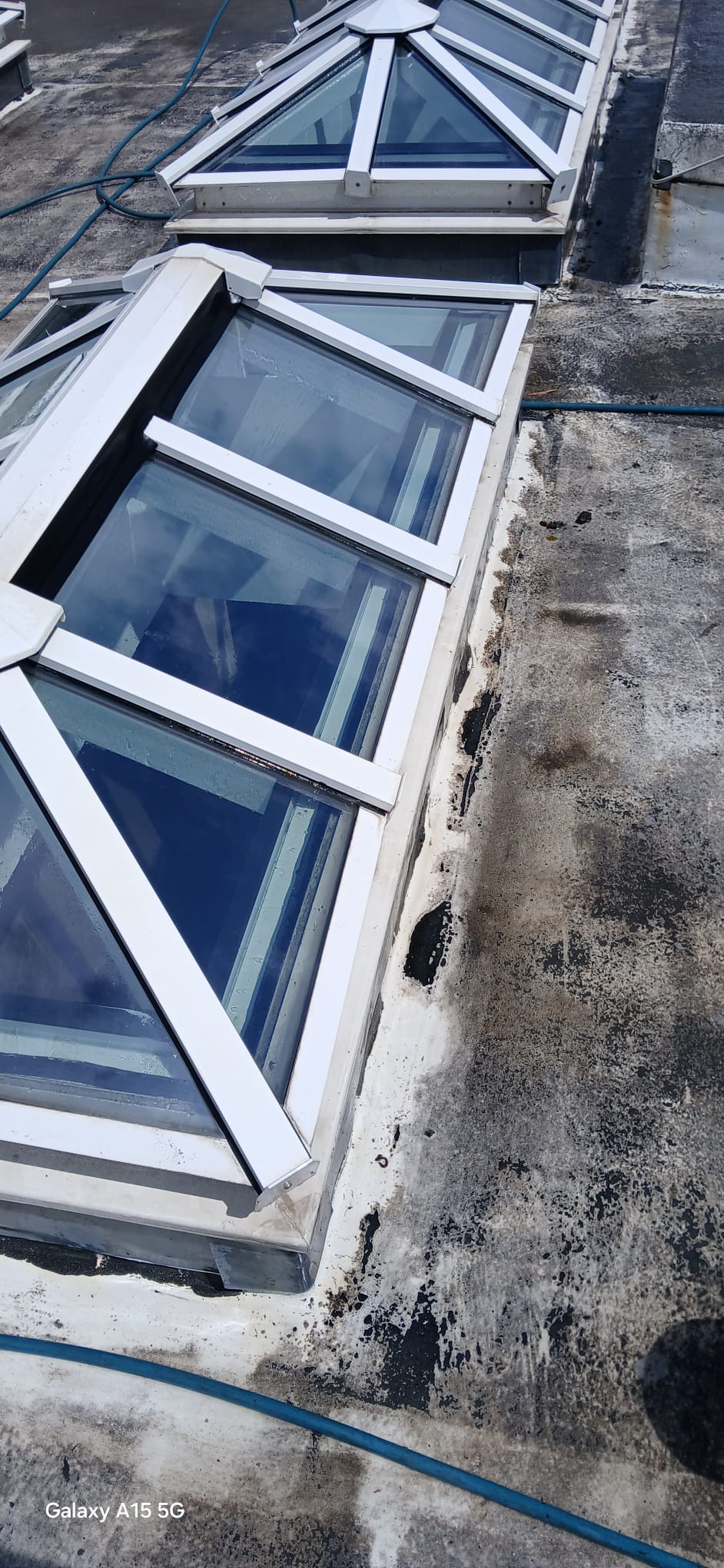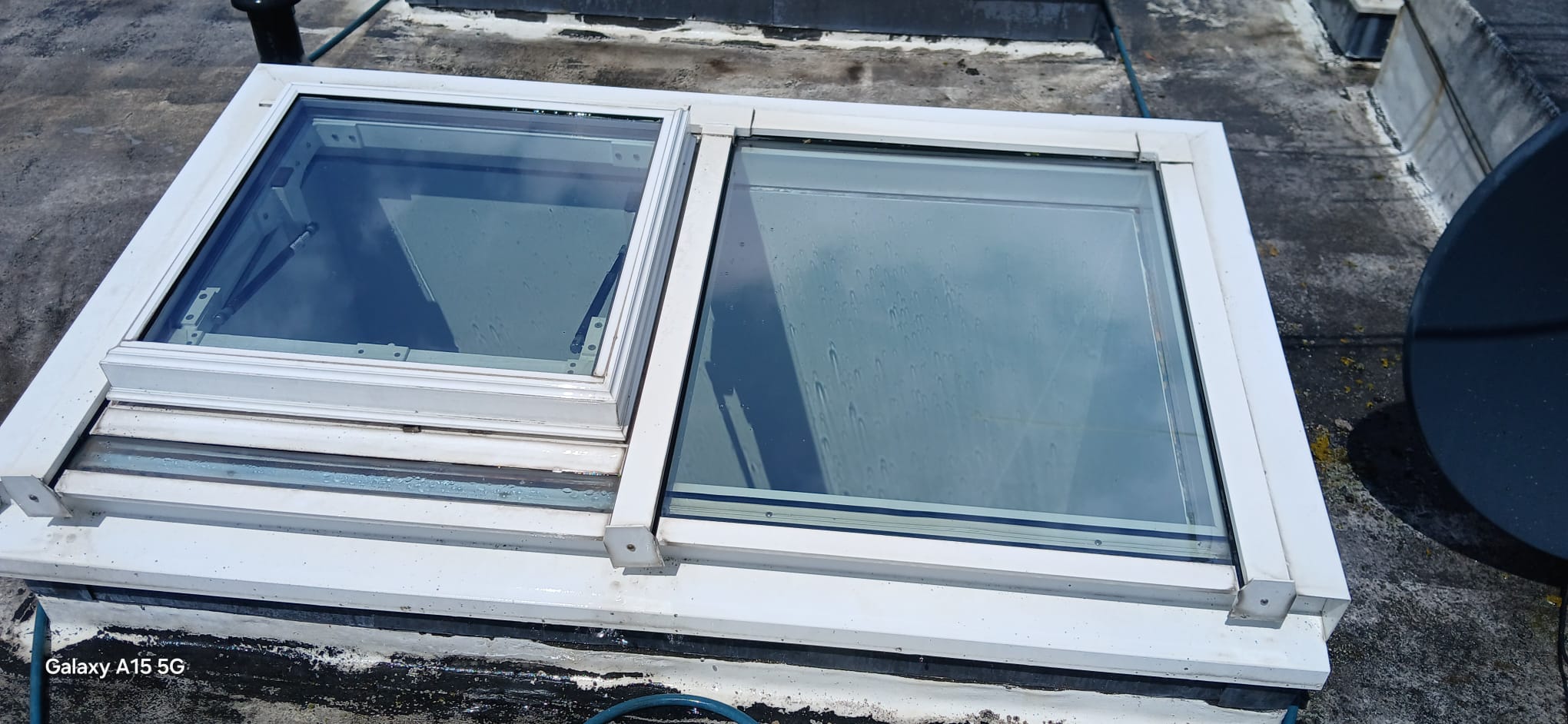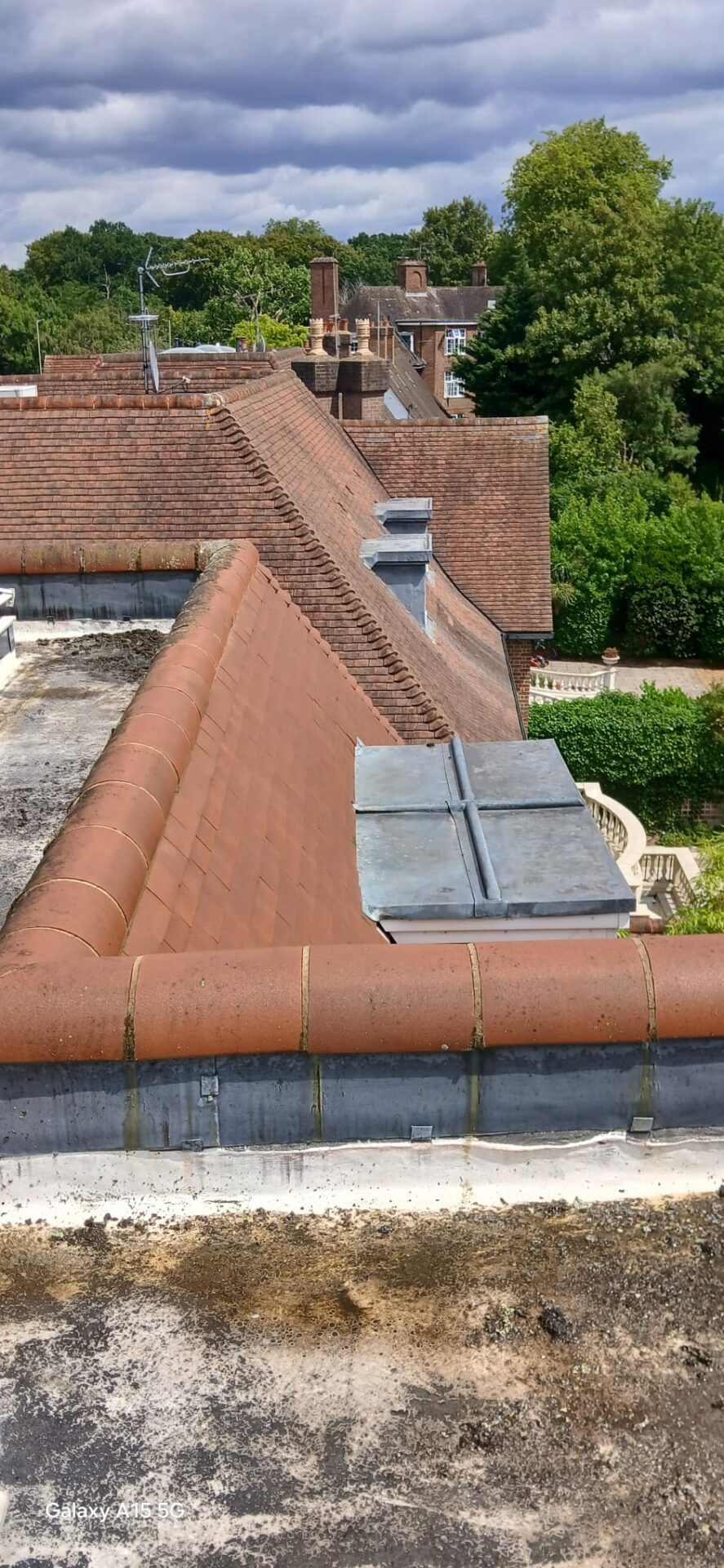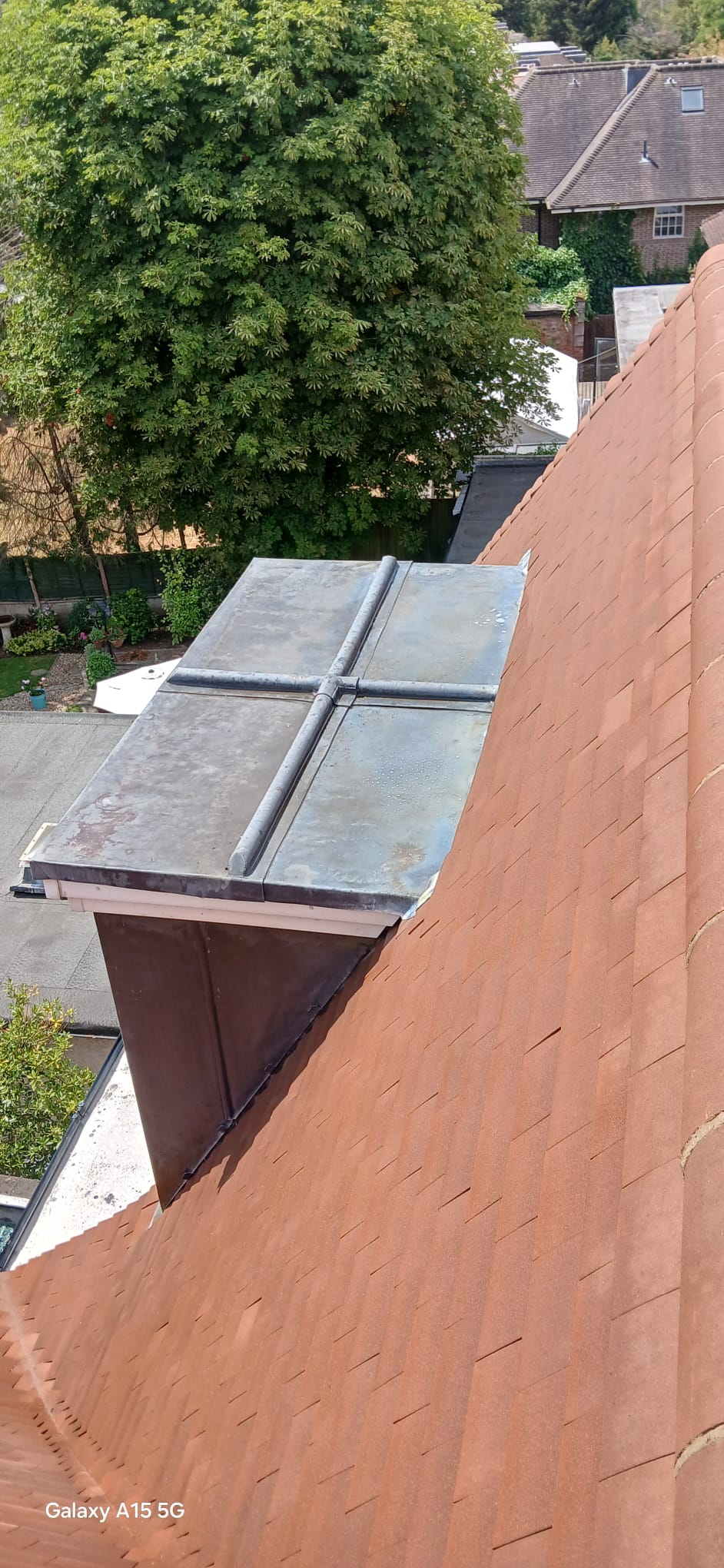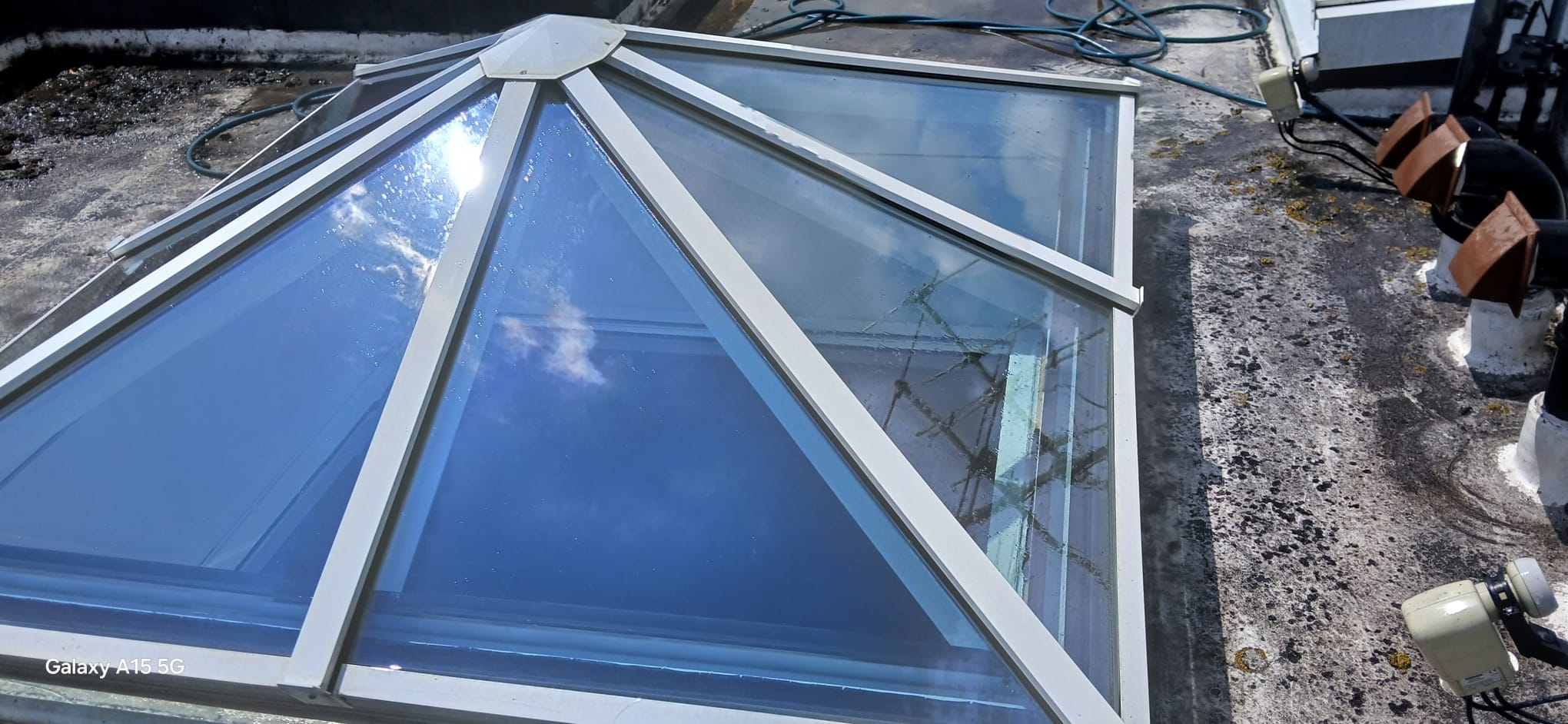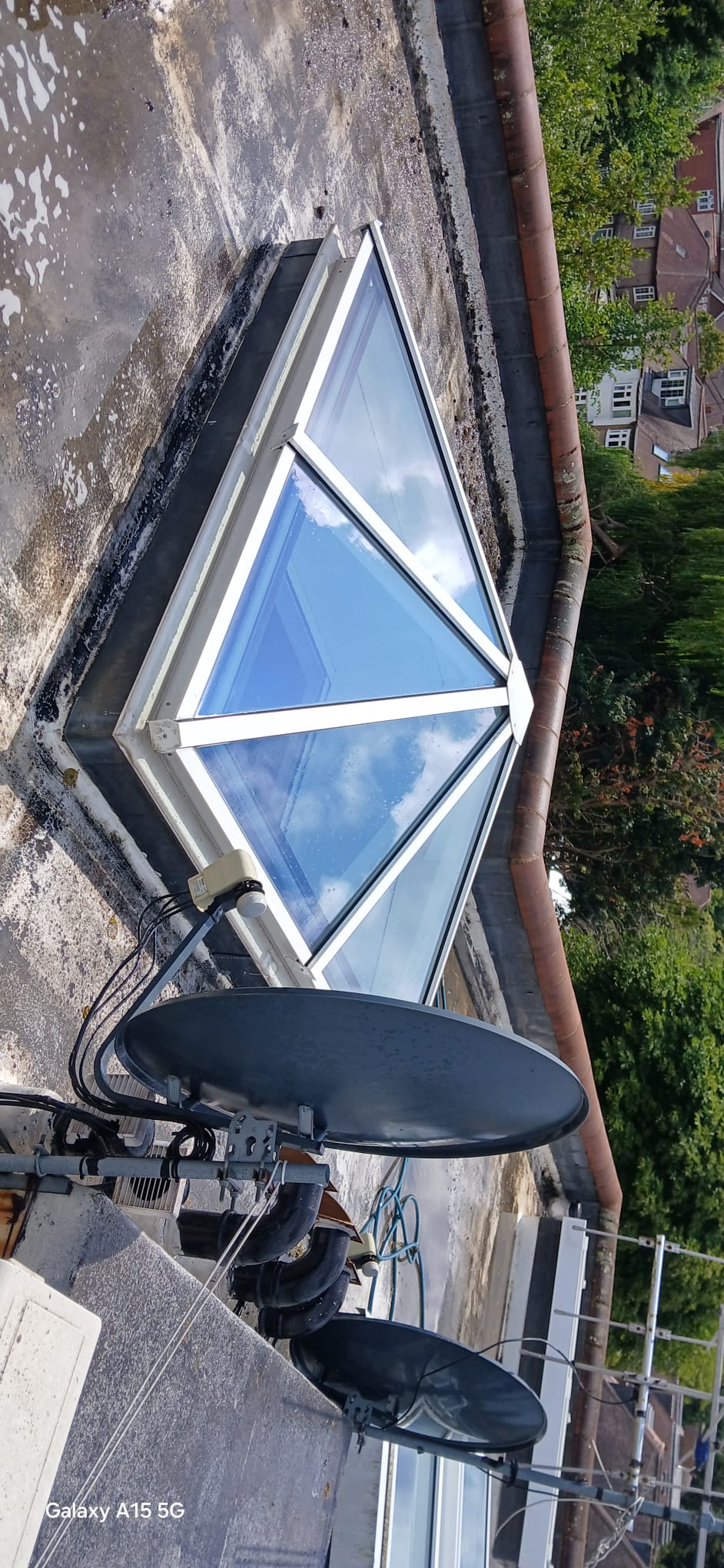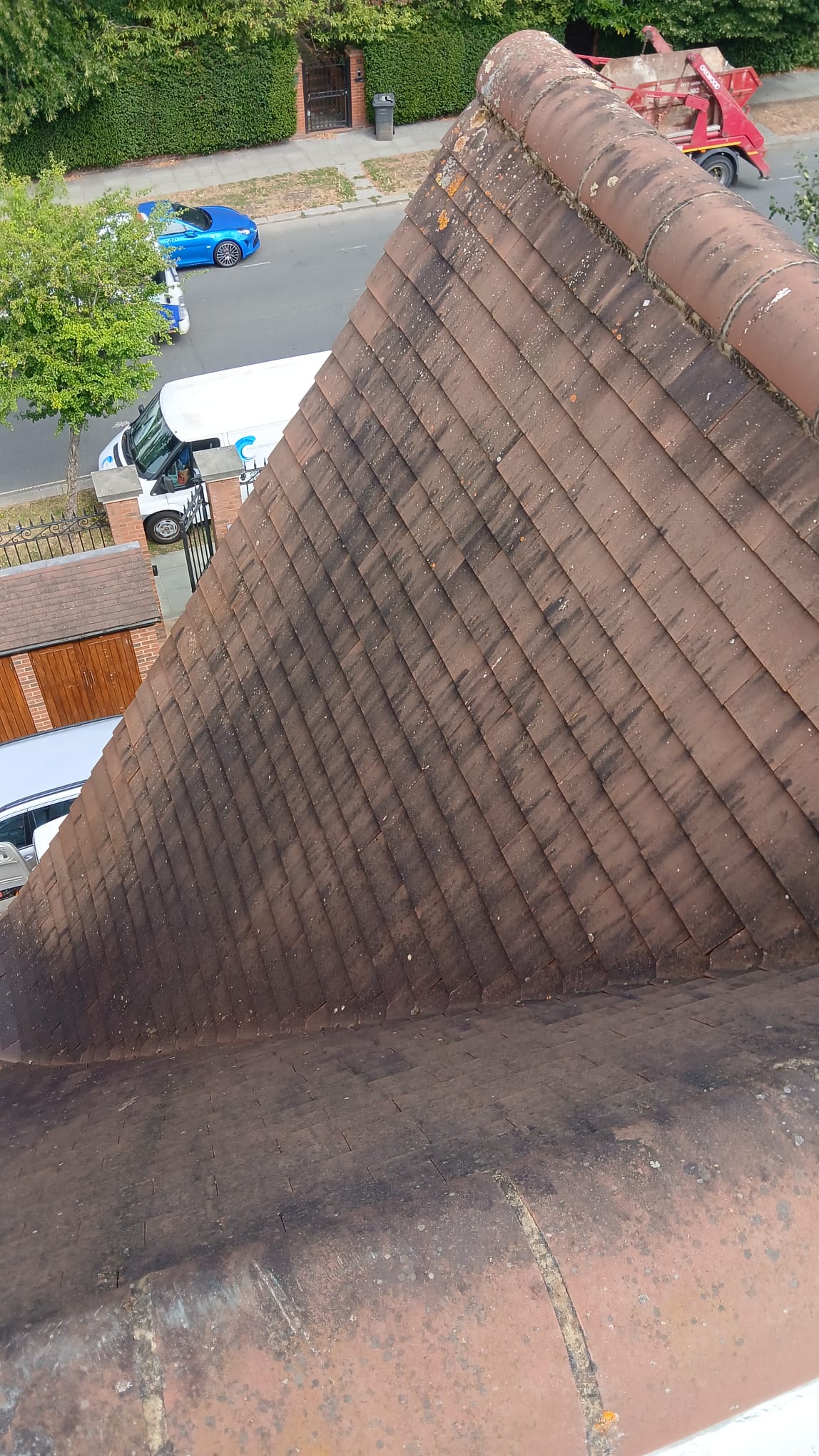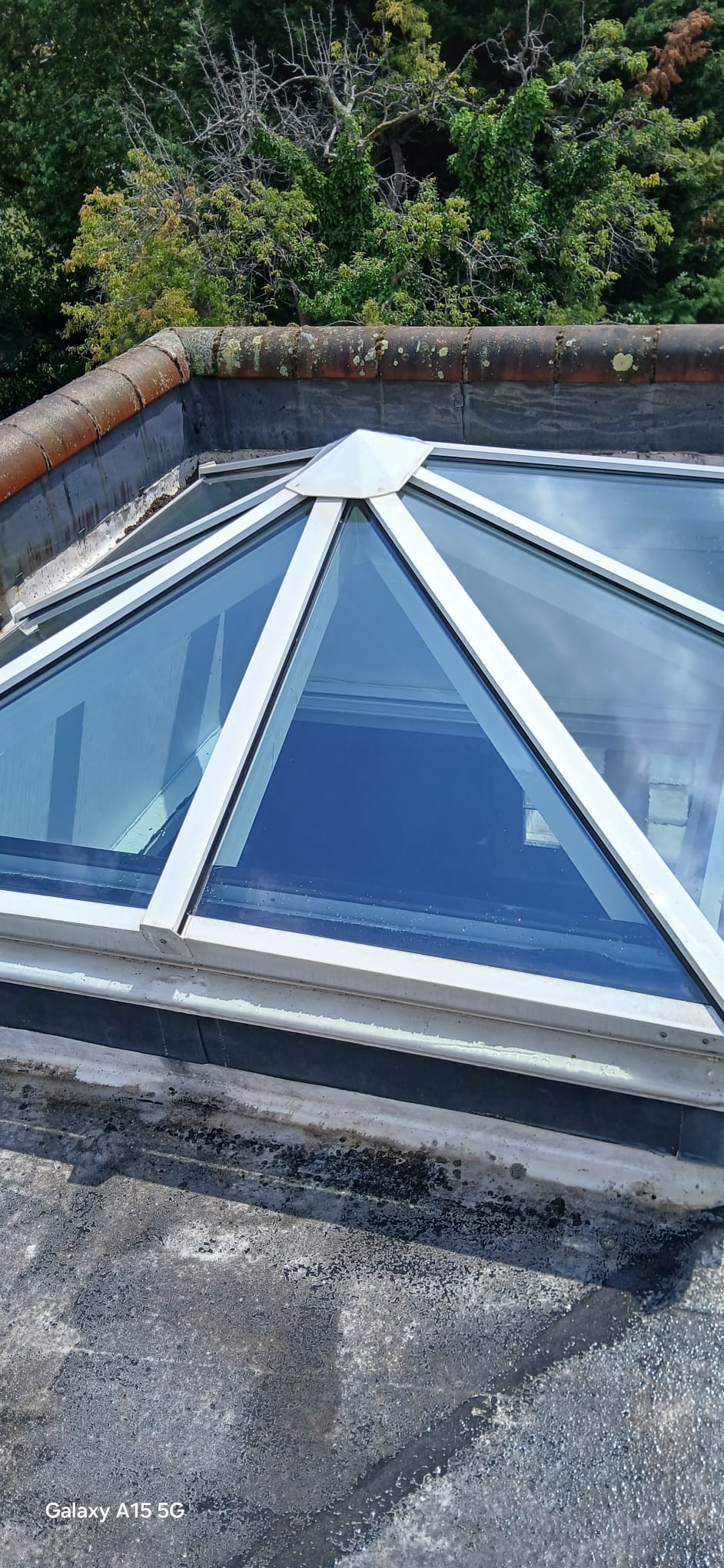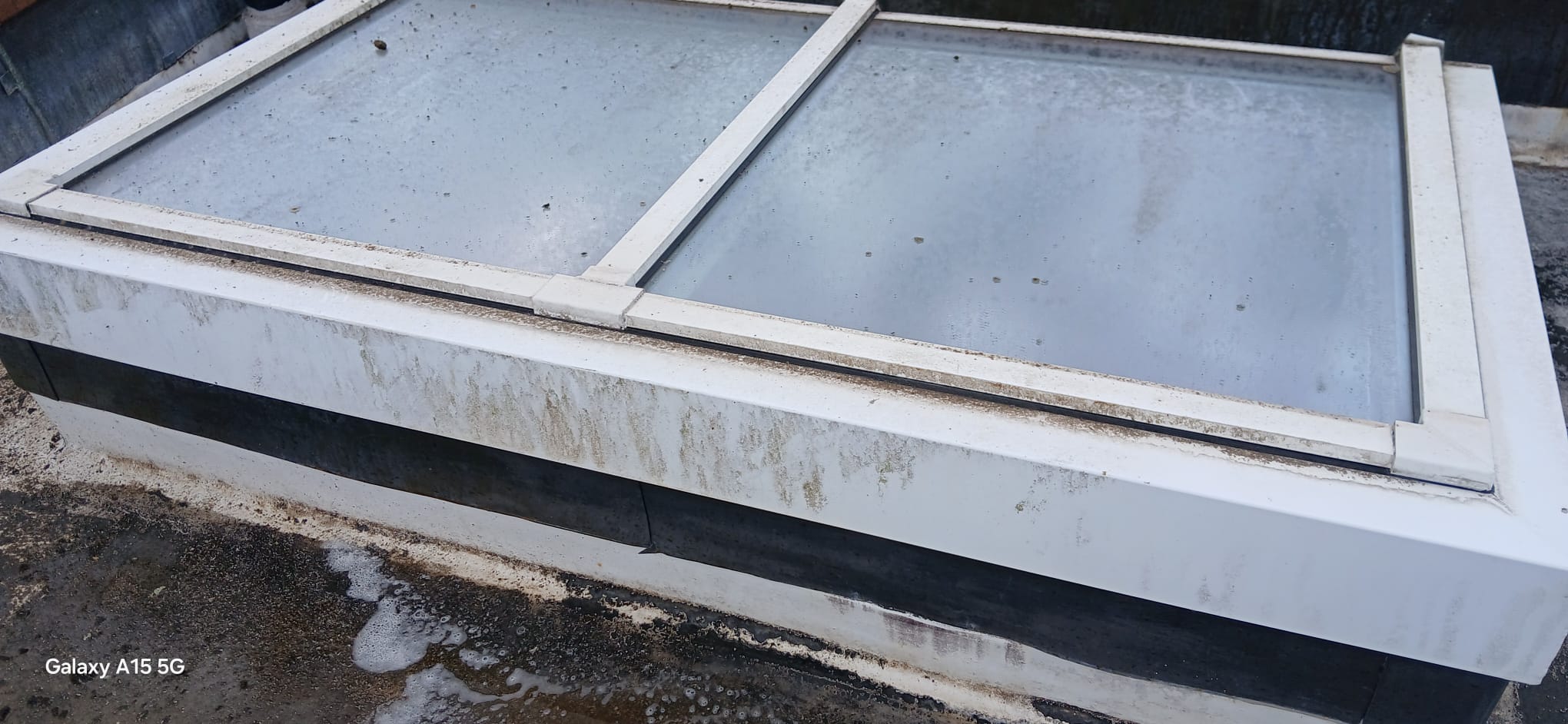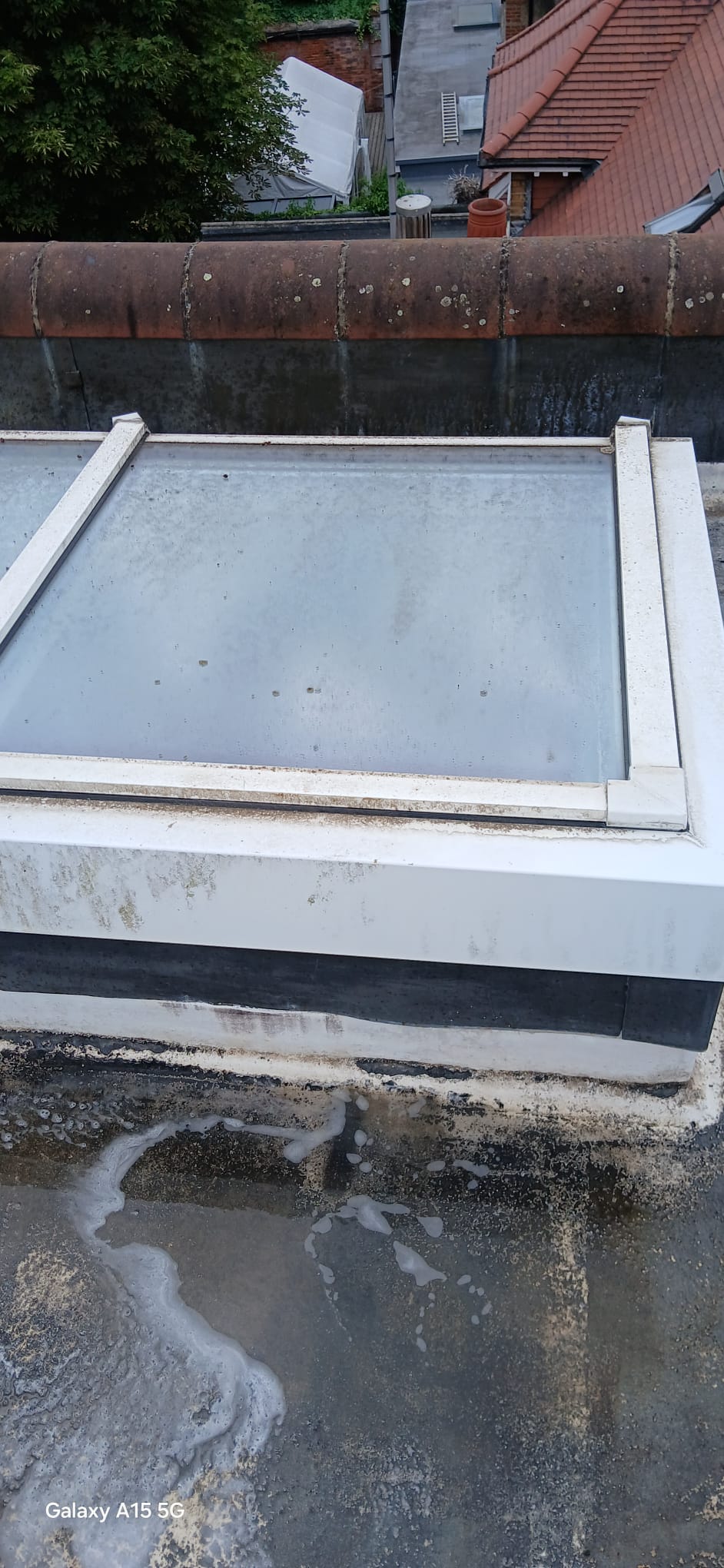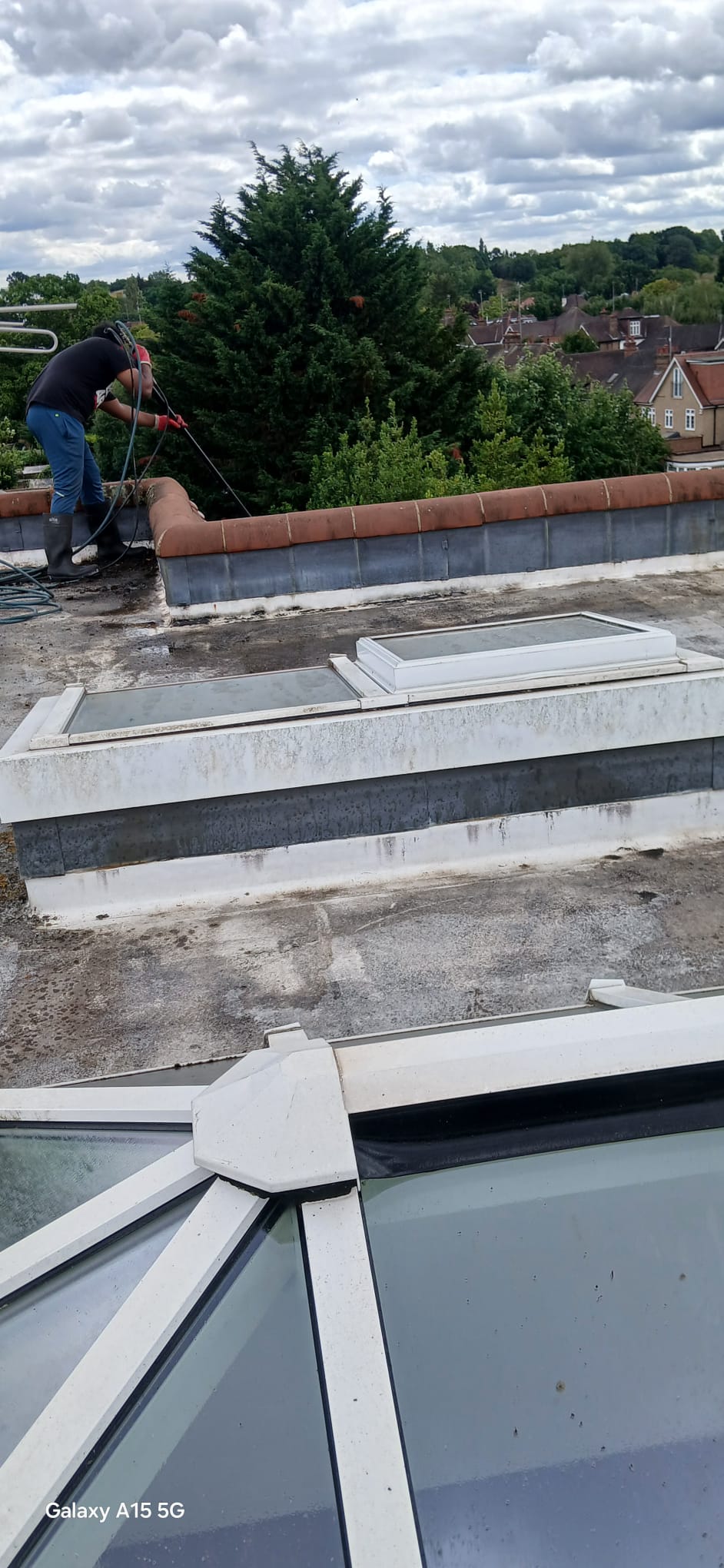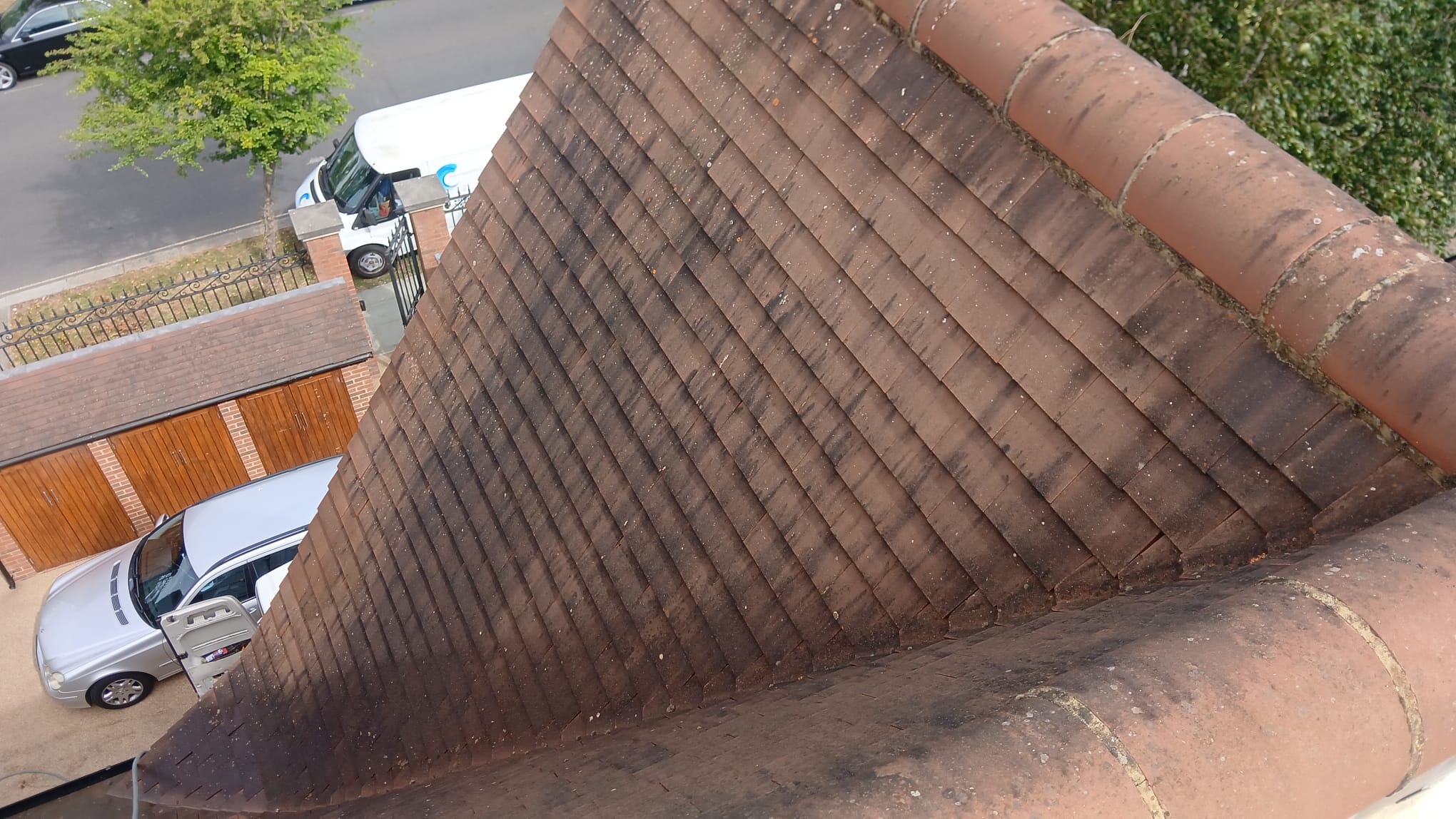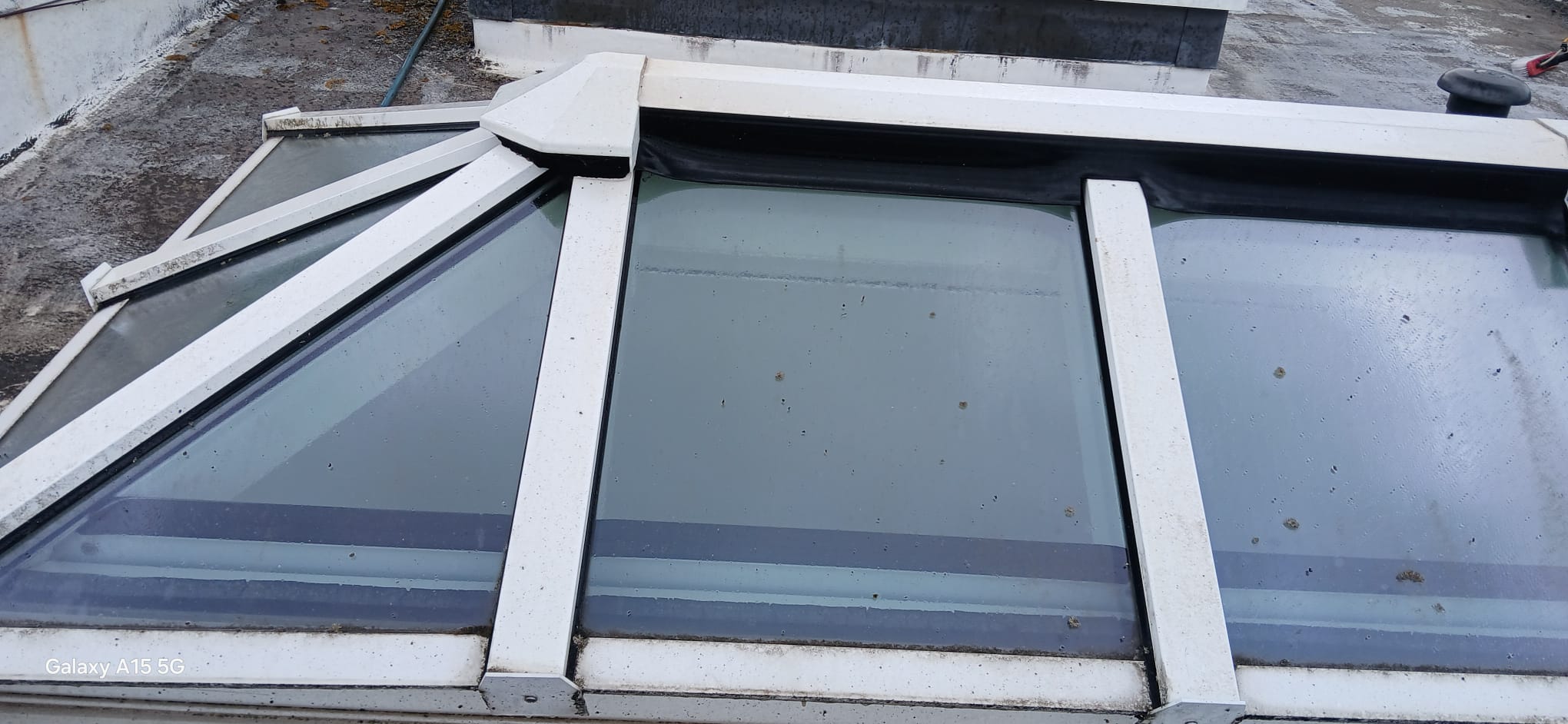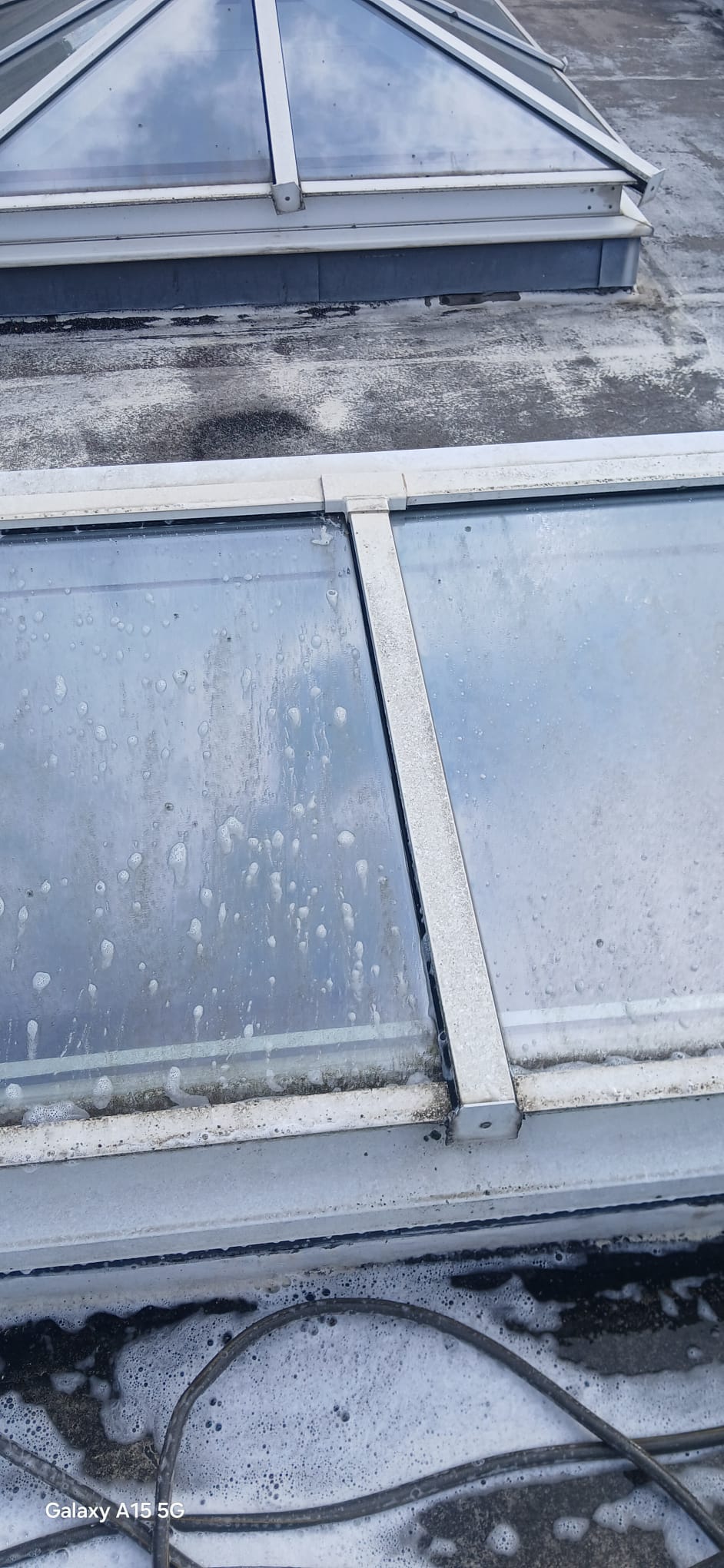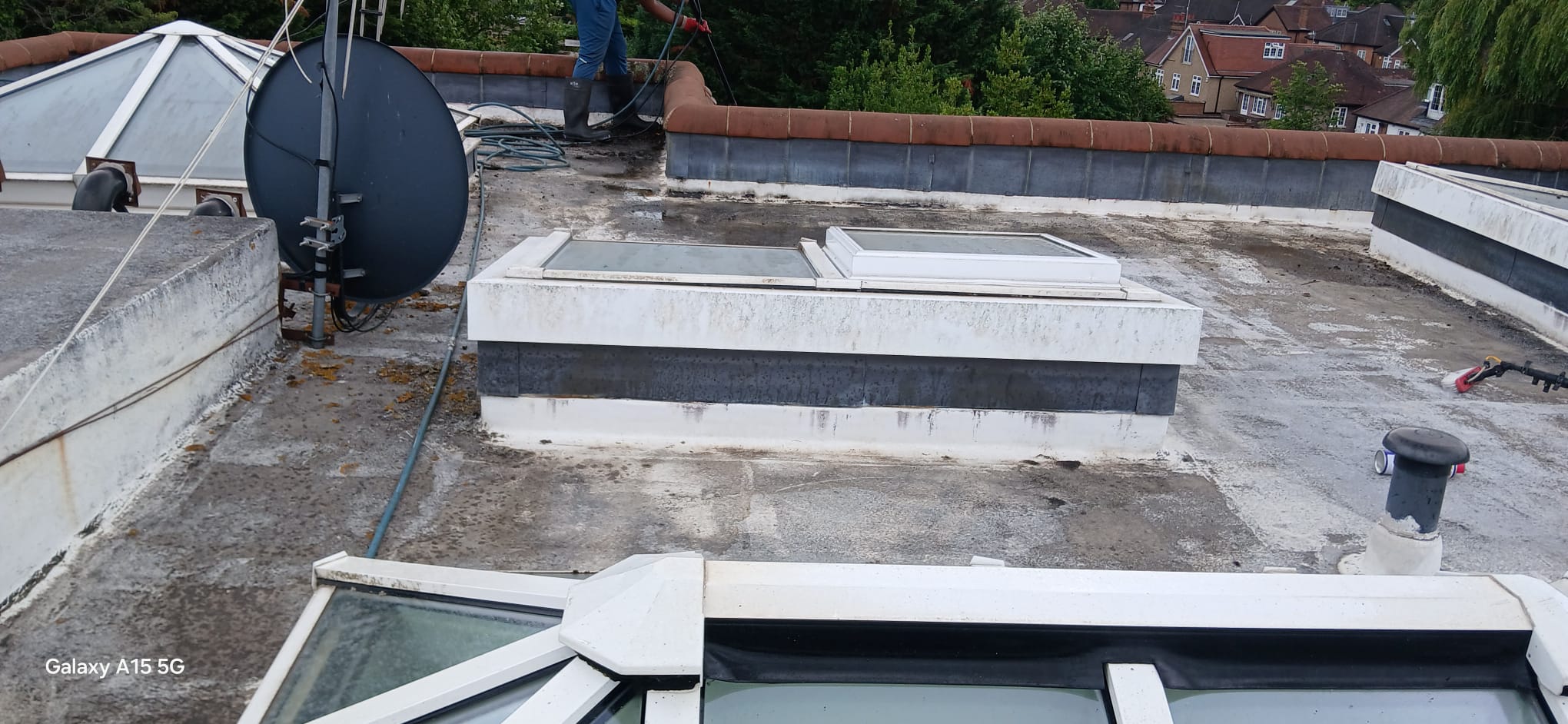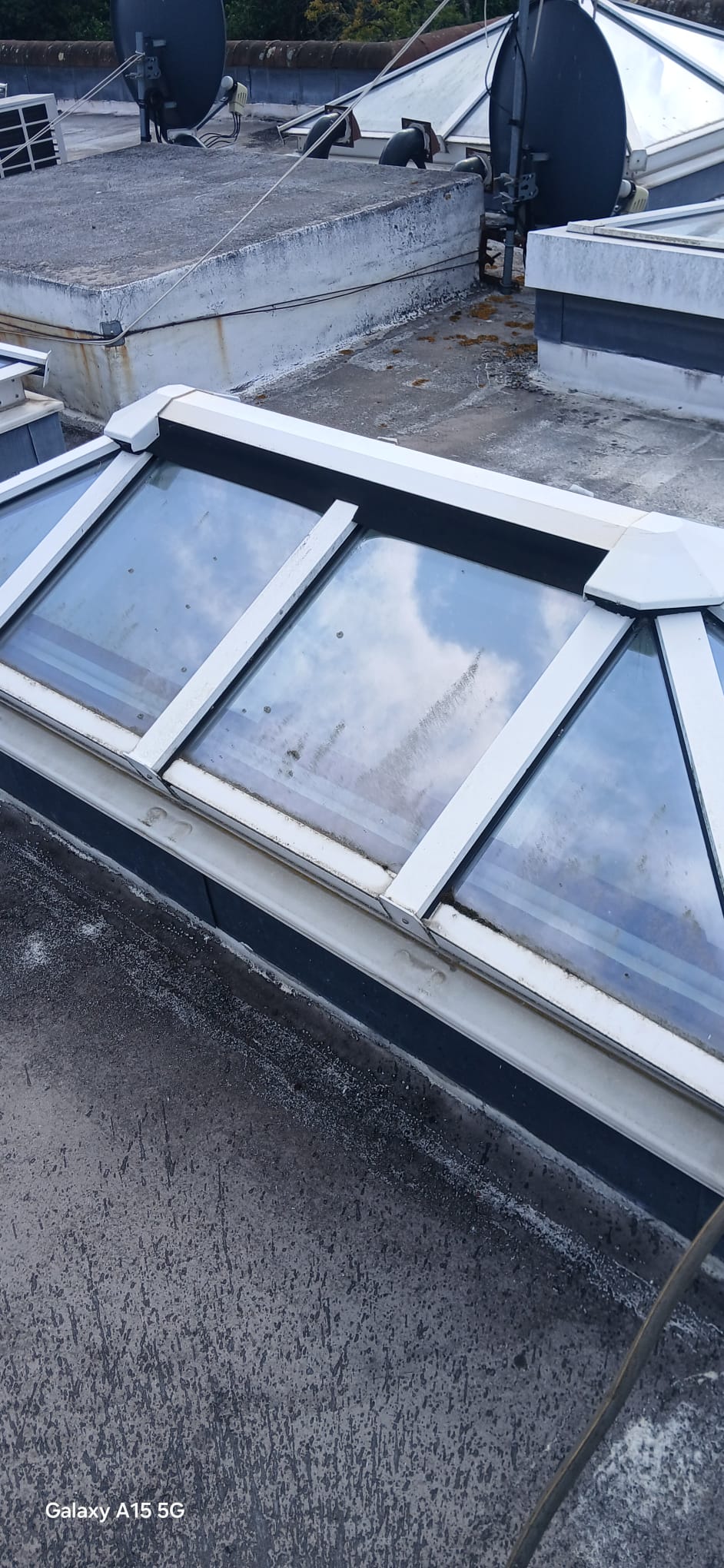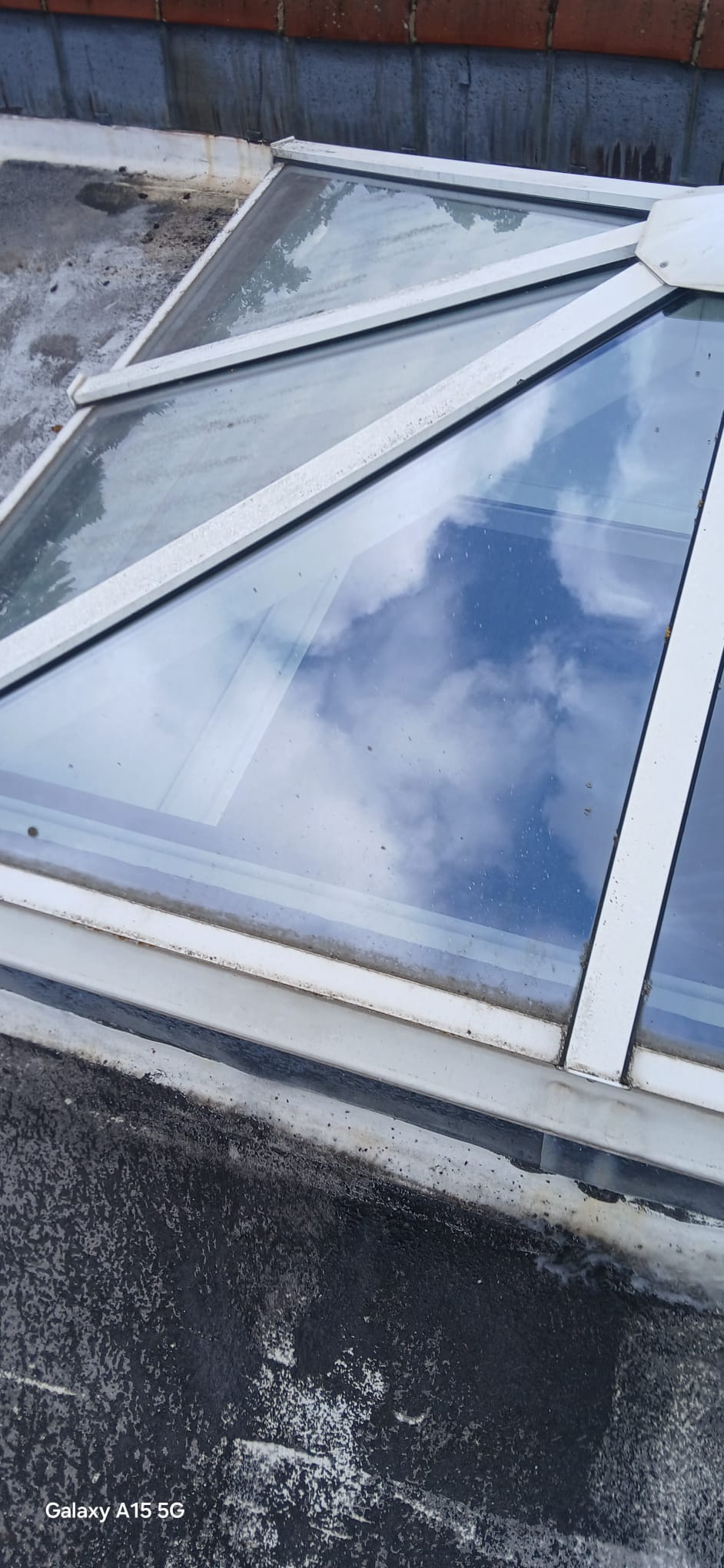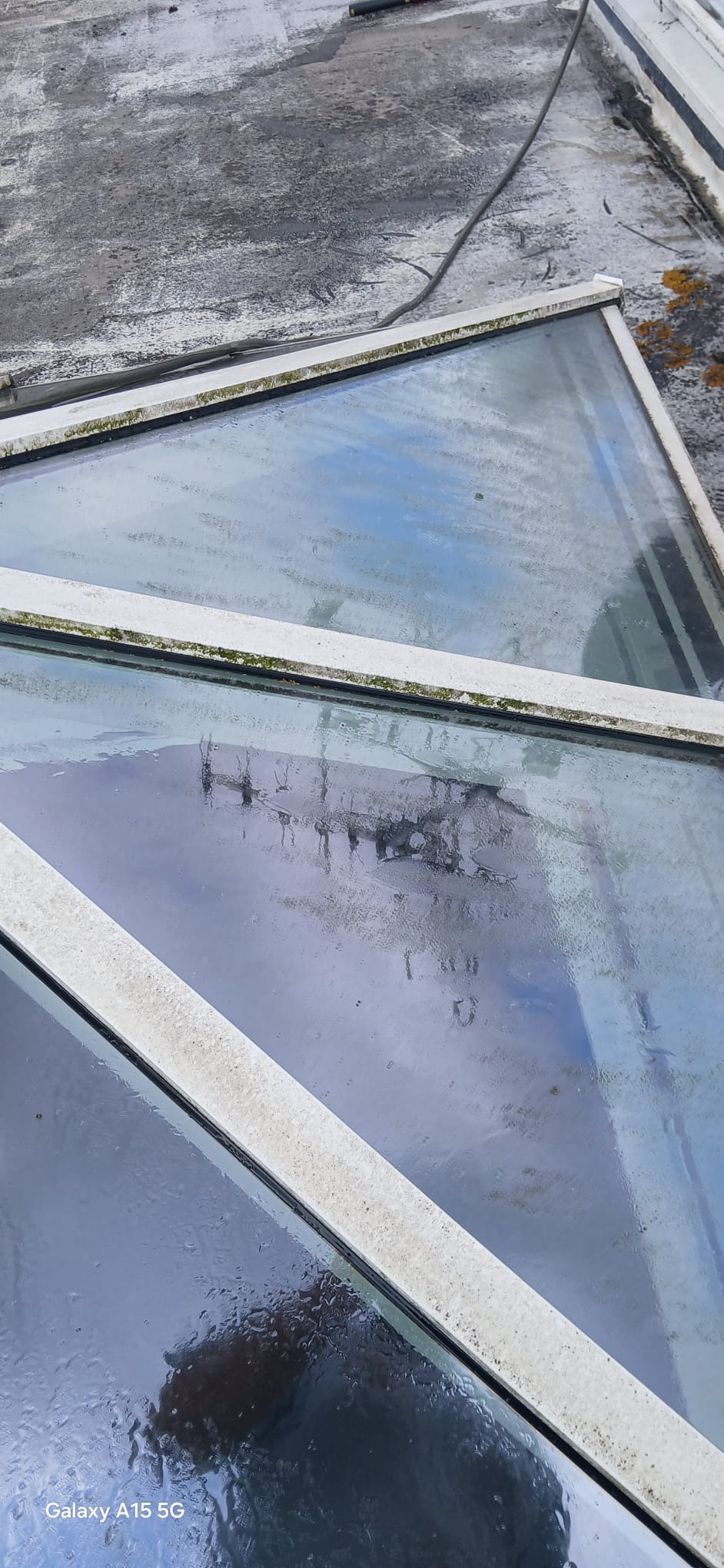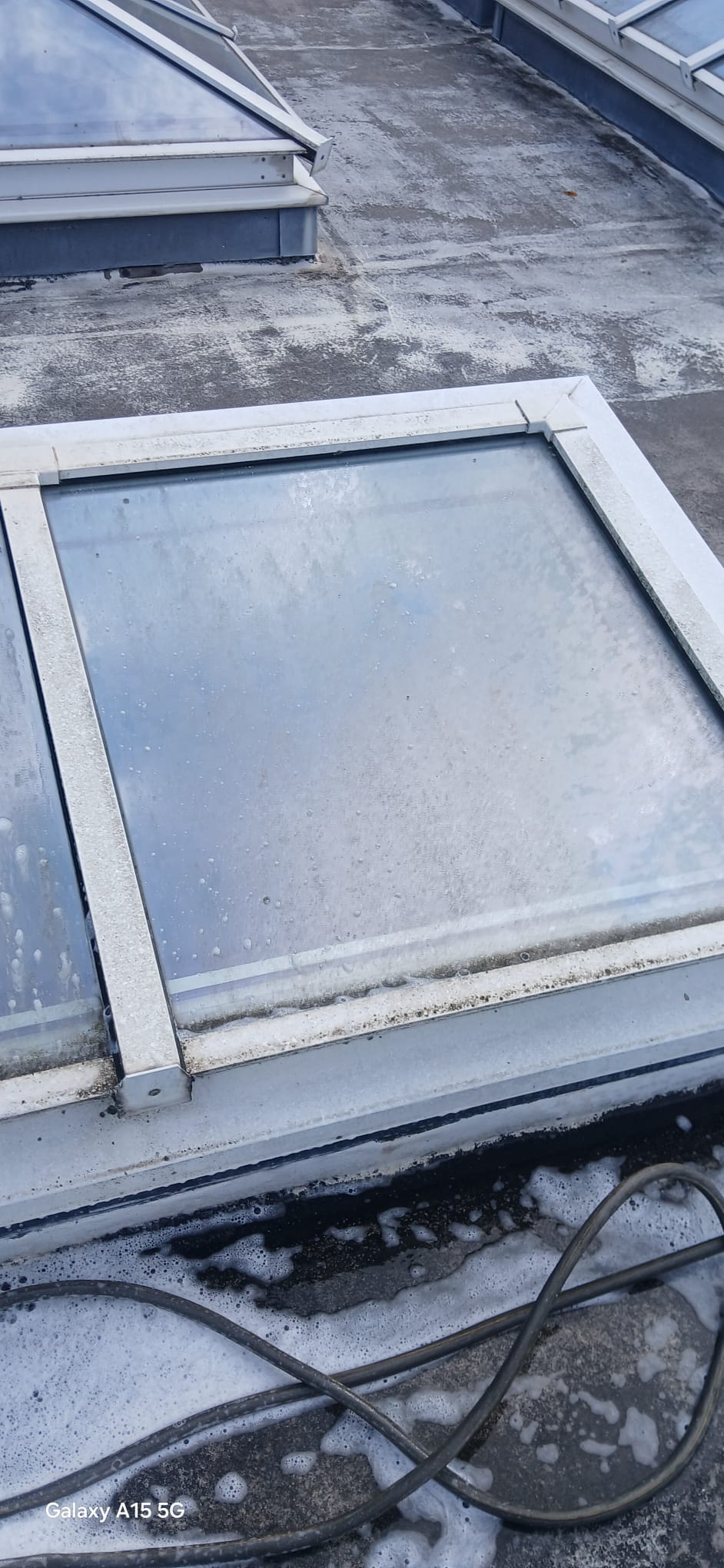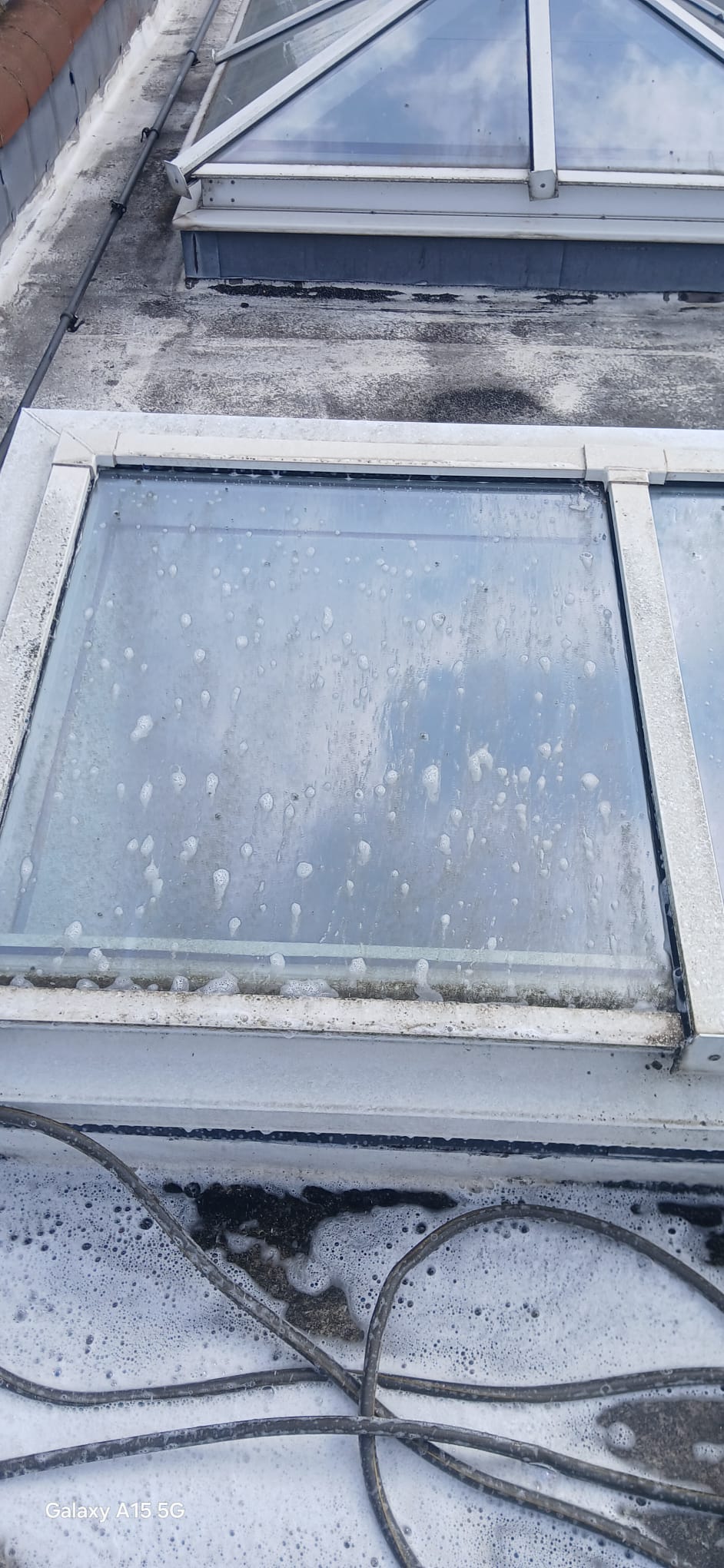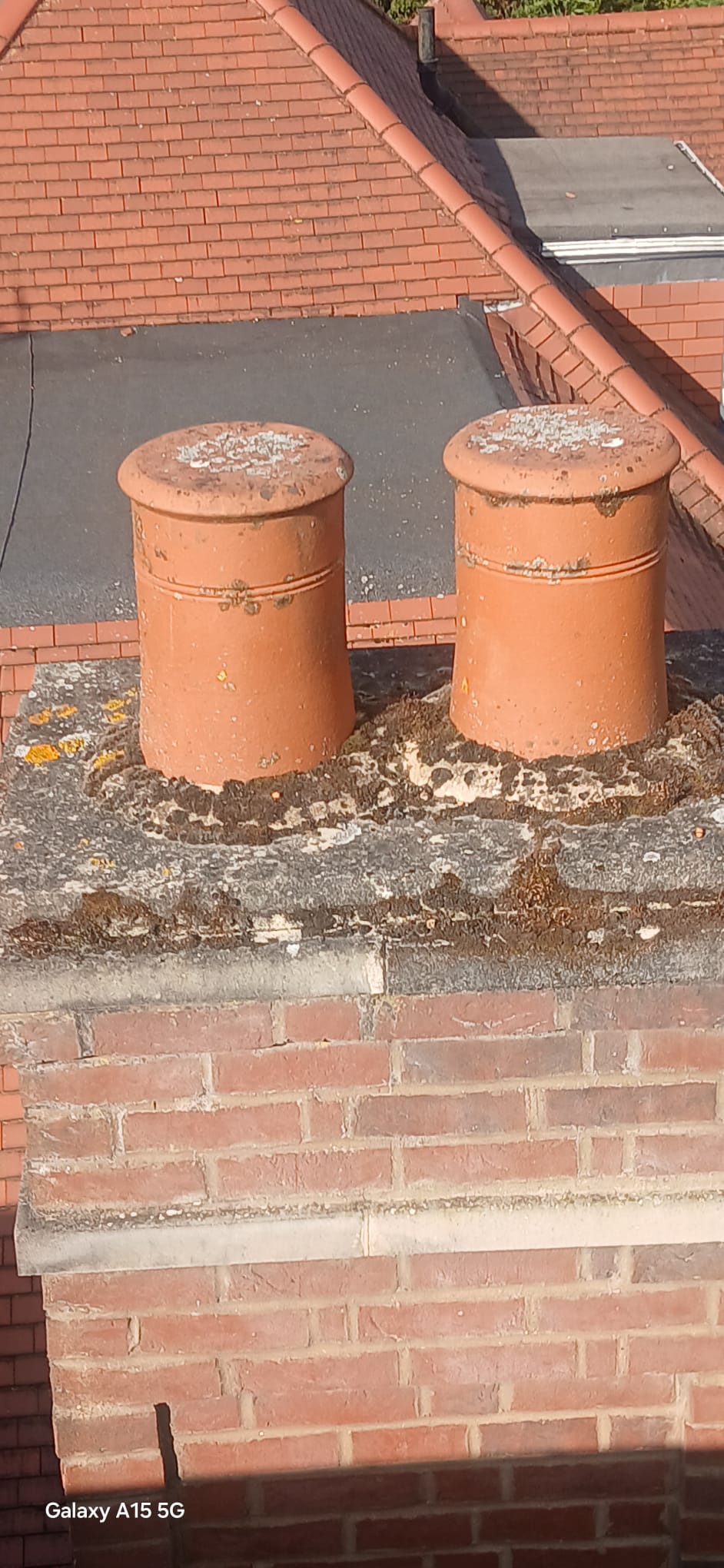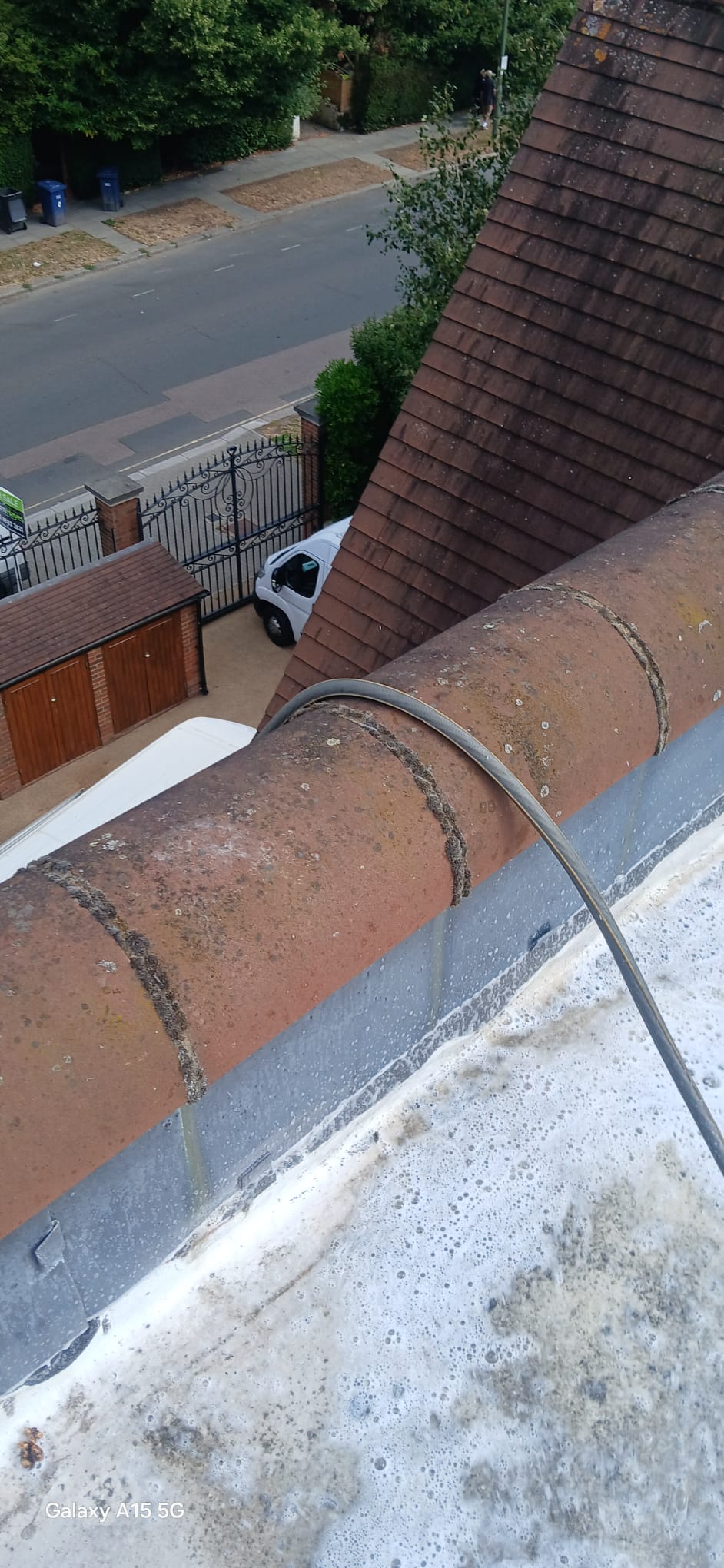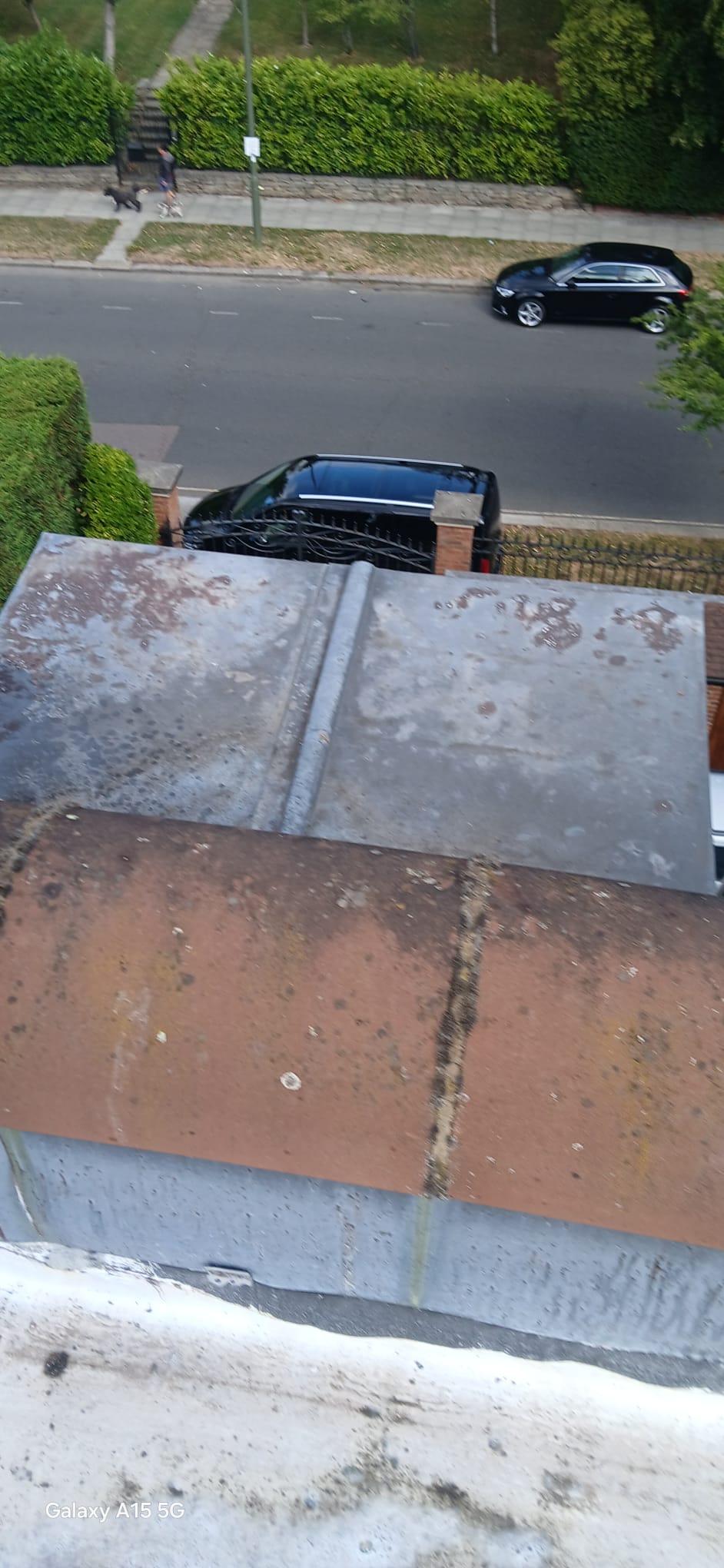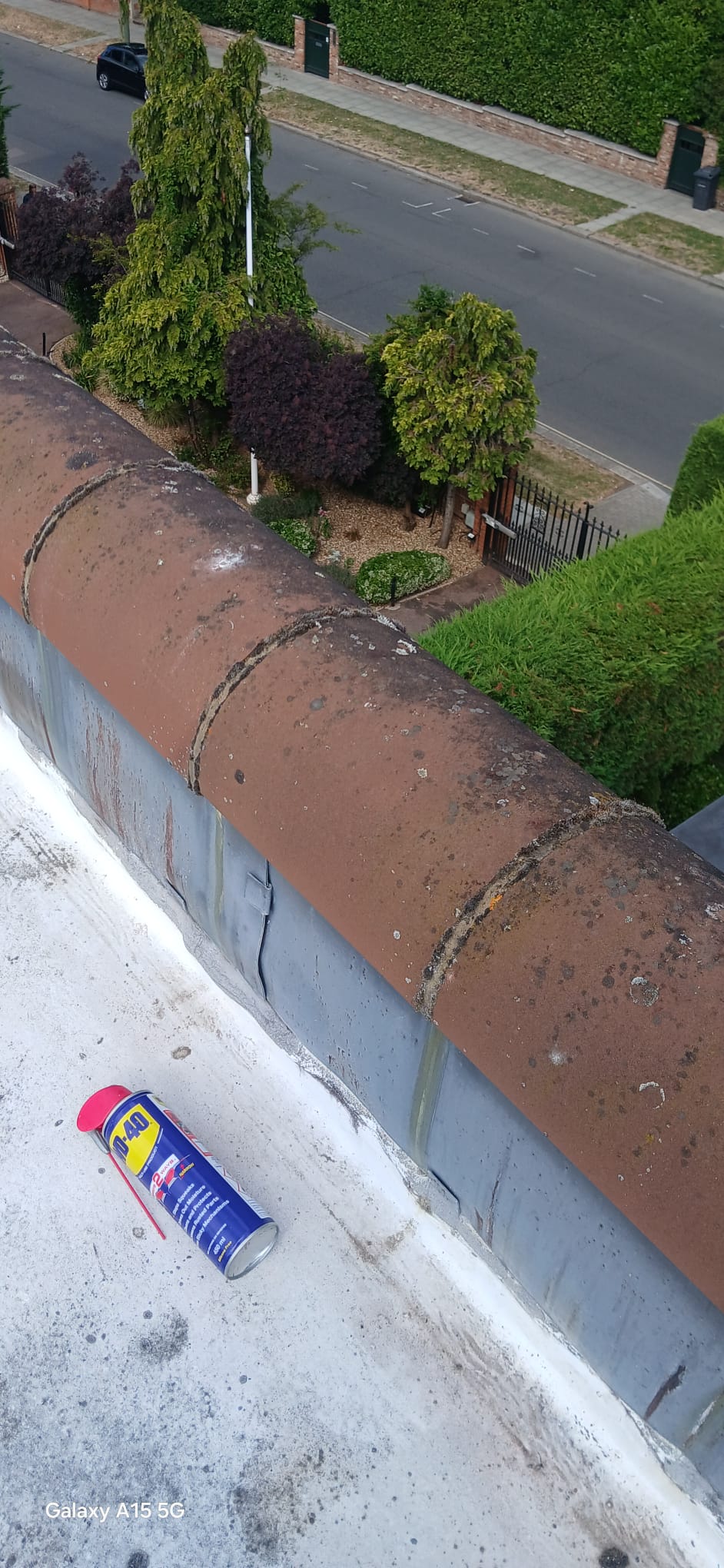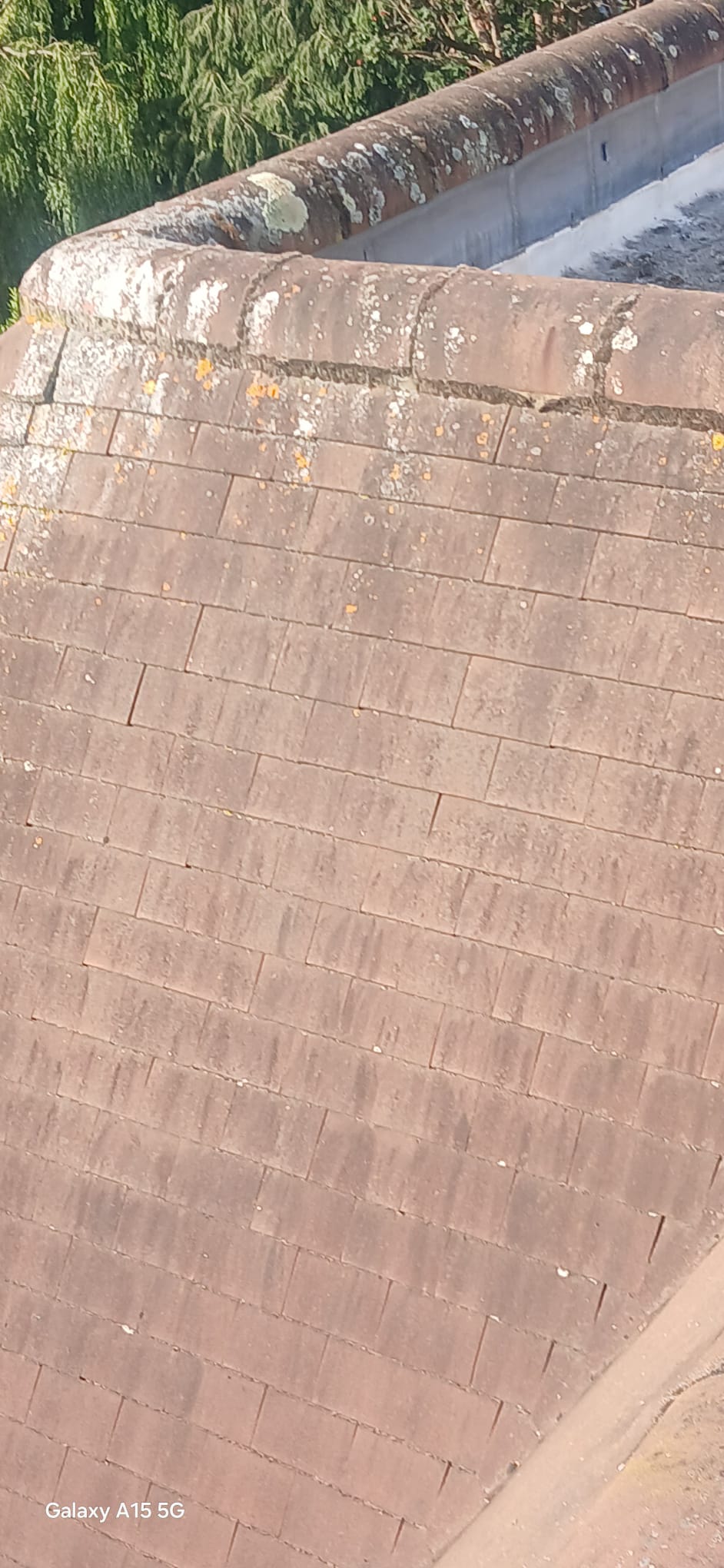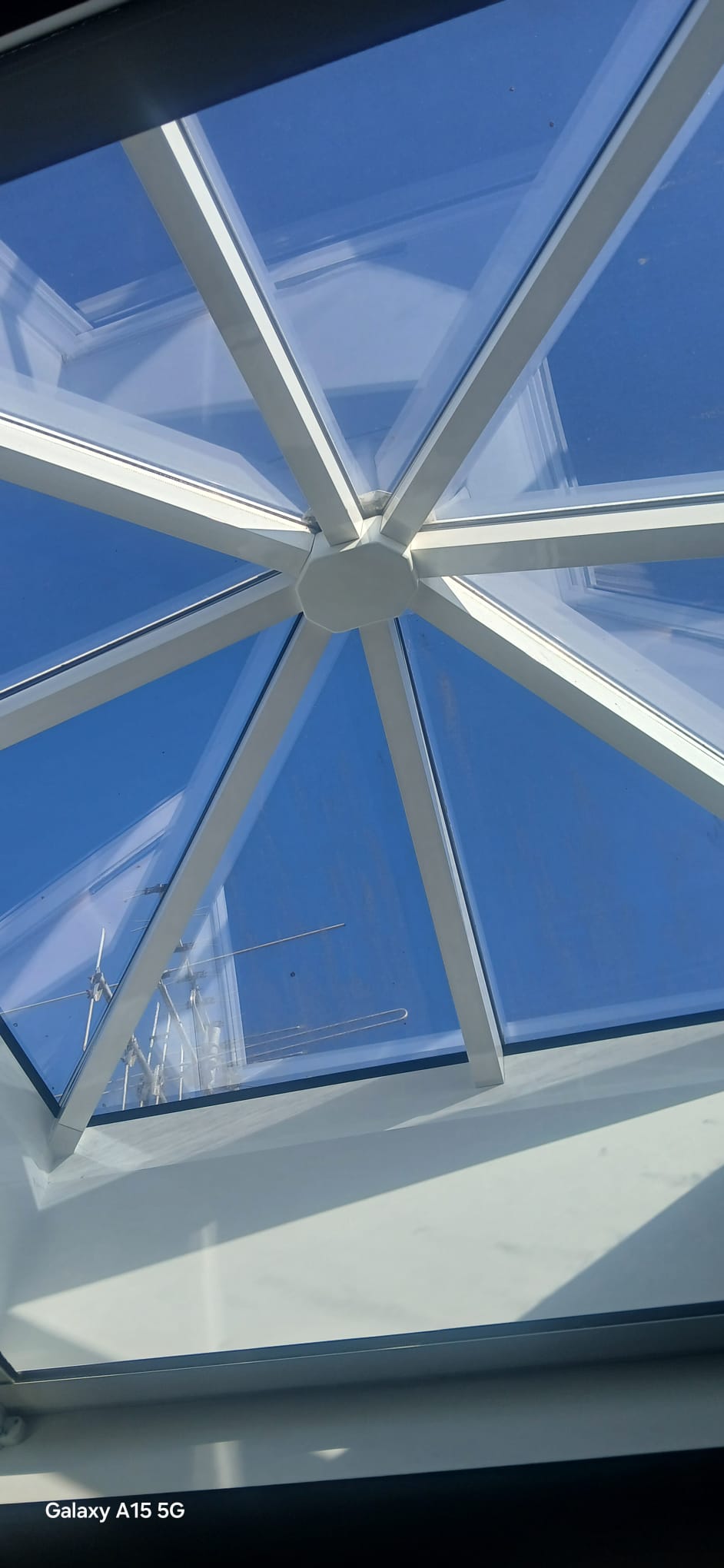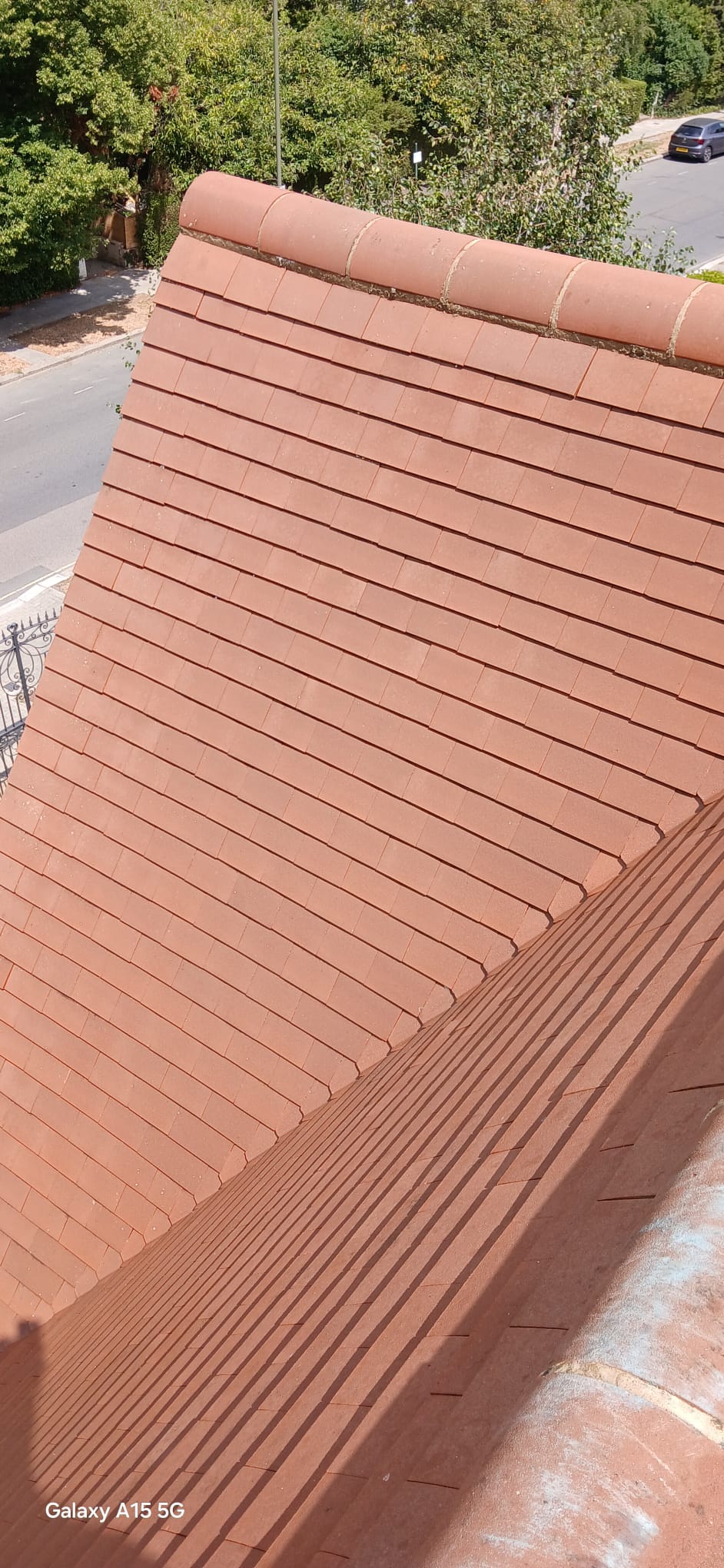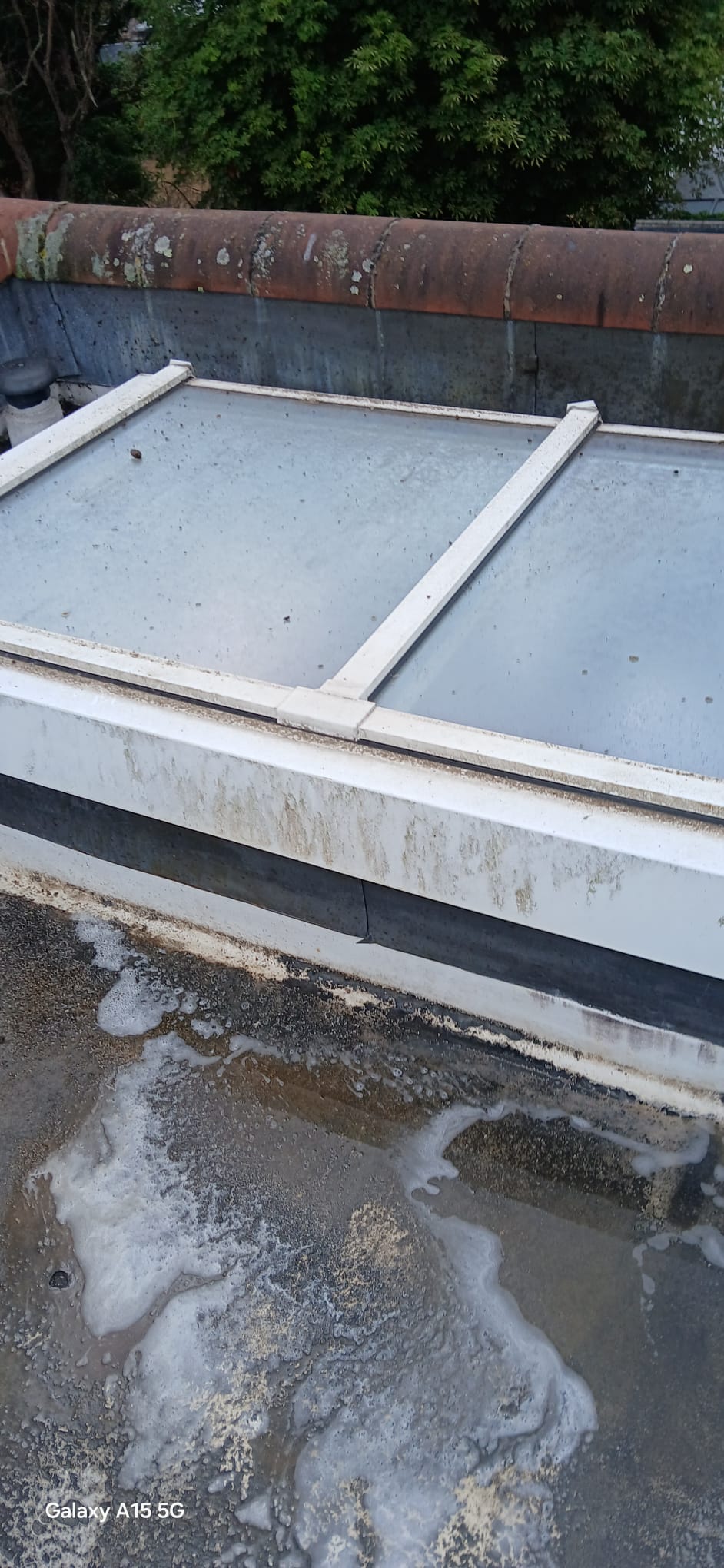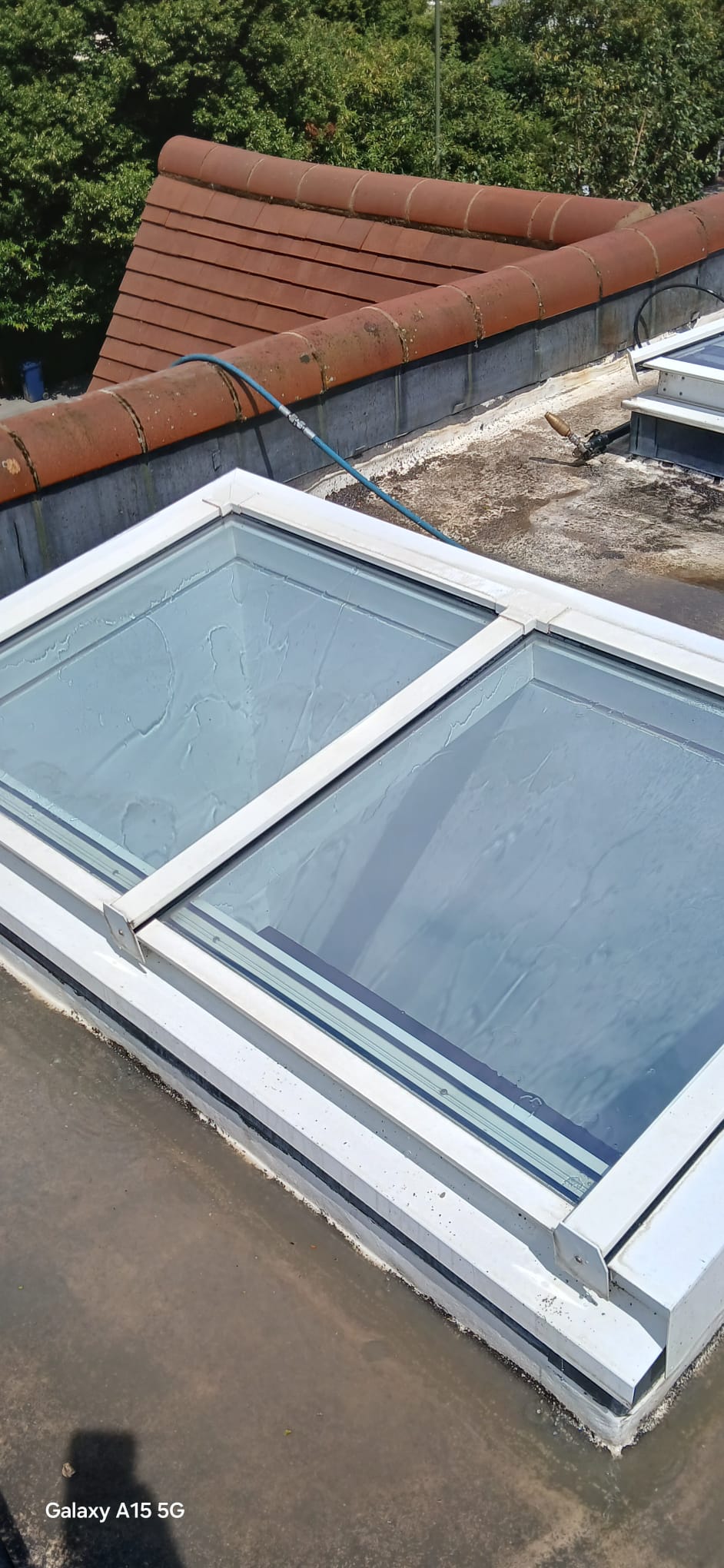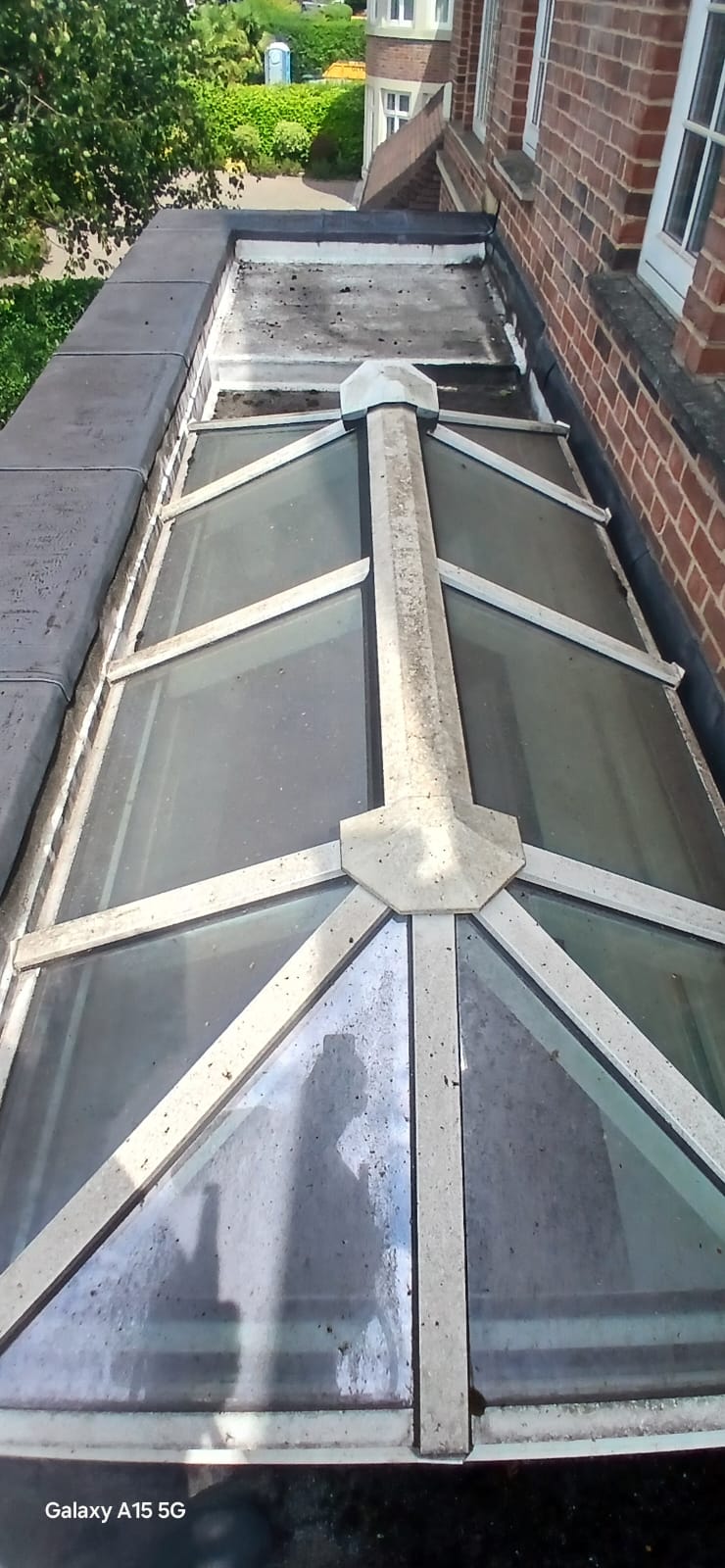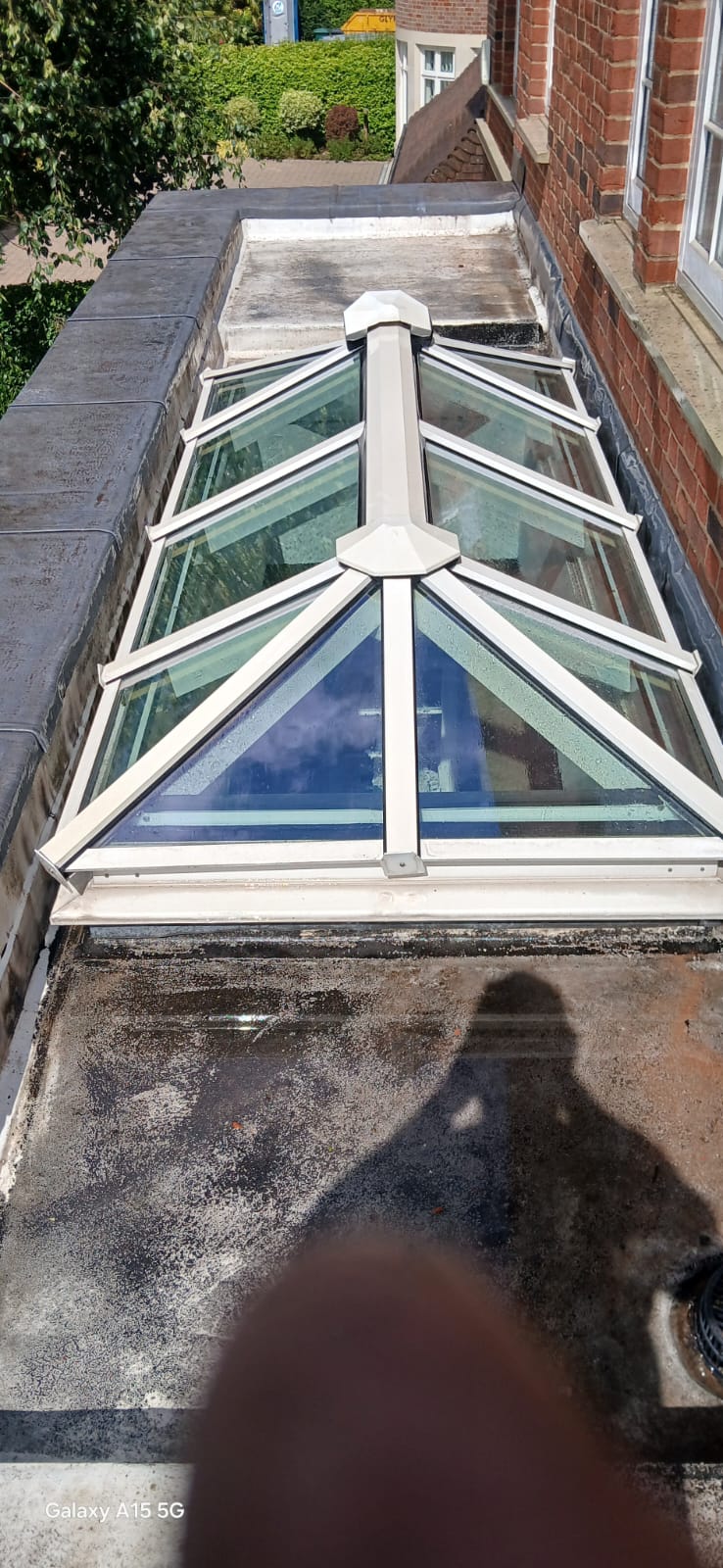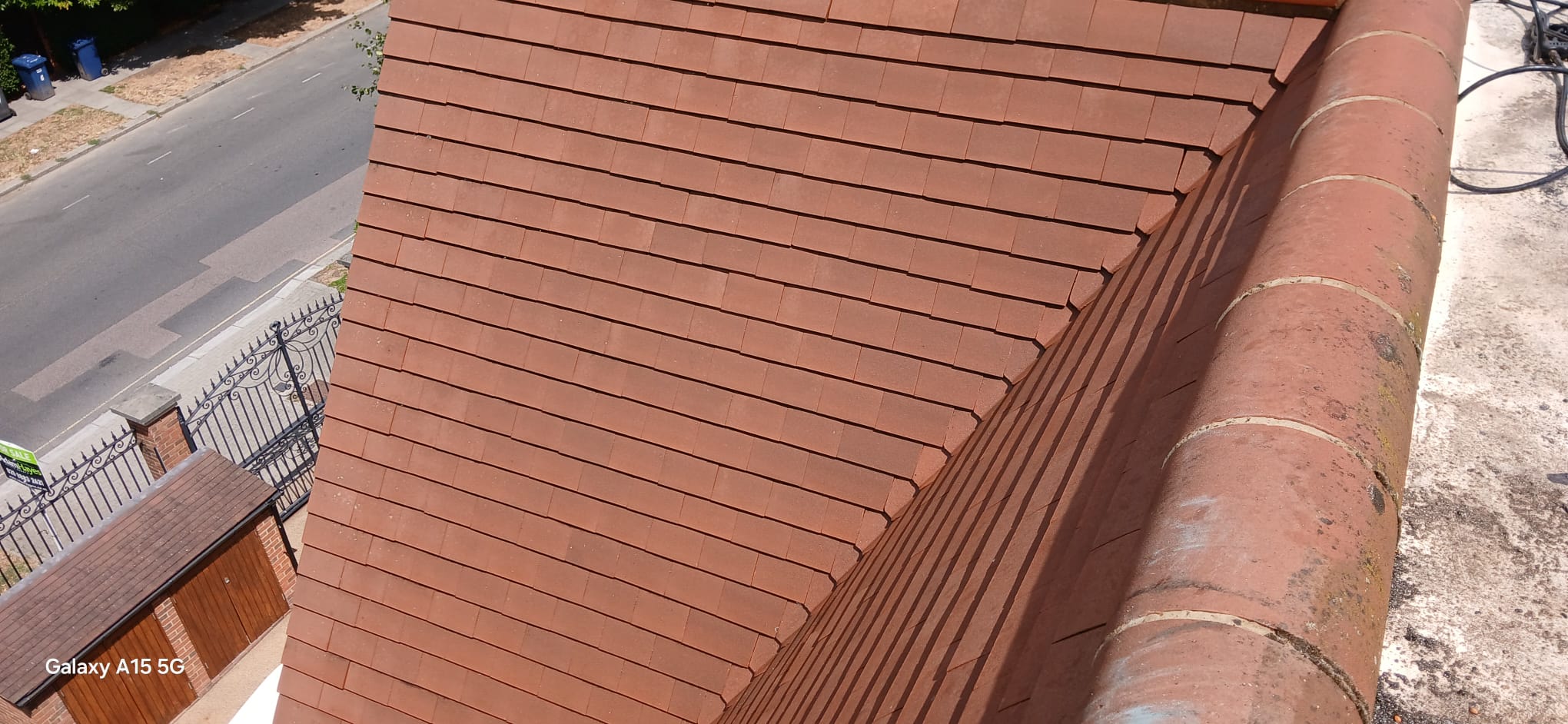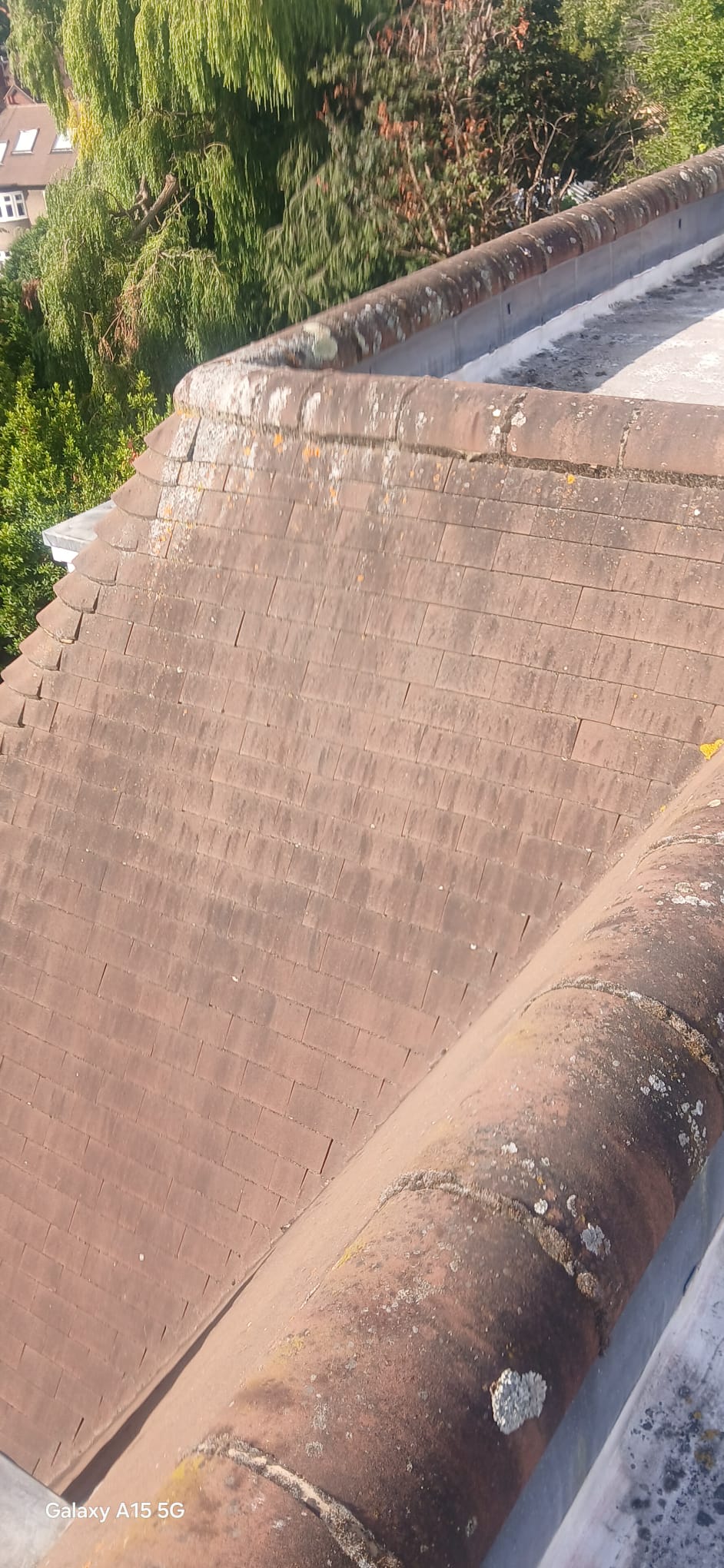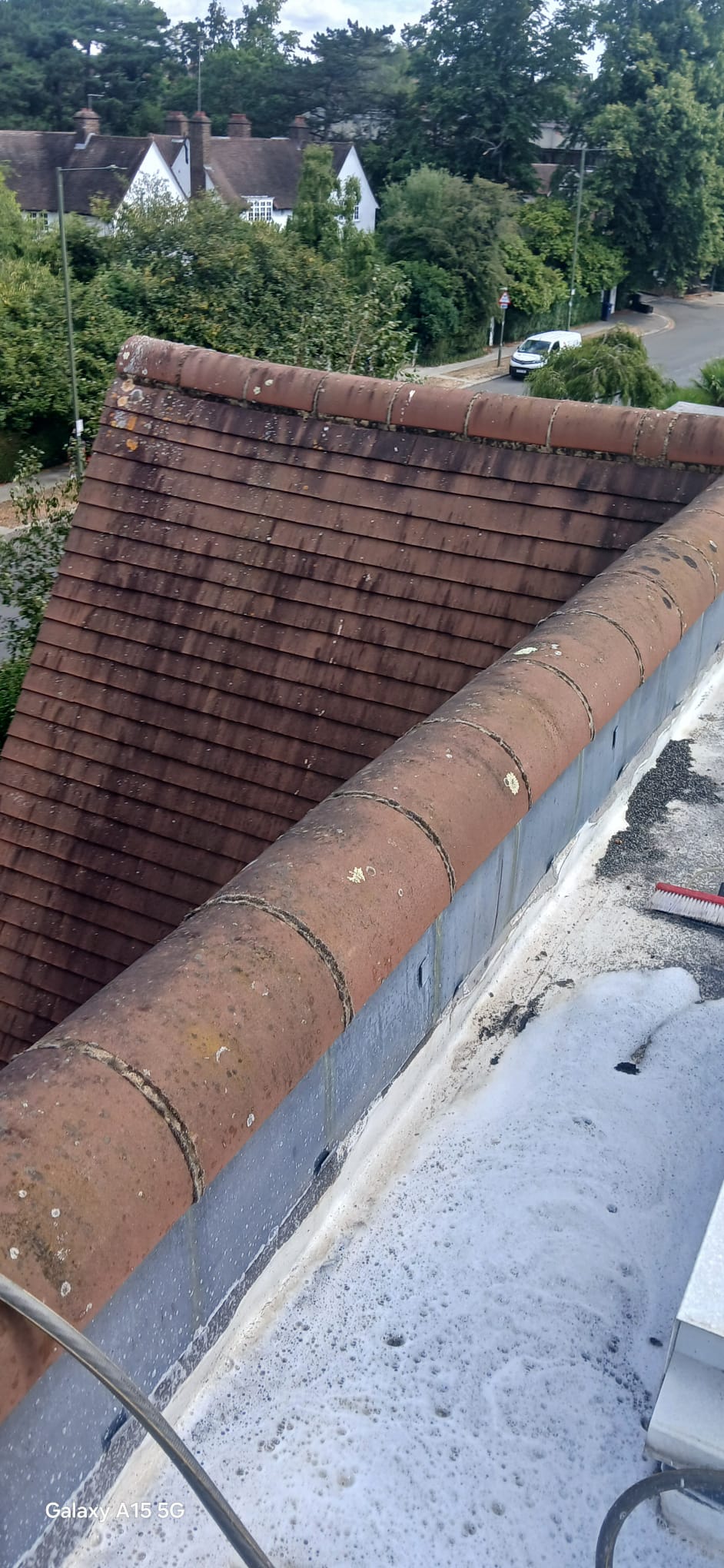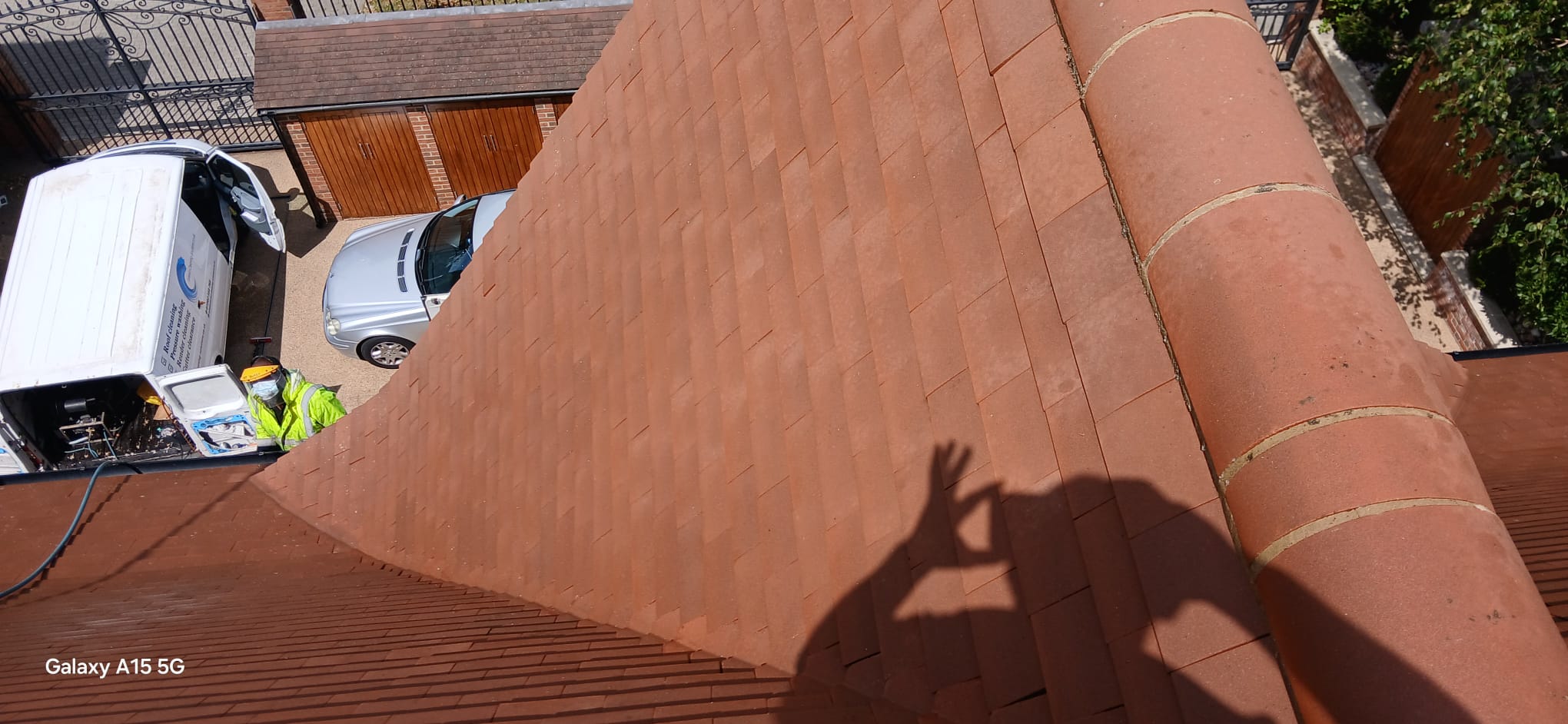
In July 2025, we completed a specialist clean of a private mansion roof and skylights in Harrow. The roof featured very steep/sloped sides with clay roof tiles, requiring careful method selection and controlled work practices to achieve an even finish without damaging the surface.
The service combined:
private-mansion-harrow-jul-2025This project had three defining constraints:
Steam provides effective removal of organic buildup and staining while being gentler than aggressive high-pressure approaches on delicate roof surfaces. We focused on consistent coverage across the tile runs and detailing around features.
After cleaning, we applied DDAC as a biocidal treatment to help inhibit algae regrowth and keep the roof looking cleaner for longer (maintenance frequency will still depend on shade, trees, and exposure).
For the skylights and rooflight glass, we used a pure water system to lift grime and leave a clear, streak-free finish. Frames and surrounding areas were also detailed to match the restored look.
Roofs in shaded or damp areas are more prone to algae return. A planned maintenance clean and periodic treatment can help keep clay tiles and skylights looking their best long-term.
Clay tiles can be vulnerable to aggressive pressure, especially on older roofs or where pointing, flashings, or tile fixings are tired. Steam cleaning relies on heat with controlled flow to break down organic growth and grime, so we can clean effectively while reducing the chance of:
If a pressure-based method is used at all, it should be carefully controlled and matched to the roof condition — but for many clay tile roofs, steam is the safer, more precise approach.
DDAC is applied to help slow down algae regrowth, but longevity depends heavily on conditions. Typical factors that shorten lifespan include:
As a practical expectation, many roofs stay noticeably cleaner for months to a few years, with best results when combined with sensible maintenance (e.g., keeping gutters clear and scheduling periodic re-treatments where the environment is high-risk).