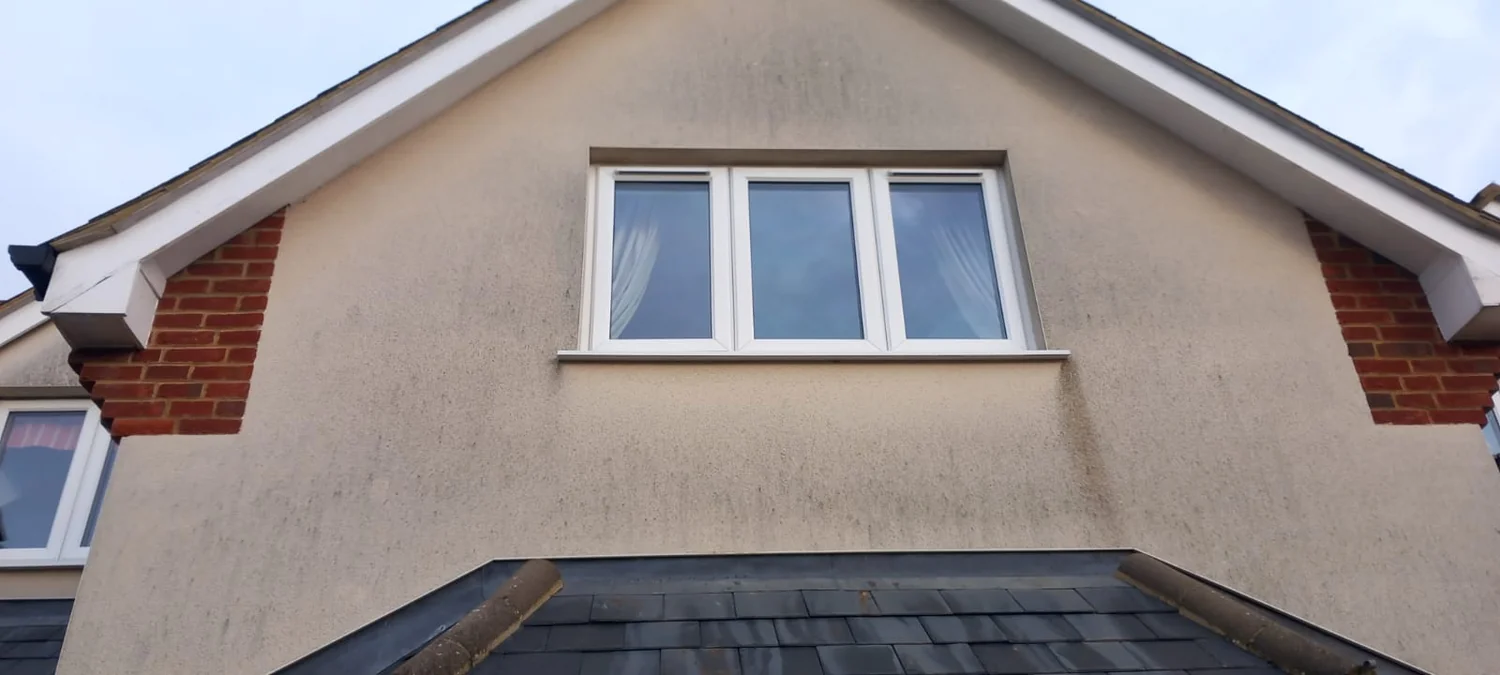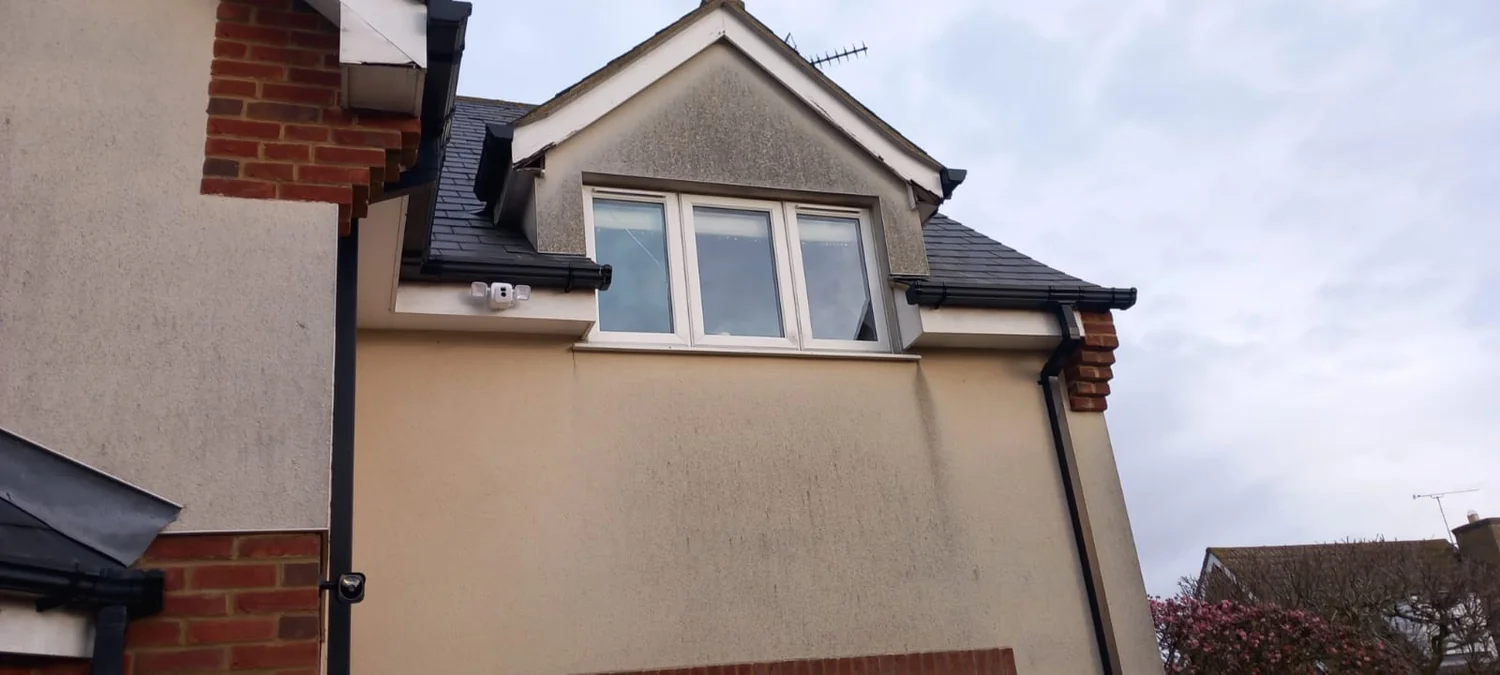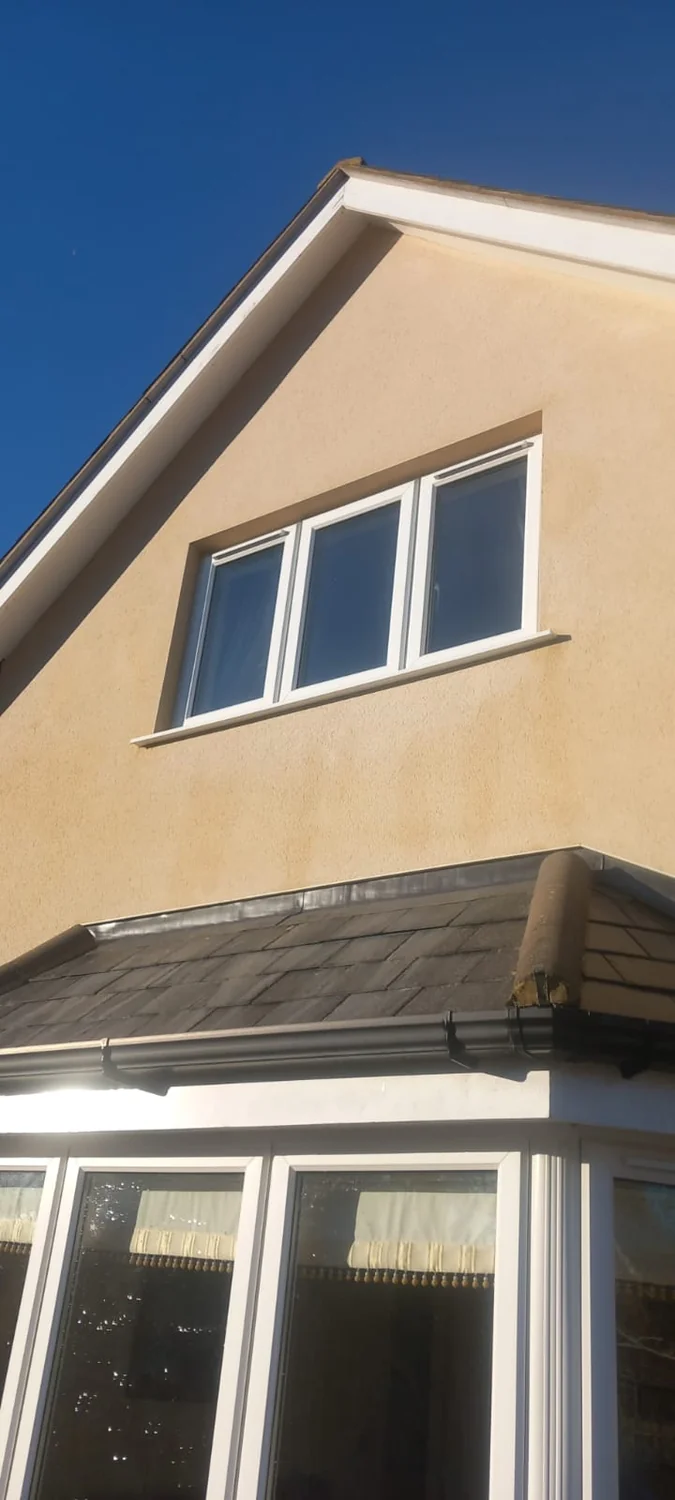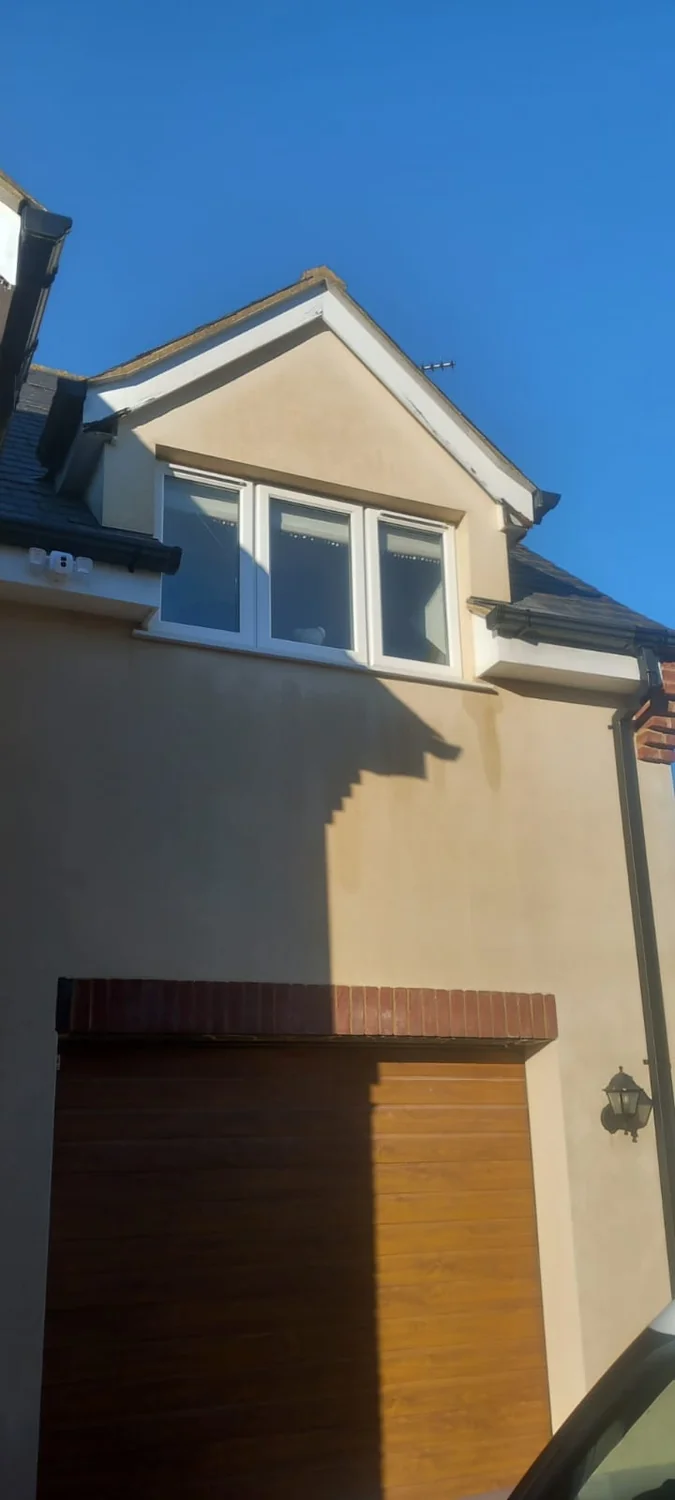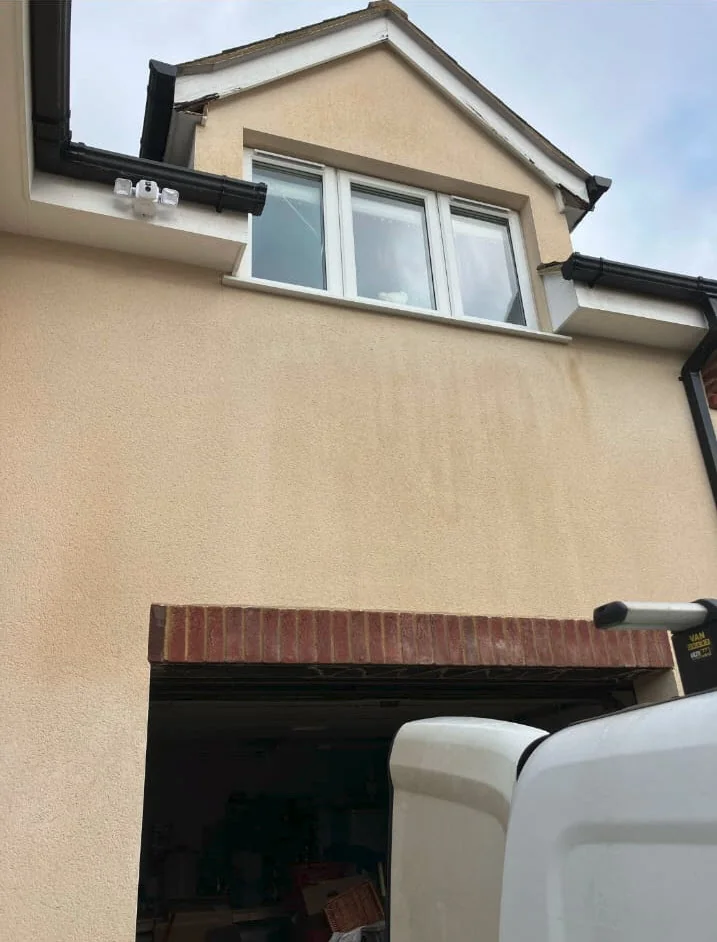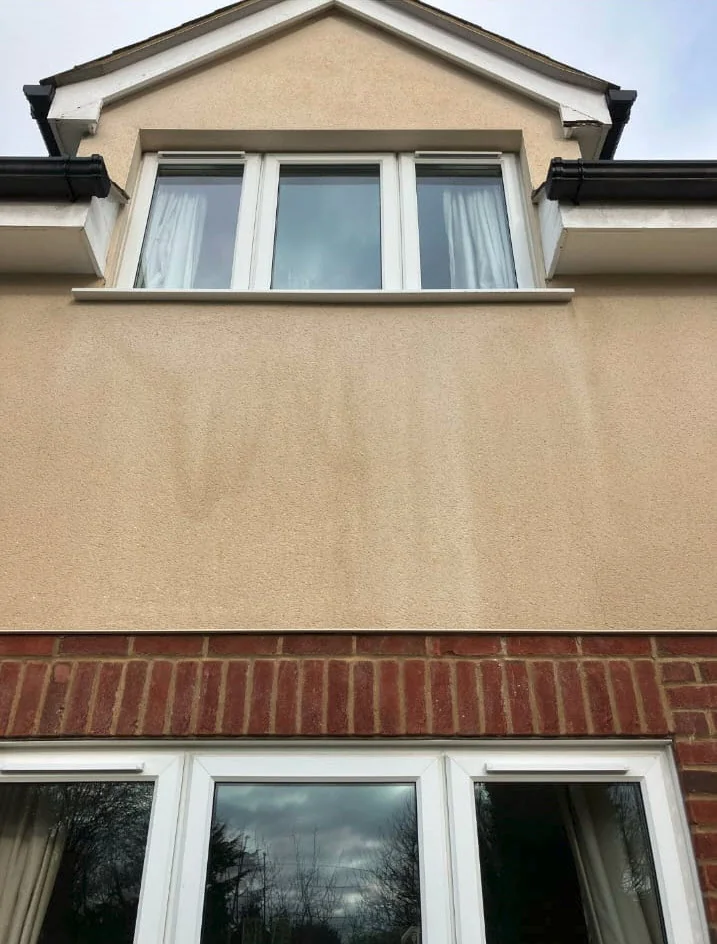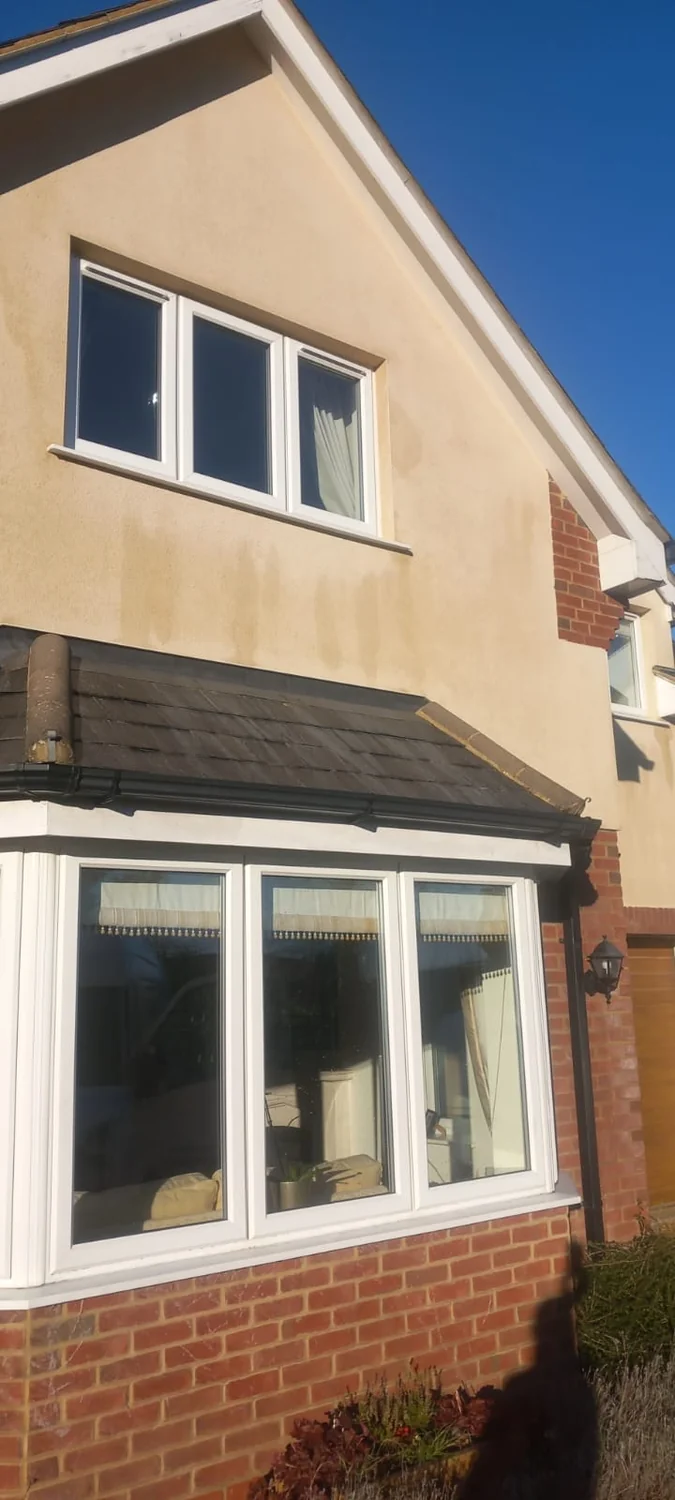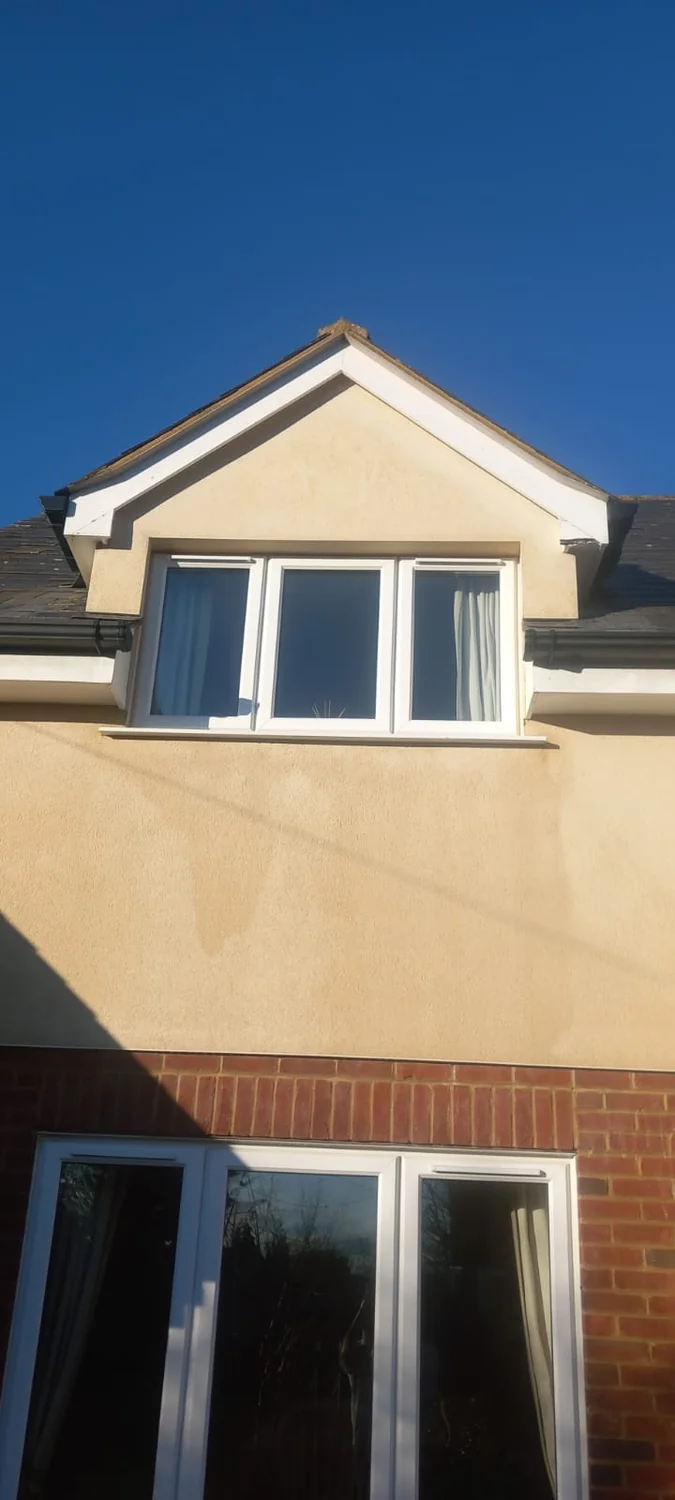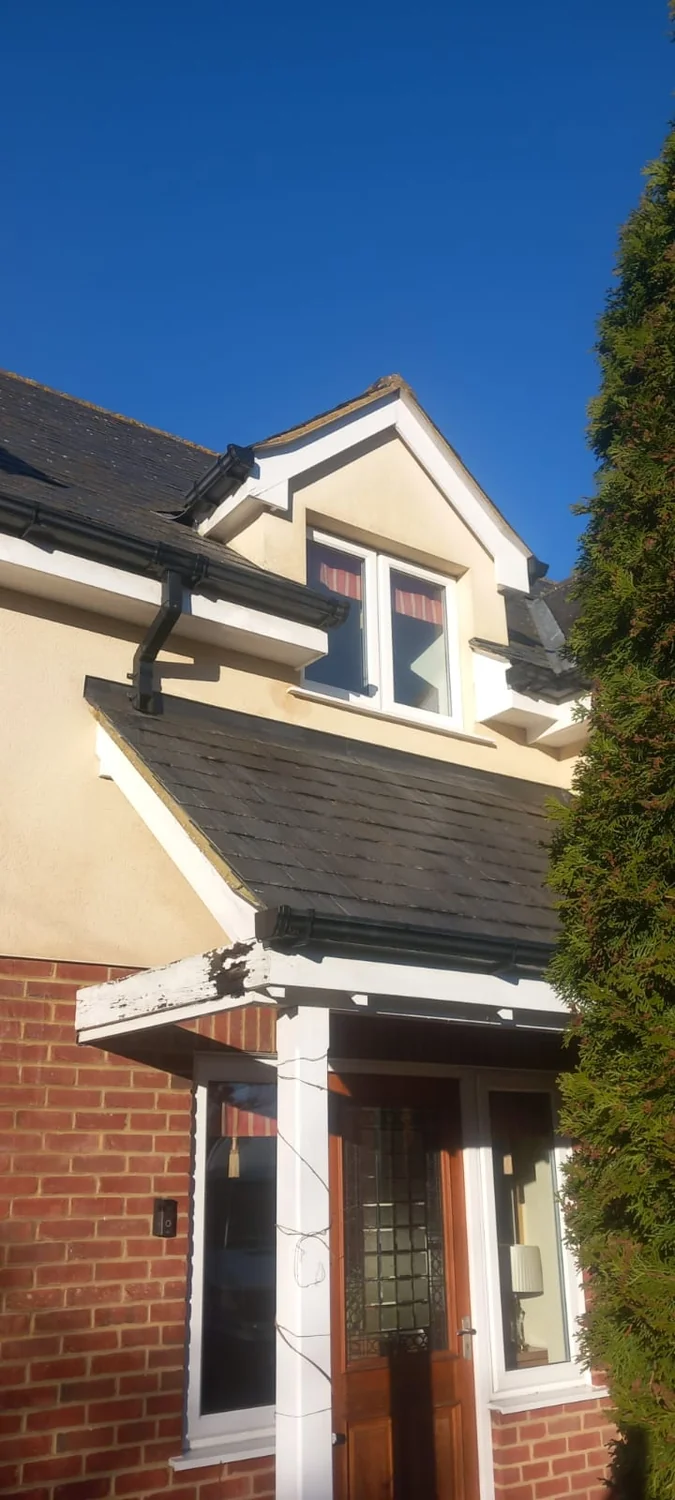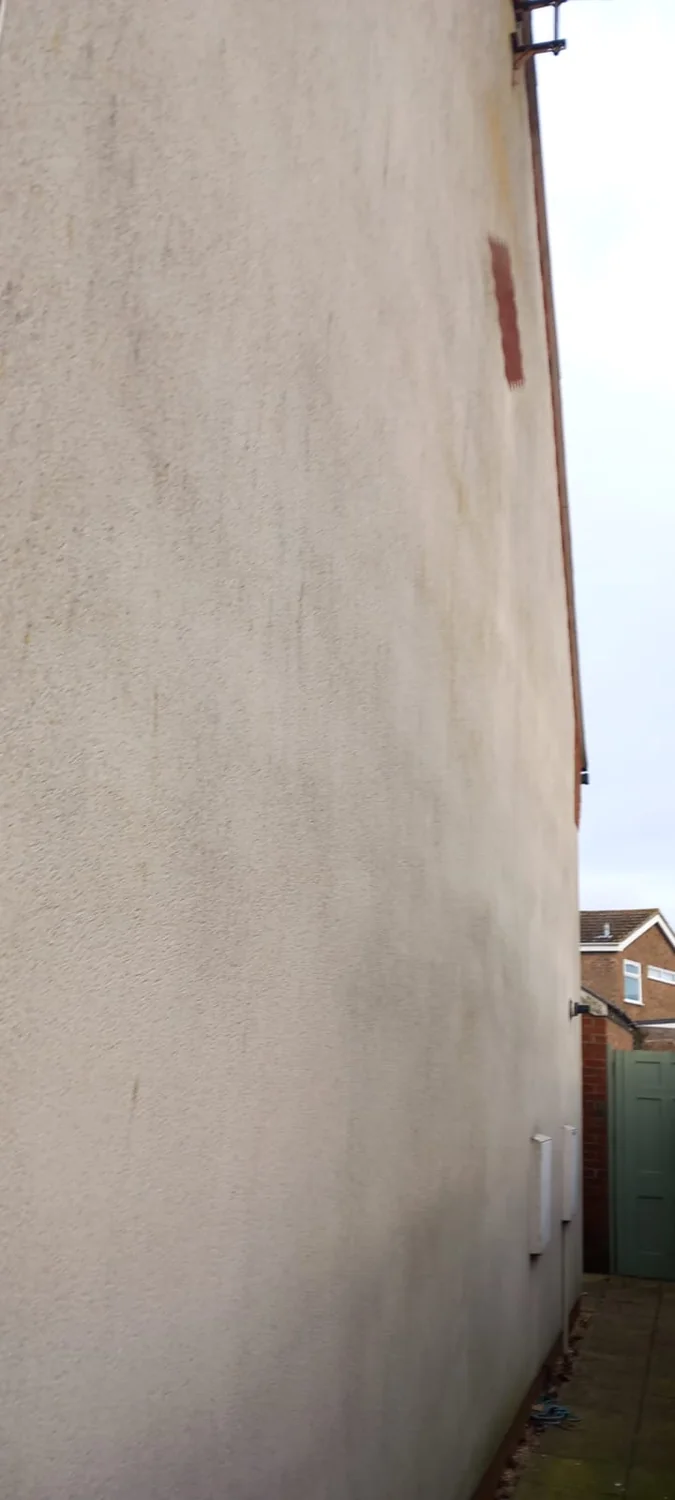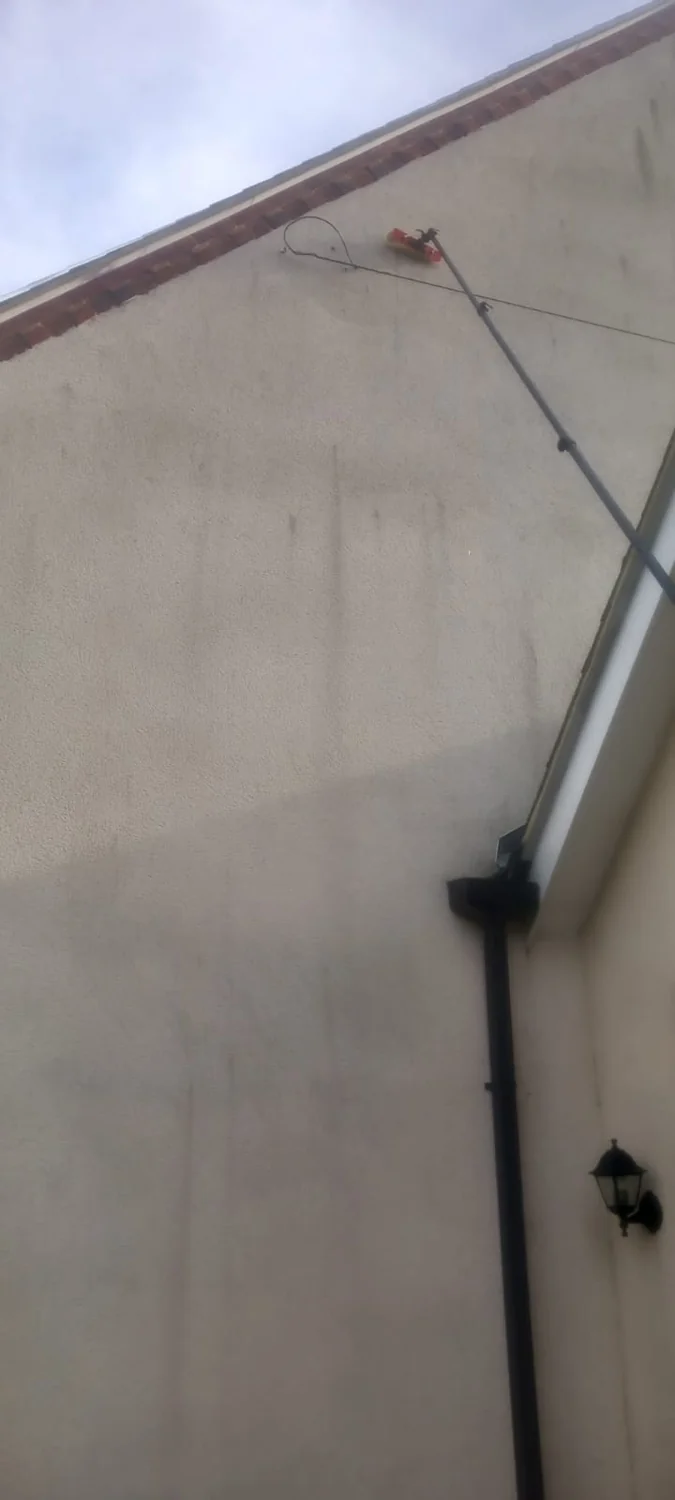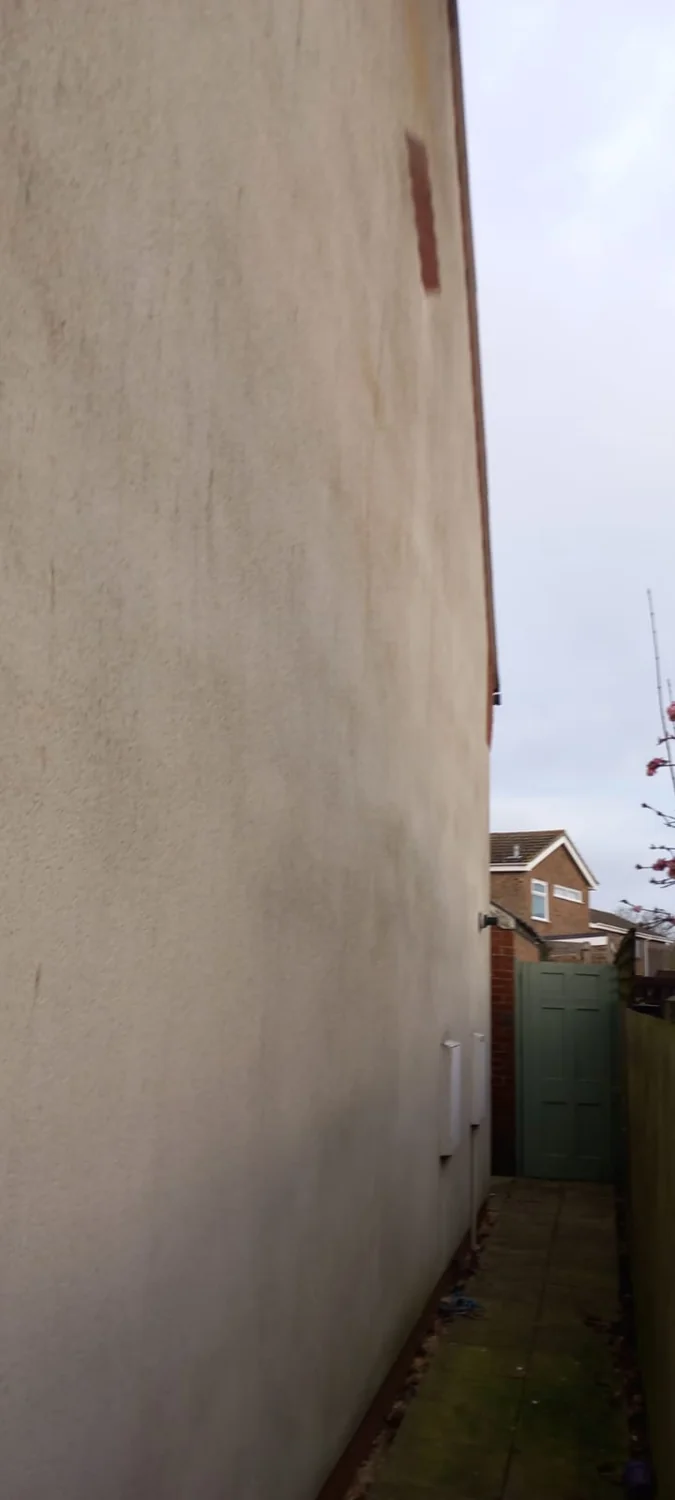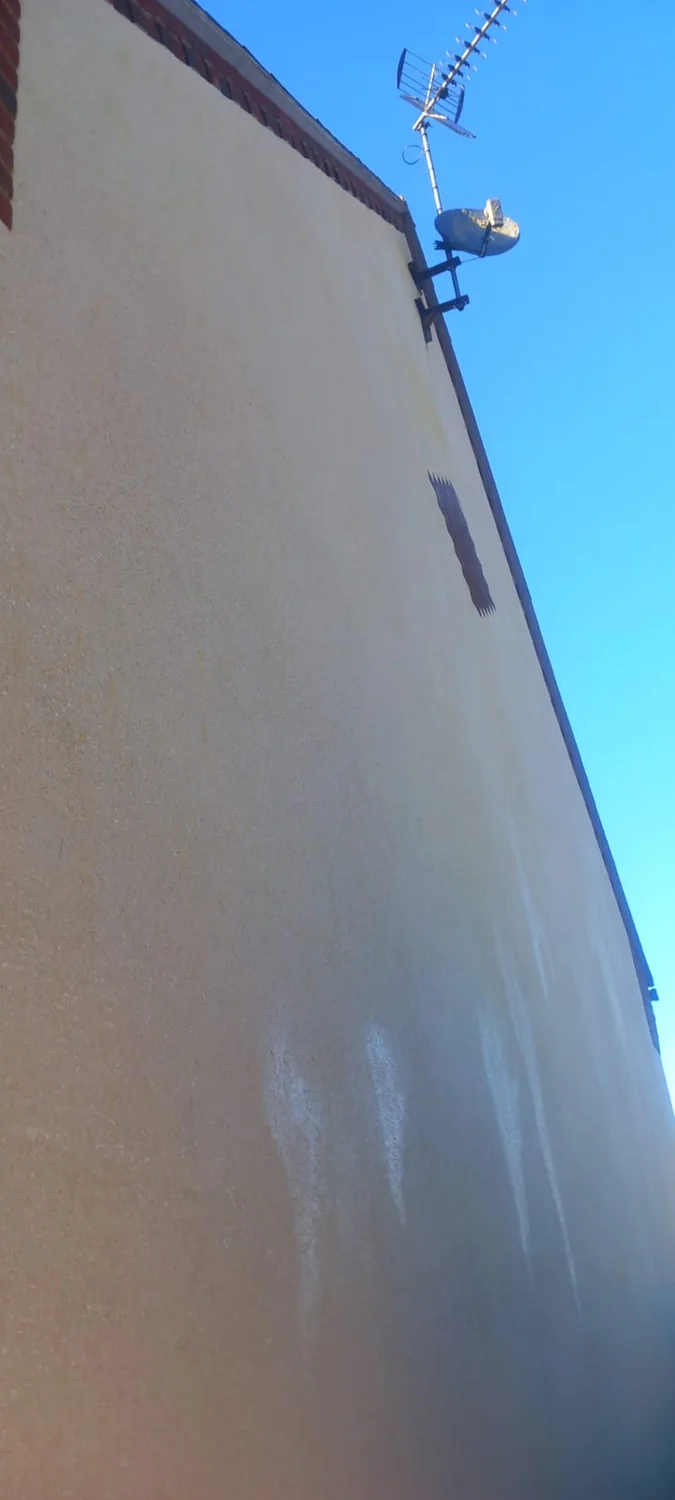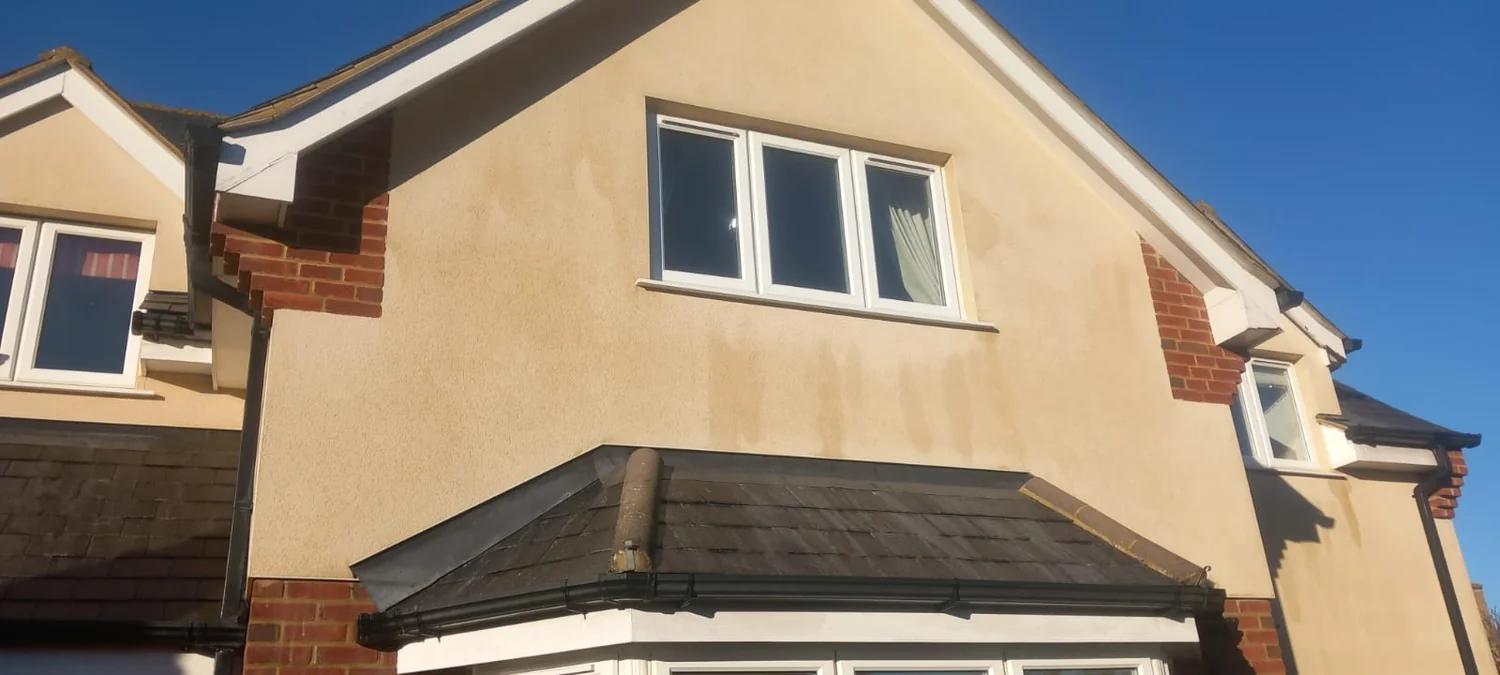
Project type: Residential render cleaning (full exterior)
Location: Northampton, UK
Date: February 2024
Main issue: Black algae staining and weathering on rendered elevations (gable + side walls + dormer areas)
Method: Bleach-based softwash (low-pressure) + follow-up biocide treatment for long-term prevention
This Northampton home had widespread black algae staining across the render, particularly on the more weather-exposed elevations. Black algae marks often present as dark speckling and streaking and can be more stubborn than lighter organic growth, so this job required a bleach-based softwash approach rather than aggressive pressure washing.
Our goal was to restore the original cream finish while keeping the process safe for the render surface and surrounding areas. After the clean, we applied a biocide treatment to slow regrowth and help keep the walls looking better for longer.
In Northampton (and across the UK), algae staining on render is most common where walls stay damp for longer—think shaded areas, north-facing elevations, spots under eaves/gutters, and places where rainwater runs down the façade.
Algae can appear in different colours (green, dark/black, and sometimes red/orange). The darker staining is often the most noticeable and can be harder to shift because it tends to cling tightly to the surface and may penetrate slightly into porous finishes.
For this project we used a softwash method (low pressure) with a bleach-based solution (commonly sodium hypochlorite as the active ingredient) to break down and lift the algae staining without blasting the render.
Why softwash?
Safety note (important): Sodium hypochlorite/bleach must be handled correctly and must not be mixed with ammonia-based products (or other incompatible chemicals), because that can produce hazardous gases (e.g., chloramines).
Once the render was cleaned, we followed up with a biocide application to target remaining invisible spores and reduce the speed of regrowth—particularly important on elevations that stay shaded or damp.
Used incorrectly, harsh chemicals can cause issues—so we use controlled mixes, appropriate dwell time, and careful rinsing/neutralisation practices where required. Softwashing is commonly chosen specifically because it cleans effectively while avoiding the physical damage risks associated with pressure washing.
Longevity depends on shade, exposure, and local microclimate. The biocide treatment helps slow regrowth, especially on elevations that stay damp or shaded.
Softwashing relies on low pressure + cleaning chemistry to kill and remove organic growth; pressure washing relies on force and can risk damaging render and forcing water into the wall.
If your render is showing black algae staining, green growth, or weather streaks, we can restore it safely using professional softwash methods and long-term treatments.