Call Now WhatsApp

Render Cleaning

Soft washing for K-Rend, monocouche, silicone, and sand/cement render. We remove green, red, and black algae without damaging the render surface. DDAC biocide treatment prevents regrowth for 4-5 years.

No Upfront Deposits Pay Only When Satisfied Free Quotes Fully Licensed & Insured

How Render Cleaning Works

Render cleaning is made with soft washing - low-pressure water combined with a biodegradable sodium hypochlorite (bleach-based) solution. It's not the pressure doing all the work, but the chemical solution. We never use high-pressure jets because they alter the textured render, remove paint from smooth render, and push water behind the render layer.

Penetrating the render surface, the cleaning solution oxidises cell membranes and breaks down organic pigments, killing algae, lichen, and biofilm at the root level. We clear green algae in several hours. It takes days to weeks for red and black staining to fade - the dead organisms will weather away.

Washing is followed by application of the DDAC (Didecyldimethylammonium chloride) biocide across the entire surface. While cleaning solutions work on the spot, DDAC has residual activity - it adheres to the render surface and will activate every time it rains. This way, it will kill spores before they thrive. It will take 6-12 months until the biocide is fully effective, and its effects will last for 4-5 years.

Render cleaning prices start from £350 for a standard semi-detached house. Call 07307 358765 for a free estimate.

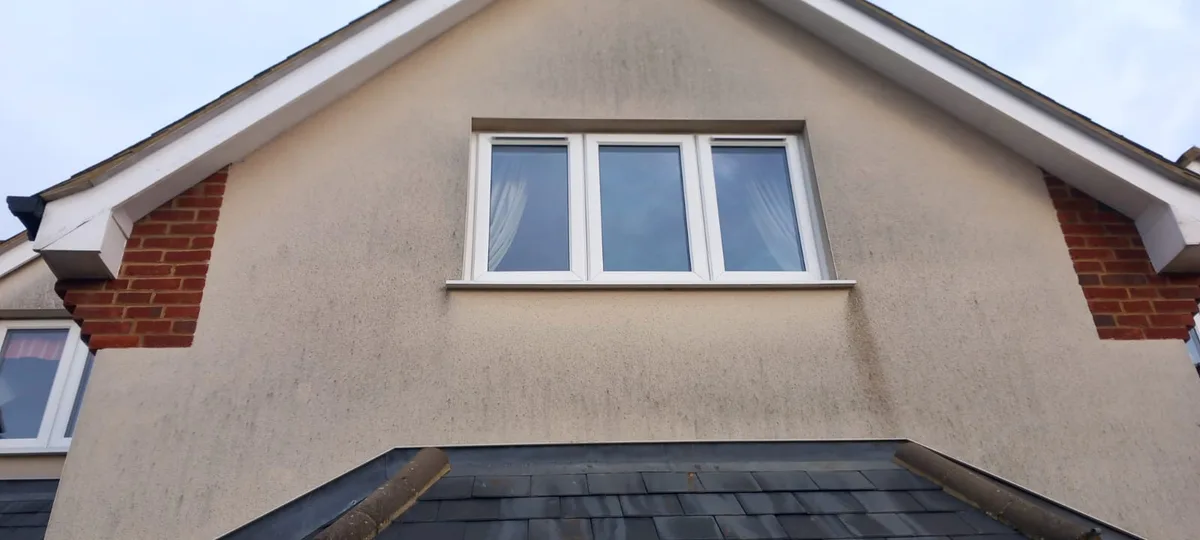
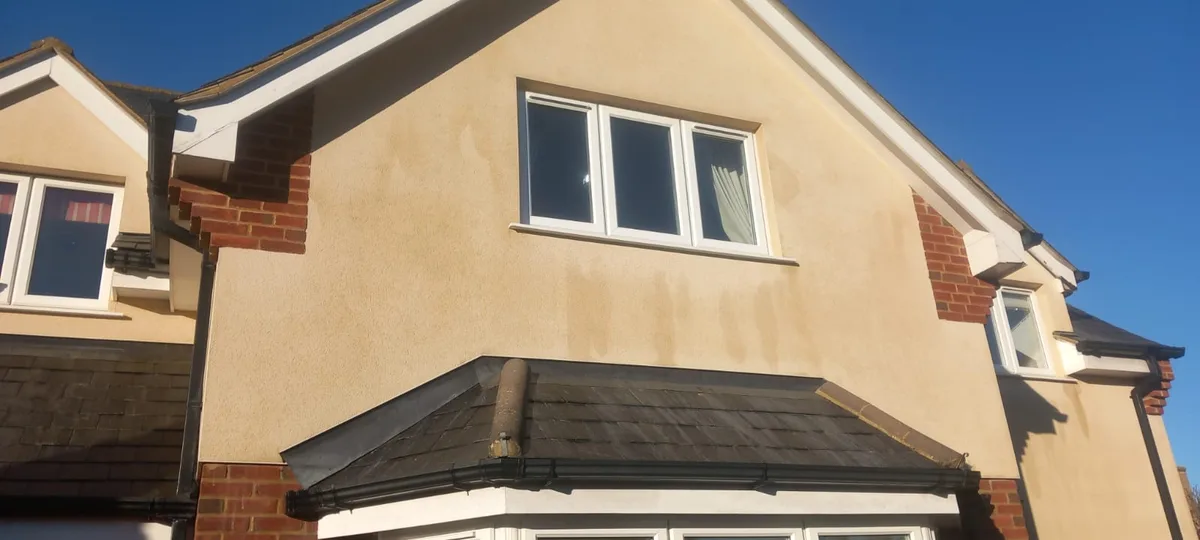
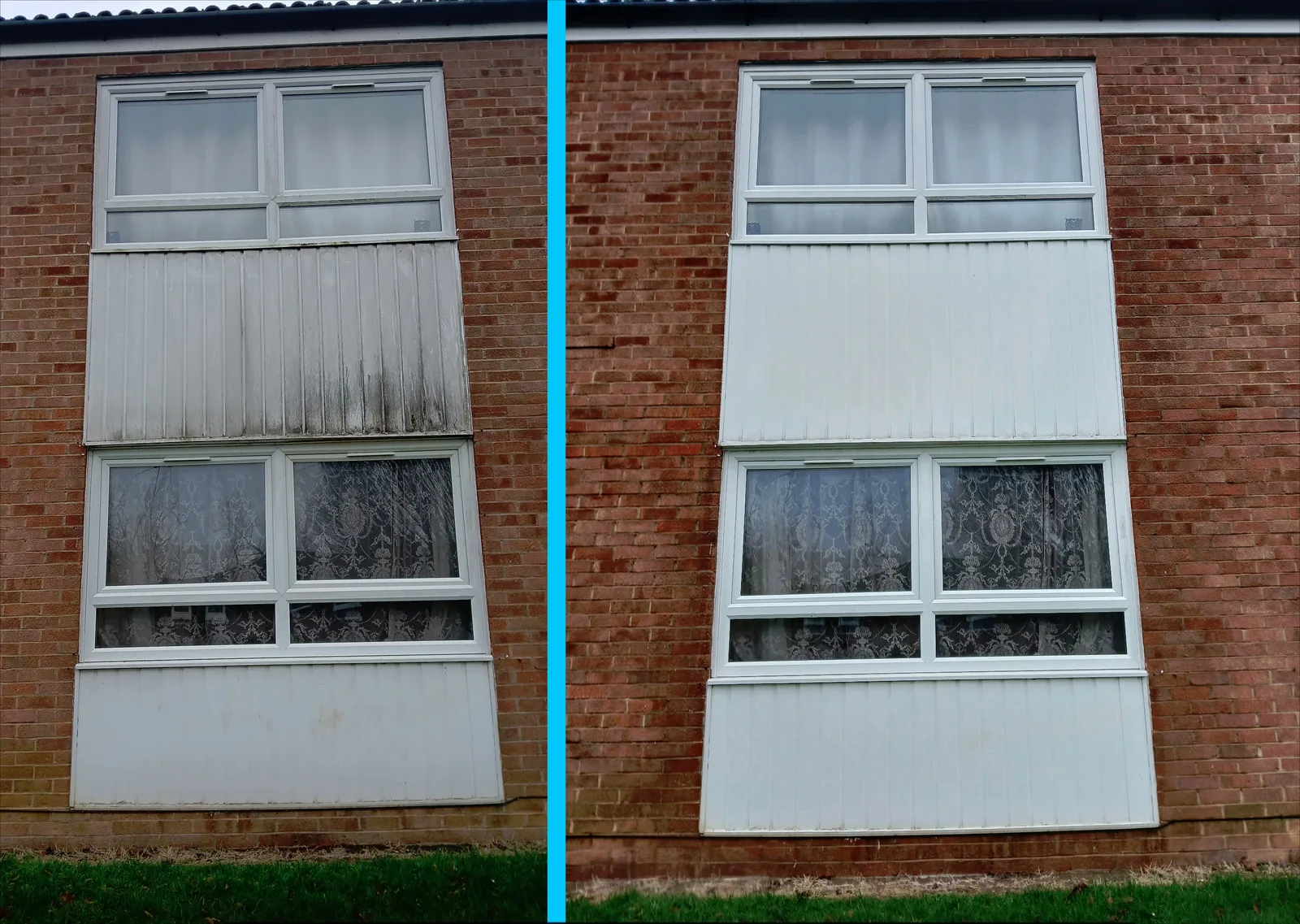
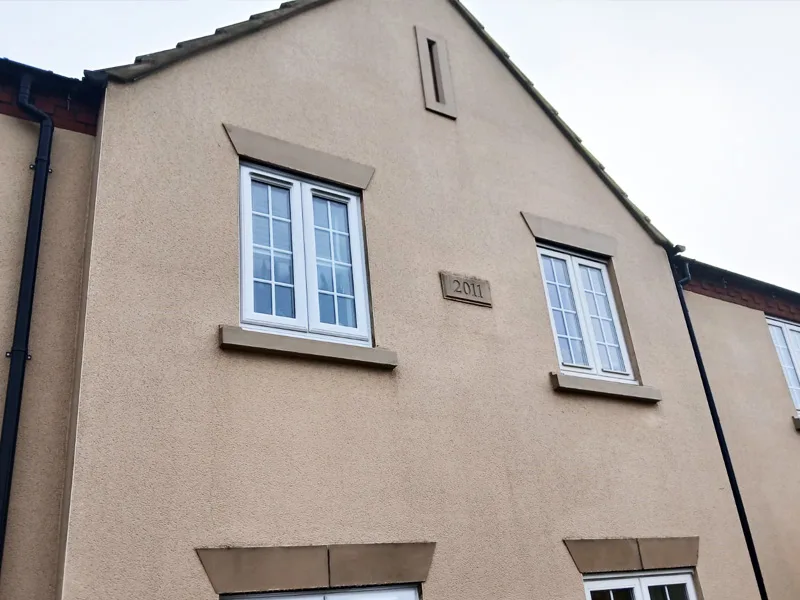
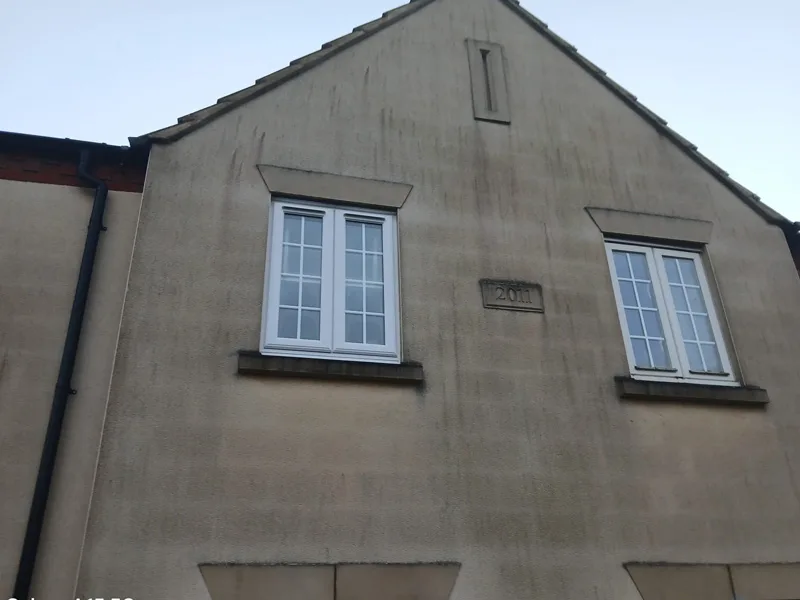
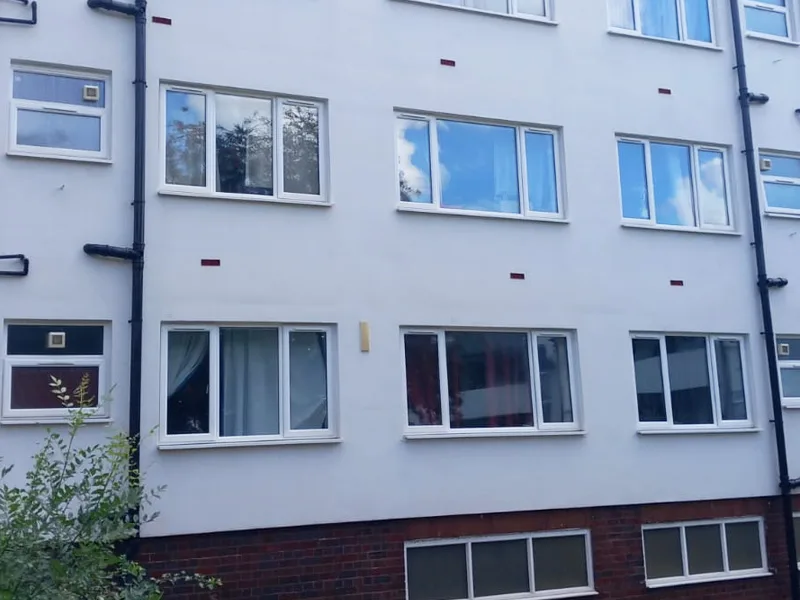
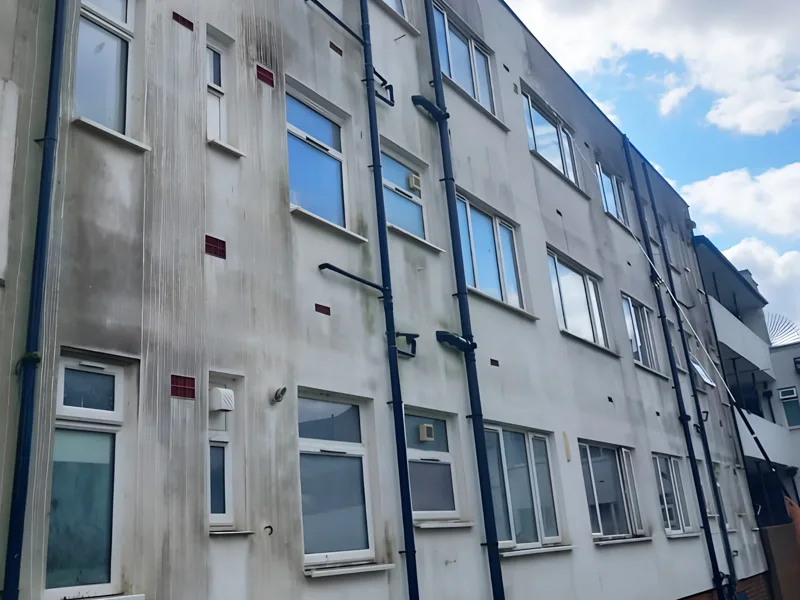
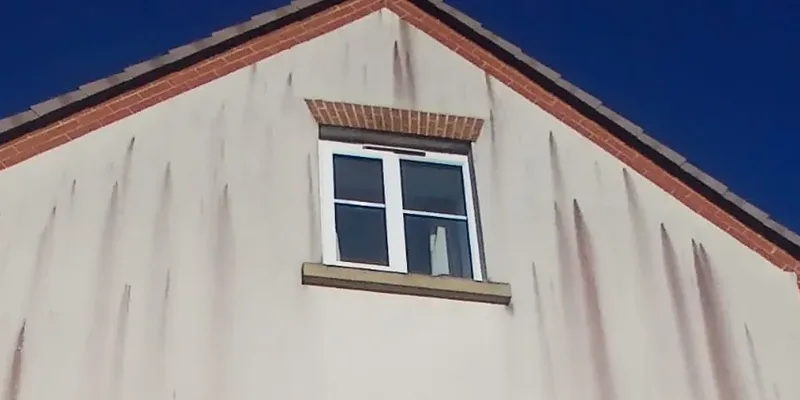
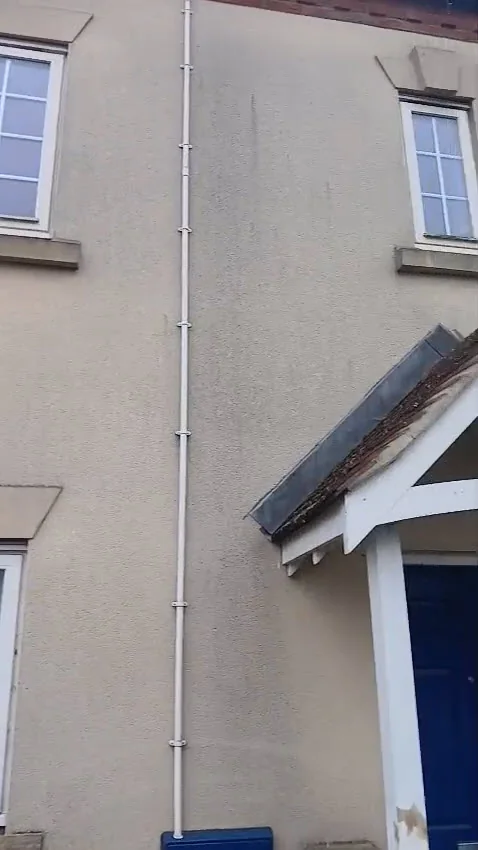
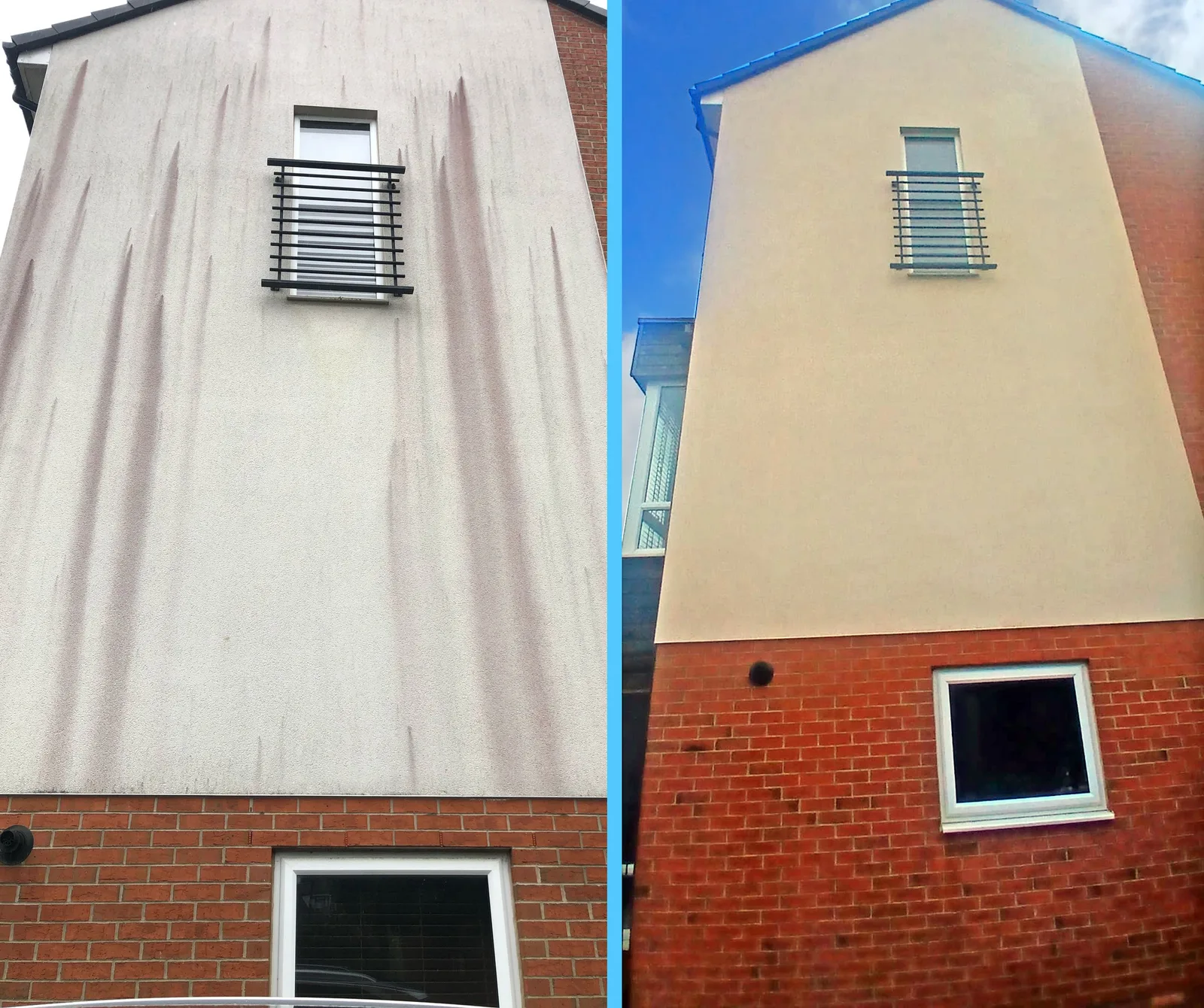
House render cleaning before and after - red algae removal

“I recently had the exterior of my house cleaned and I'm so impressed with the results. The render clean has completely transformed the look of my home, it genuinely looks like new again. Fantastic service and brilliant results.”

Sharon Moore - Peterborough

Types of Algae & Staining on Rendered Walls

Stains on render can vary significantly. Different treatment approaches must be used for different organisms. Once we know exactly what's on your walls, we can choose the best cleaning method.

Green Algae (Desmococcus)

This is the most widespread type of growth on rendered walls in the UK. Desmococcus olivaceus is a single-celled terrestrial alga that grows on any damp surface. At first, it appears as a faint green discolouration, then turns into a vibrant green film, filling the texture of renders such as K-Rend and monocouche.

Why it grows: moisture is the main cause. North-facing and east-facing walls stay damp longer. Due to its textured surface, render traps moisture in its pores. Surfaces near trees and hedges tend to be more humid. Mild, wet, and overcast - all typical of the UK climate - make the perfect environment, too.

Removal: It's the easiest type to remove. Sodium hypochlorite soft washing kills it rapidly - it only takes a few hours until you can see the results. Typically, one application is enough. DDAC biocide inhibits regrowth for 4-5 years.

Red & Orange Algae (Trentepohlia)

Trentepohlia is, in fact, a green alga, but has a vibrant rust-red or orange colour due to its high concentrations of carotenoid pigments that mask the chlorophyll and produce the colour. Many mistake it for iron oxide or rust staining. You only need a white cloth to see what it is; rub the surface, and if it doesn't produce an orange smear, it's not Trentepohlia.

Why it's harder to remove: Trentepohlia is filamentous - unlike green algae, which stays on the surface, Trentepohlia develops branching threads that extend deeper into porous render. Chemically more stable than chlorophyll, the carotenoid pigments resist bleaching. Even if the organism is killed, the orange stain may not also be removed.

Removal: Soft washing with sodium hypochlorite will kill the organism. However, it will take 1-4 weeks for the pigment staining to fade, as rain and UV will break down the remaining carotenoids. If it's stubborn Trentepohlia staining, a second application may be necessary after 1-2 weeks. Most homeowners struggle with red algae on white render and light-coloured silicone render - it's not easy to ignore the vibrant orange on a white background.

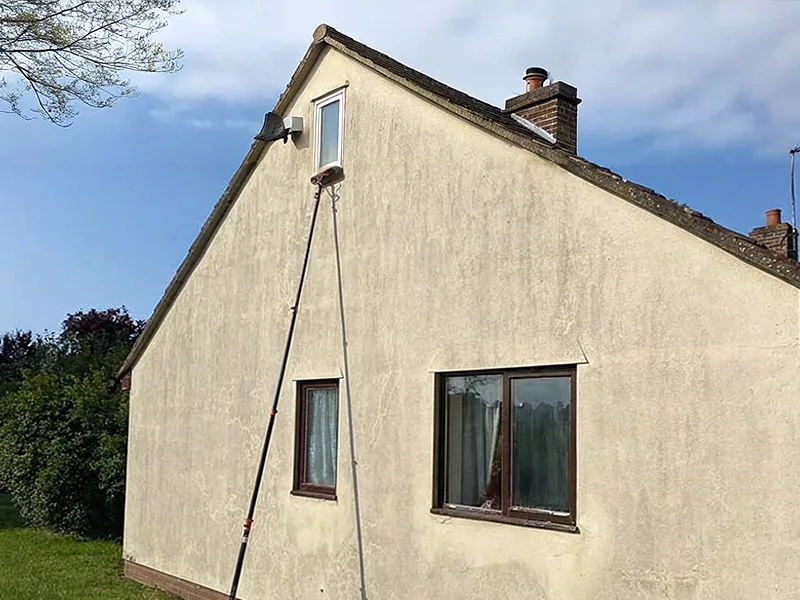
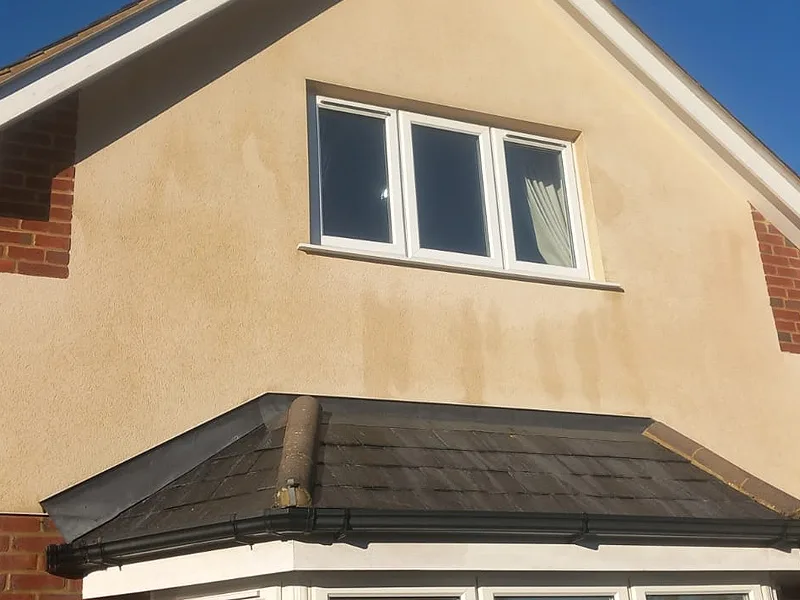
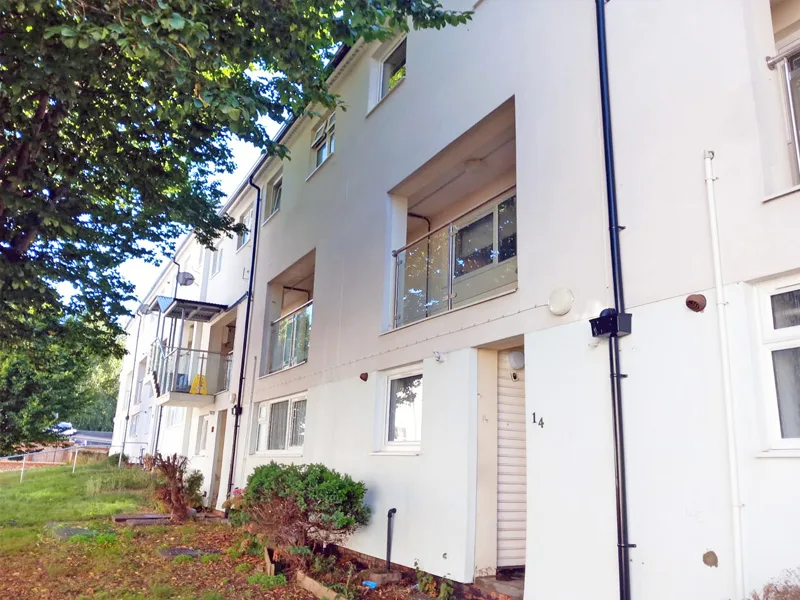
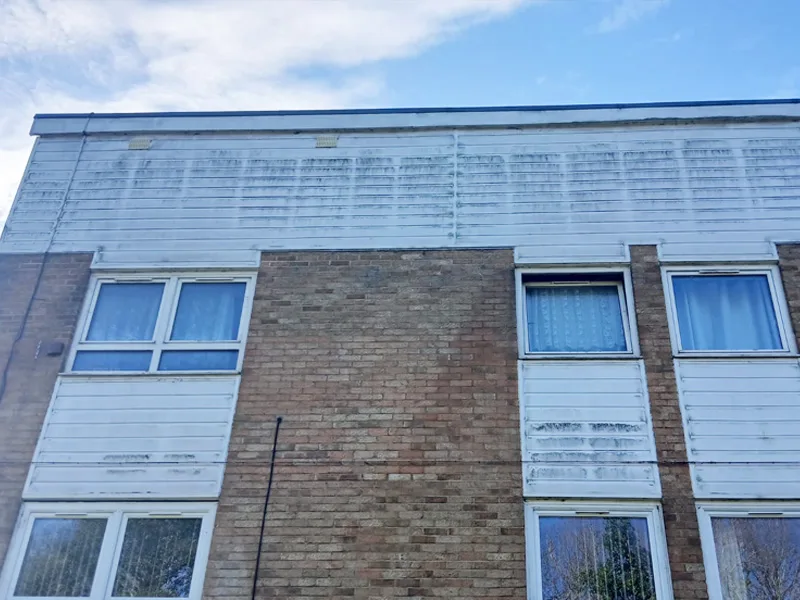
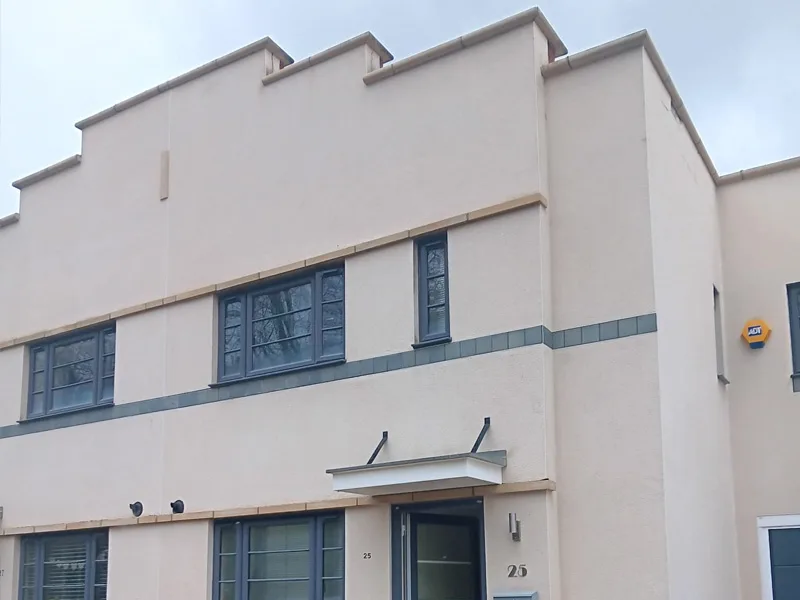
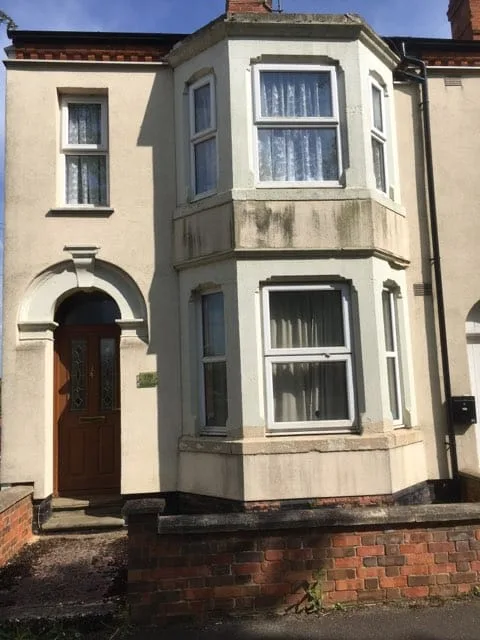
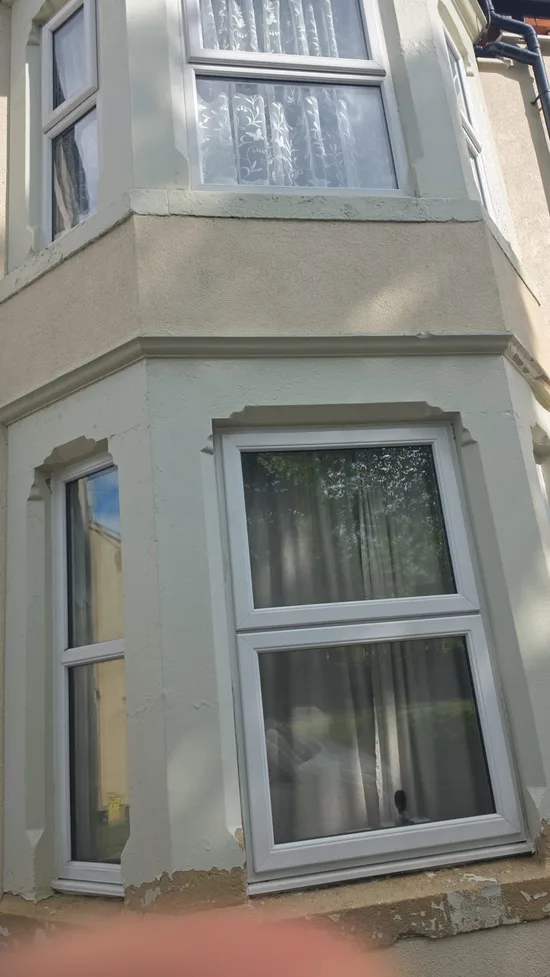
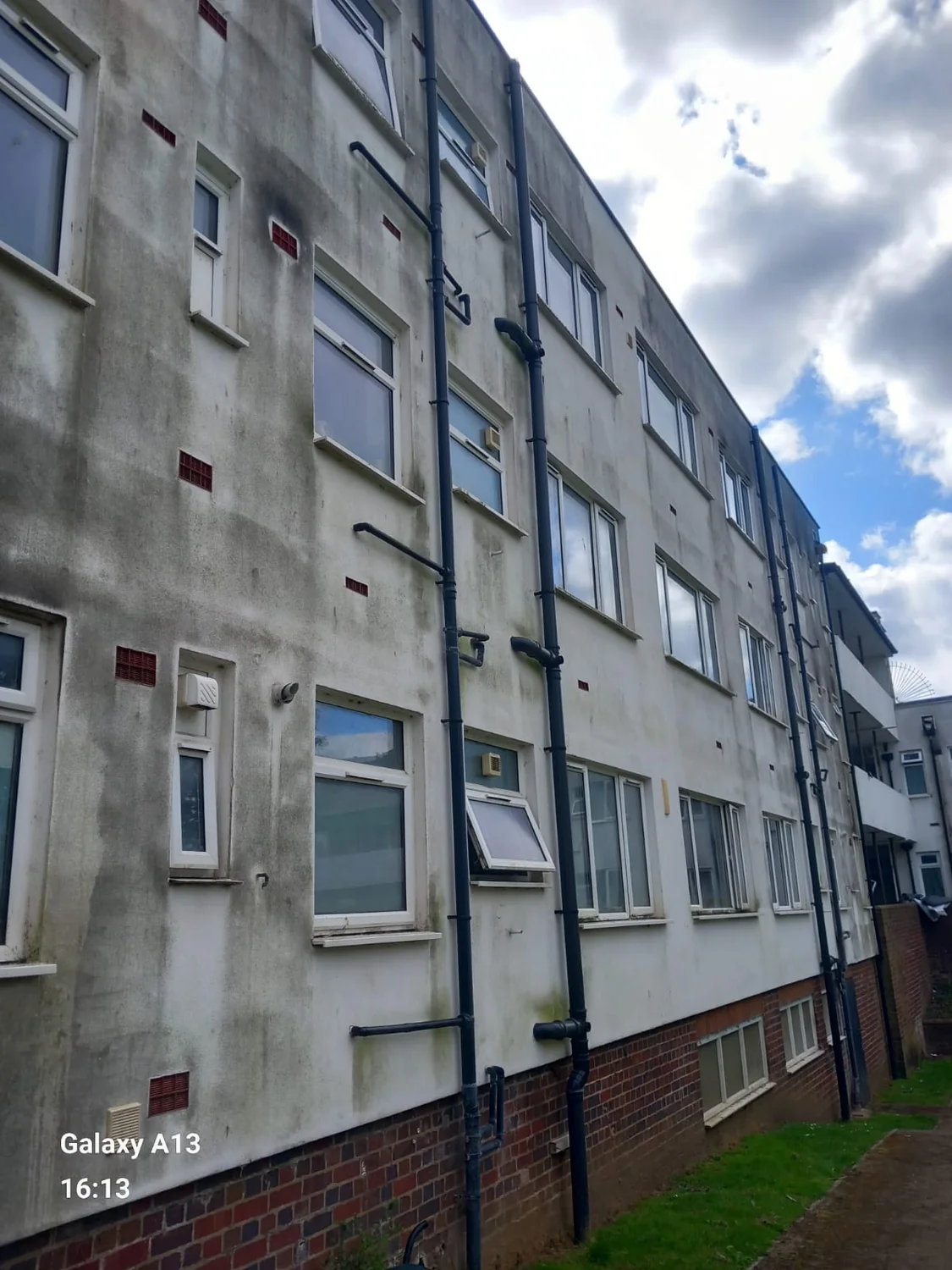
House render before cleaning - grey-green algae staining on walls
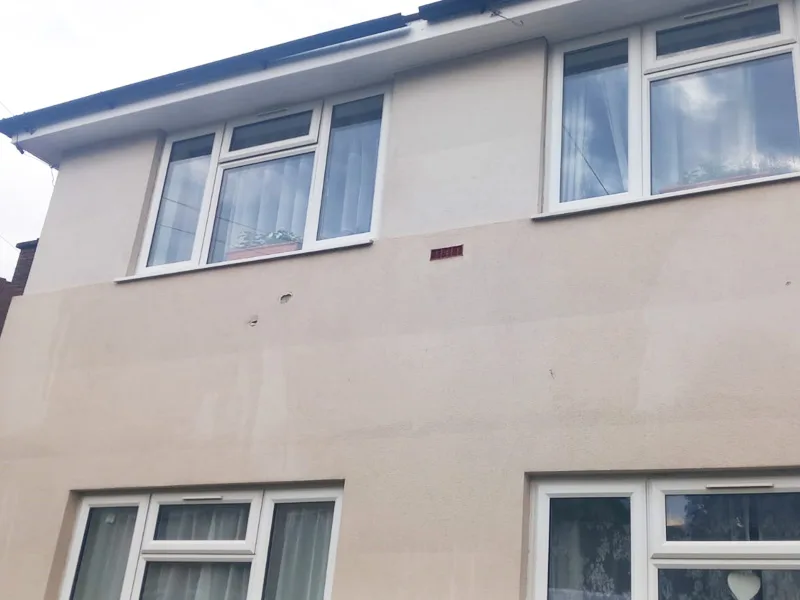
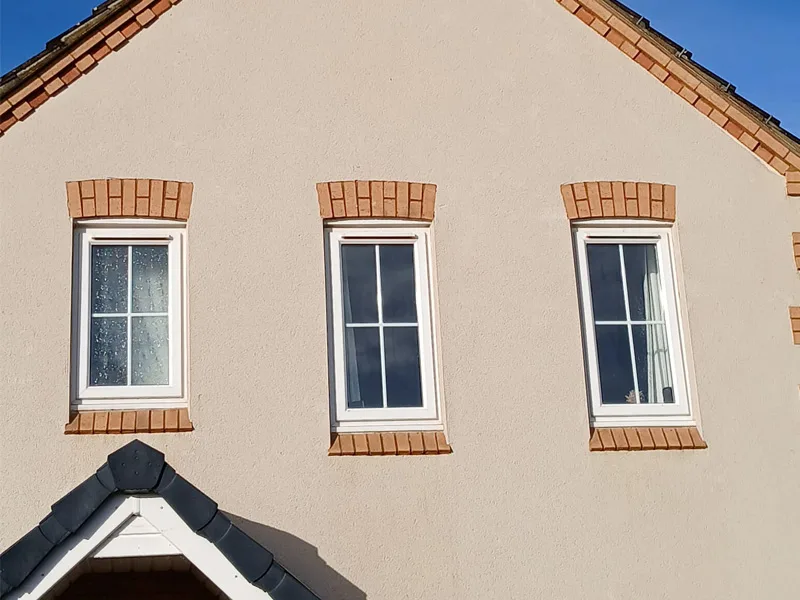
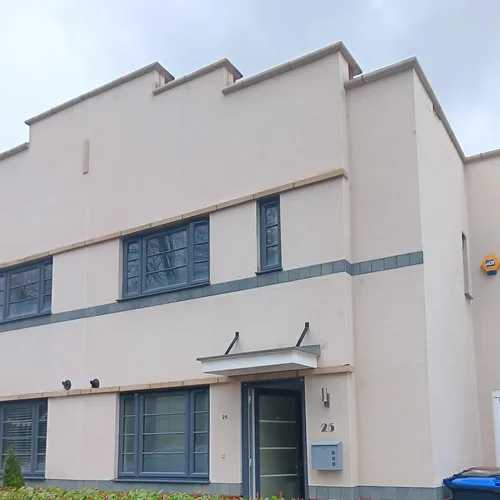
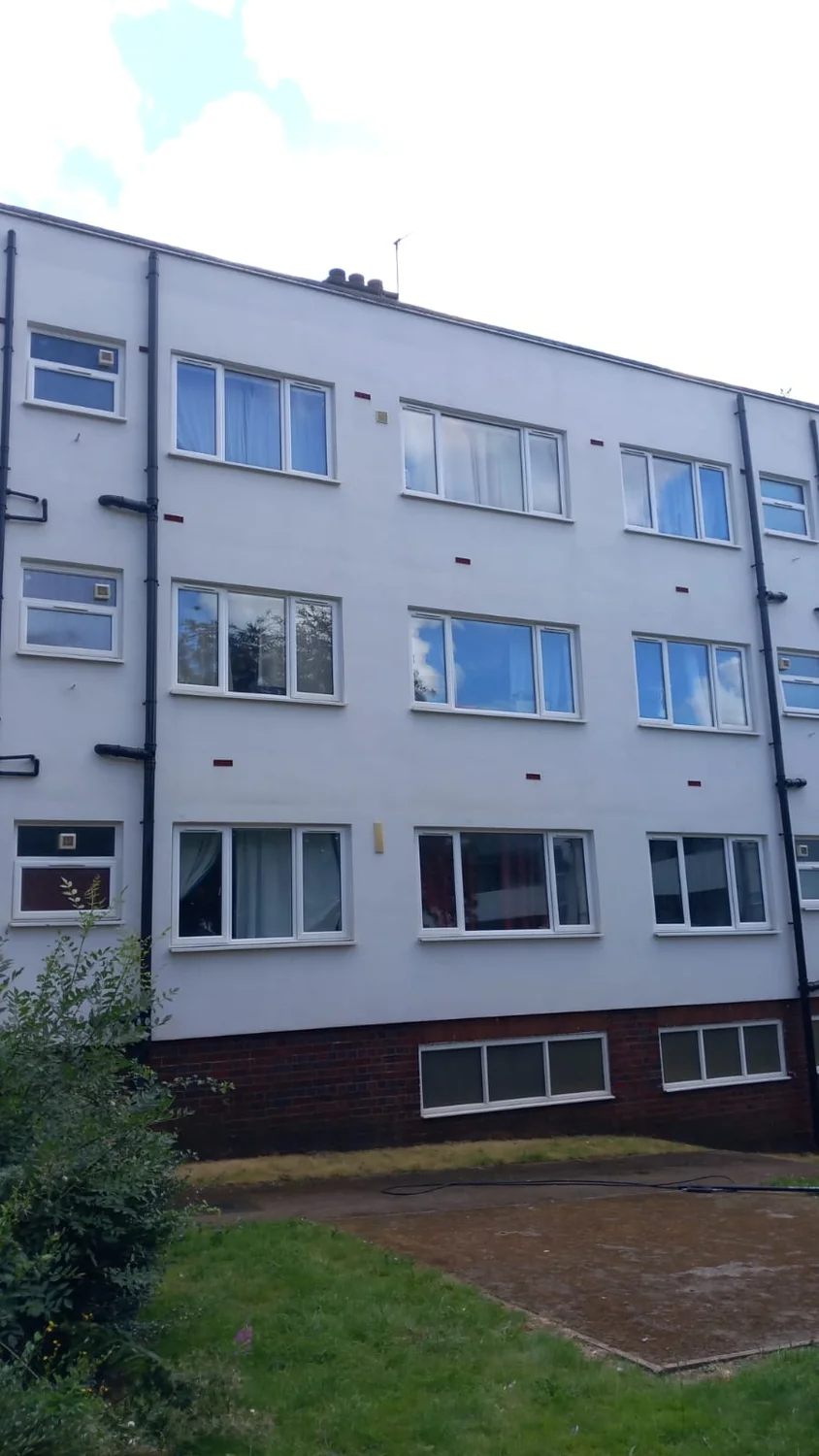
House render after soft wash cleaning - original colour restored

Black Algae & Biofilm

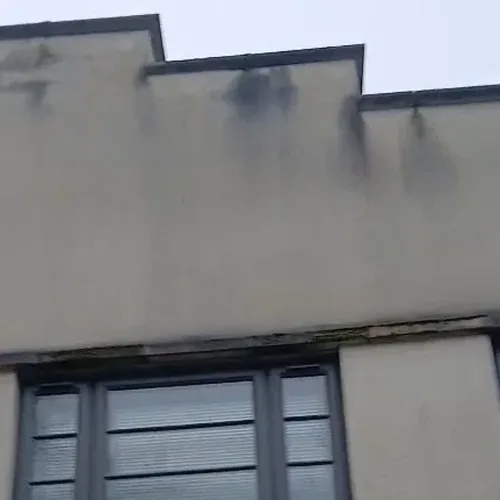
Dark grey to black streaking on render is typically produced by a diverse biofilm community - cyanobacteria, dark-pigmented fungi, and black yeasts living together. To protect themselves from UV radiation, cyanobacteria produce a dark melanin-like pigment sheath - this is the black staining we see. The biofilm darkens over time, as it also collects atmospheric soot and dust.

Removal: Sodium hypochlorite soft washing gives good results. Not only does the solution break down the protective polysaccharide sheath, but it also kills the organisms. It can take several weeks for the dark staining to go away completely - rain will wash away dead biofilm. To avoid recolonisation, we follow washing with the application of DDAC biocide.

Lichen & Atmospheric Soiling

Lichen looks like grey, white, or yellow crusty patches strongly attached to the surface. The composite organism (fungus + alga) produces organic acids that can slowly dissolve cement-based substrates. Lichen is the most difficult biological growth to remove. Even after the chemical treatment, the dead organism remains physically attached to the surface. They will weather off in a few weeks or can be carefully brushed away.

Atmospheric soiling is not biological: soot, traffic pollution, mineral dust, and pollen. It looks like an even grey discolouration. Since it's not alive, it doesn't respond to biocide; surfactant-based cleaning, along with low-pressure rinsing, must be used. Most of the time, rendered walls present a mix of biological growth and atmospheric soiling.

Get a Free Render Cleaning Quote

Call 07307 358765 for a free, no-strings-attached survey. Or Request a Quote Online

K-Rend & Monocouche Render Cleaning

K-Rend, monocouche, and other textured silicone renders are the most widespread exterior finishes on UK homes built or renovated in the last 20 years. While aesthetically pleasing when new, they collect algae faster than smooth render because the textured surface traps moisture, giving organisms more area to colonise.

The critical rule: never pressure wash textured render. Eroding the aggregate finish, high-pressure jets will make a clean/dirty line, pushing water behind the render layer. The damage is irreversible, and re-rendering is the only solution.

We only use soft washing to clean K-Rend and monocouche. Similar to a garden hose, low pressure will spread the cleaning solution into the texture but won't damage the surface. The bleach-based solution kills algae at the root level. We follow washing with the application of DDAC biocide, which inhibits regrowth for 4-5 years.

K-Rend cleaning prices start from £350. Monocouche cleaning pricing starts at £400. Using the right pressure and chemical settings each time, we also clean silicone render, acrylic render, sand/cement render, and lime render.

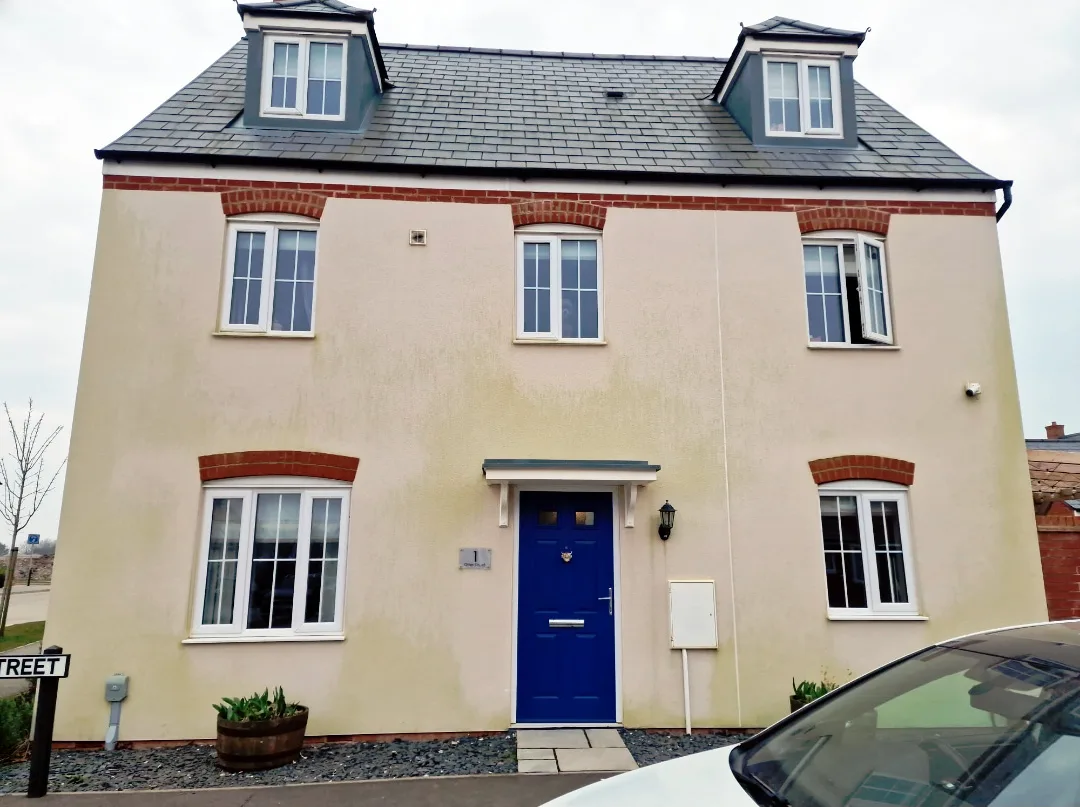
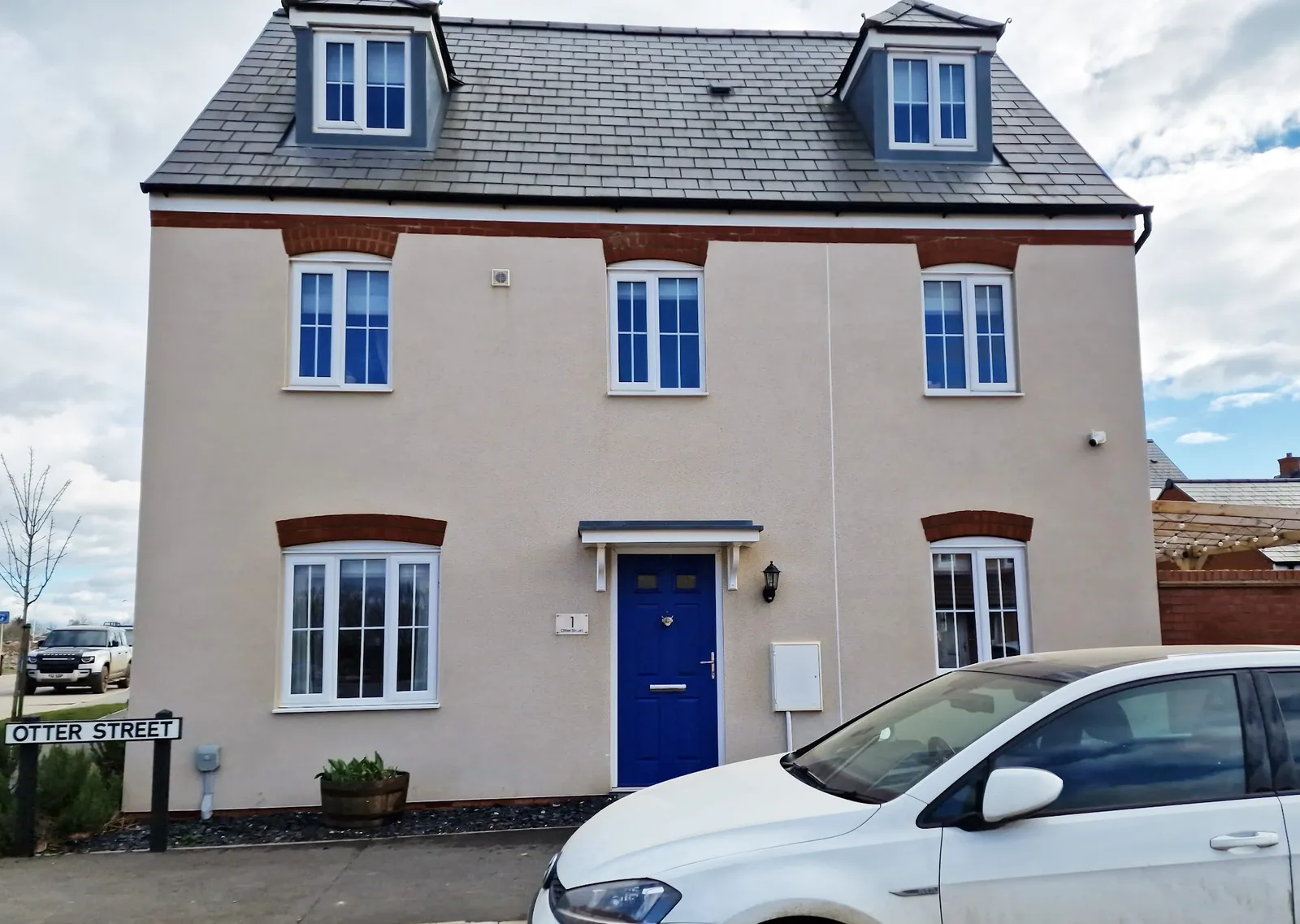
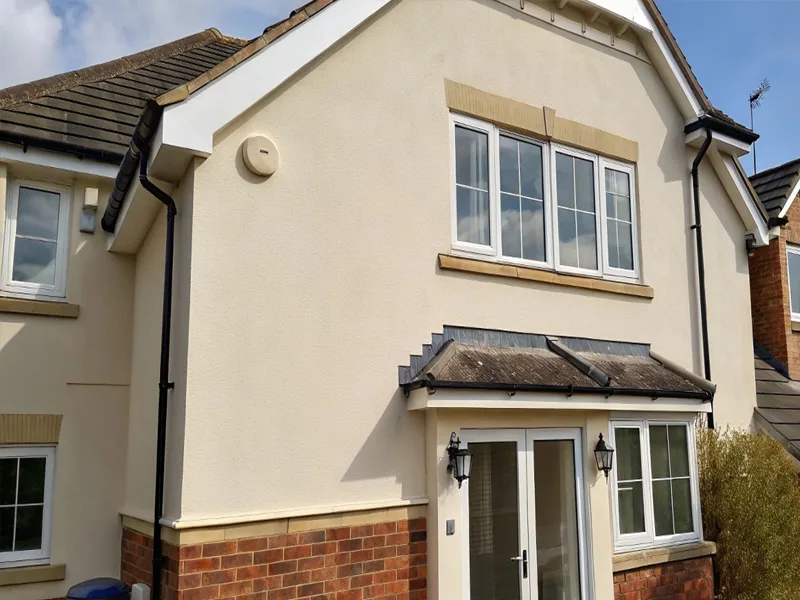
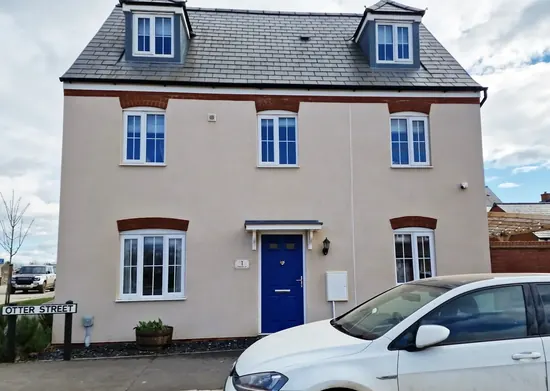
House render before cleaning - green algae on K-Rend House render after soft wash cleaning - algae removed
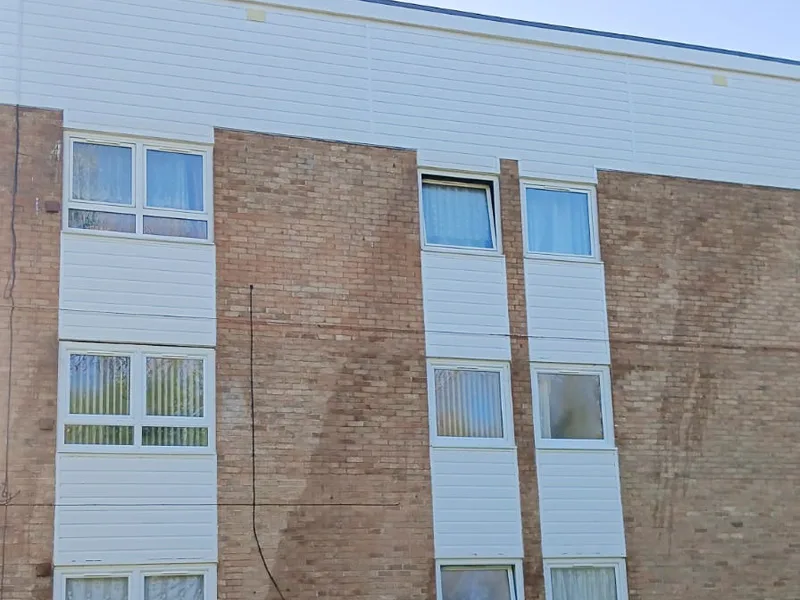
Soft wash algae removal - render panels restored

How to Clean Rendered Walls

Surf the web, and you see that, according to some, you can clean rendered walls with household products and a pressure washer. However, this will damage the render. Here's what has to be done, instead.

What works: soft washing with a sodium hypochlorite solution at 1-3% concentration, applied with a low-pressure pump sprayer. The dwelling time is 10-12 minutes, and the organic growth will be killed during that time. Low pressure is used again for rinsing the wall. To avoid regrowth, rinsing is followed by application of a DDAC biocide.

What does not work: Since it's too weak and doesn't cover consistently, household bleach diluted in a bucket won't work. Pressure washing isn't a solution either, as it damages the render. Vinegar or "eco" cleaners won't kill algae at the root level, and growth will return in a few weeks. Working only at the surface, without penetrating into porous render, paint-on mould removers are also ineffective. It doesn't matter which type of render you try to clean - white, coloured, or textured - it's the same method, with only the concentration varying.

Why professional cleaning is different: Using professional pump equipment, we evenly apply a commercial-grade sodium hypochlorite at calibrated concentrations. To prevent chemical runoff, we pre-wet nearby vegetation and cover drainage. We have a £5M public liability insurance. We always achieve the promised results.

“Had our render cleaned today and our flat roof. Great work. And great customer service. See you in a few years to keep it looking like new.”

Tracy Mould

Soft Washing for Render

Soft washing is the only adequate method for cleaning render. Unlike pressure washing, which uses 1,500-3,000 PSI, soft washing uses low-pressure water (typically 60-100 PSI). It's used with a biodegradable cleaning solution that works on a chemical level.

The Chemistry

Sodium hypochlorite (NaOCl) in solution produces hypochlorous acid - this strong oxidiser penetrates cell membranes, eliminates chlorophyll and carotenoid pigments, and breaks down the polysaccharide matrices of biofilms. The effect is immediate on green algae - it takes minutes to hours until greening is gone. Because the carotenoid pigments in red algae (Trentepohlia) are more chemically stable, it takes longer for the results to become visible.

After the Wash

There's no residual activity for sodium hypochlorite - it evaporates right after it reacts and doesn't provide any ongoing protection. After soft washing, we apply a DDAC biocide treatment. The DDAC adheres to the render surface and ensures protection for 4-5 years - it activates with every rainfall.

The two-stage strategy - NaOCl for immediate cleaning, DDAC for long-term prevention - is the industry recommendation to clean render in the UK.

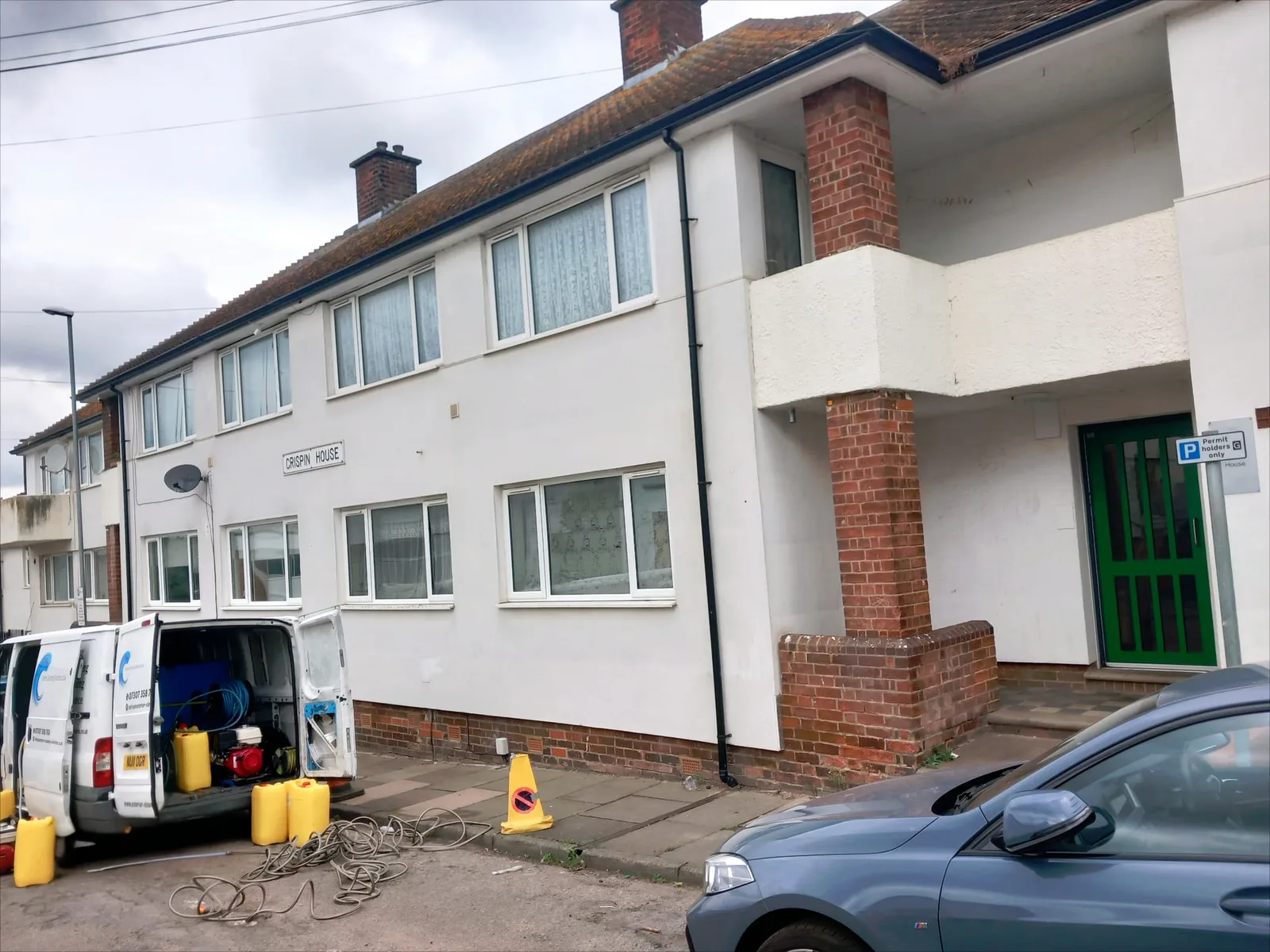
Professional render cleaning - ECS van on site with equipment

“Really happy with the results of the render, patio and drive clean and for the best price we could find. They came out super quick. Couldn't be happier.”

Alex M

Interested in a render cleaning quote? Call 07307 358765 or request one online. Free survey, no deposits, 100 five-star Google reviews.

Render Types We Clean

Silicone Render (K-Rend)

In modern UK homes, this is the most widespread textured render. Pressure washing is never used - only soft washing. At standard soft-wash concentrations, silicone surfaces typically tolerate sodium hypochlorite. Cleaning starts from £350.

Monocouche Render

Single-coat through-coloured render. High pressure may expose the aggregate and irreversibly alter its appearance, so cleaning is done with utmost care. To avoid bleaching, a soft wash is used, with a lower dwell time. Cleaning from £400.

Sand & Cement Render

This is the traditional rendered finish. While more robust than silicone renders, it's still cleaned with soft washing and not pressure. Biocide treatment is effective on cementitious surfaces. Cleaning prices start from £300.

K-Rend Monocouche Silicone render Sand/cement Acrylic render Lime render Painted render Pebbledash

Render Cleaning Results

Before and after photos from real render cleaning jobs. Click any image to view full size.

Interested in a render cleaning quote? Call 07307 358765 or request one online. Free survey, no deposits, 100 five-star Google reviews.

Professional Render Cleaning Service

100 five-star Google reviews. £5M insurance. No upfront deposits.

Specialist Knowledge

We analyse and identify the type of growth on your render (green algae, red algae, biofilm, lichen, or atmospheric soiling) and choose the right treatment concentration and strategy. Different approaches are used on different organisms - one-size-fits-all cleaning never works.

Vegetation Protection

Sodium hypochlorite can affect plants. Before we begin, we protect the nearby vegetation by pre-wetting it and covering sensitive areas. We protect the garden, drainage, and close water features by efficiently managing the chemical runoff.

Transparent Pricing

Free site survey - written, transparent estimate on the same day. Semi-detached houses start from £350, detached from £500. Full house exterior packages from £800. You always pay what we estimate.

Results That Last

We include DDAC biocide treatment as standard in every render clean - we don't do a cosmetic wash that makes render look dirty in 6 months. Our cleaning inhibits regrowth for 4-5 years. Building protection in 6-12 months, the biocide activates every time it rains.

For commercial render cleaning (apartment blocks, offices, retail), see our commercial exterior cleaning service.

Render Cleaning Reviews

Rated 5.0 out of 5 on Google from 100 verified reviews.

“I recently had the exterior of my house cleaned and I'm so impressed with the results. The render clean has completely transformed the look of my home, it genuinely looks like new again. Pete and his team were professional, punctual, and took great care with the work.”

Sharon Moore - Peterborough

“An absolute star. Helpful from start to finish and I'm so pleased with the results. My driveway looks brand new and all done with a smile! Highly recommended!”

Claire Bridges

“Peter is lovely. Considerate and friendly and kept me updated. Very good value and did a great job.”

Nicola Knight

“Great work. Carried out on the day we agreed and done to a high standard. Very friendly and helpful with suggestions. Recommended.”

Simon Bardell

Frequently Asked Questions

K-Rend and similar textured silicone renders should only be cleaned with soft washing - low-pressure water with a biodegradable bleach-based cleaning solution. High-pressure jets alter the texture and push water behind the render, so we never use them. Soft washing is followed by application of DDAC biocide treatment that inhibits algae regrowth for 4-5 years. As it's textured, the K-Rend absorbs moisture and organic matter and collects algae faster than smooth render.

Monocouche (single-coat) render is cleaned just like K-Rend - low-pressure soft washing with a bleach-based solution and a DDAC biocide treatment afterwards. Low pressure is vital - since monocouche is a through-coloured render, the colour goes all the way through. High pressure can damage the surface and expose the aggregate beneath, altering the appearance irreversibly. Soft washing removes algae, lichen, and staining and preserves the finish, too.

Green staining on render is caused by Desmococcus algae - this is a single-celled organism that grows on any damp surface. It thrives on walls facing north and east, as they get less direct sunlight. It also grows on textured renders, such as K-Rend, which absorb moisture through their porous structure. Areas near trees, hedges, and fences are more humid, and growth is accelerated. The UK climate - mild, wet, and overcast for much of the year - also makes a perfect environment for green algae.

Typically, red or orange staining is Trentepohlia algae - a filamentous organism that produces carotenoid pigments, which result in the vibrant rust-red colour. Many mistake it for rust or iron oxide. Because its filaments penetrate deeper into porous render, Trentepohlia is more difficult to remove than green algae. Plus, bleaching doesn't remove the carotenoid pigments. For effective treatment, soft washing is mixed with sodium hypochlorite, and a second application may be necessary after 1-2 weeks. It can take days to weeks for the orange stain to fade.

Render cleaning pricing starts from around £350 for a standard semi-detached house. Larger detached properties typically cost £500 to £800. Full house exterior packages (render, roof, gutters, patio) start from £800. Soft washing, DDAC biocide treatment, and vegetation protection are all included in the price. We offer free site surveys, and you only pay what we estimate.

Every 3-5 years for most properties. The aspect and environment directly affect the frequency of cleaning. Walls facing north and properties under a canopy collect algae more quickly, so cleaning is needed more often. Cleaning is followed by application of a DDAC biocide treatment that inhibits regrowth for 4-5 years. Therefore, the interval between cleans will be greatly extended. Since red algae (Trentepohlia) may reappear more quickly than green algae, these properties will require cleaning sooner.

No - not with high pressure. High-pressure washing poses significant risks: damaging textured render, stripping paint from smooth render, and pushing water behind the render, causing dampness. We only use soft washing for render - low-pressure water (similar to a garden hose) with a cleaning solution that works on a chemical level. This is the industry strategy recommended for all render types.

Where We Work

Based in Northampton, but we can travel up to 90 minutes for render cleaning jobs.

For our Northampton residential service with full postcode coverage, see Exterior Cleaning in Northampton.

For commercial render cleaning (apartment blocks, offices), see Residential Block & Housing Association Cleaning.

Get Your Free Quote

Fill in the form below and we'll get back to you within 24 hours.

Get Your Free Quote

Fill in the form below and we'll get back to you within 24 hours.