
Residential Block Management Exterior Cleaning - Northampton (March 2026)
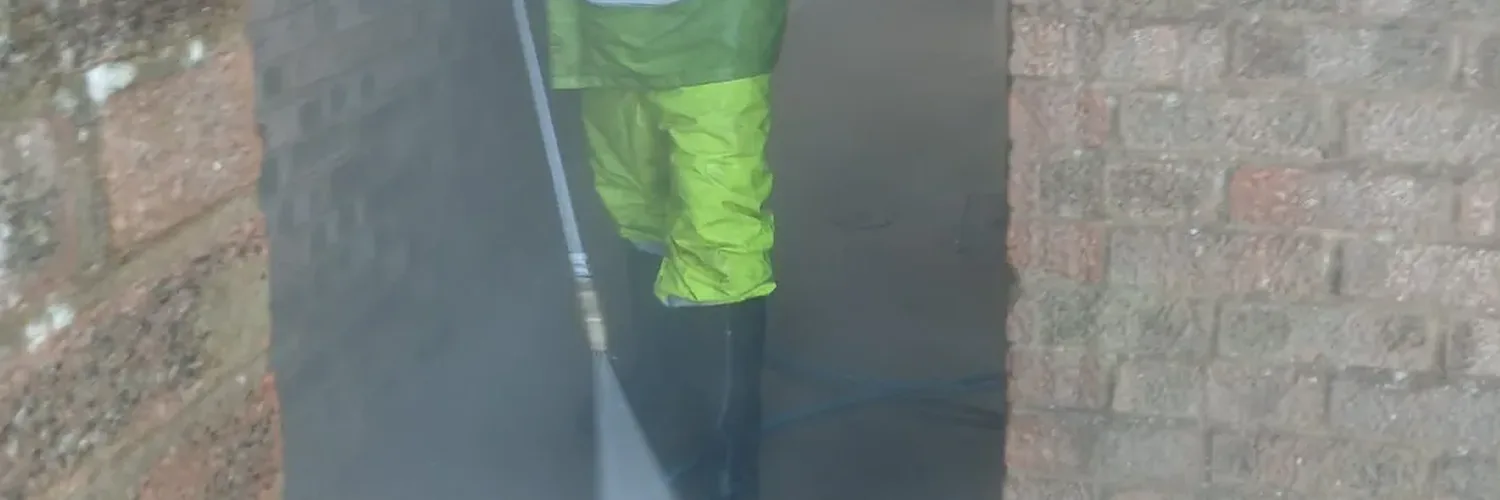
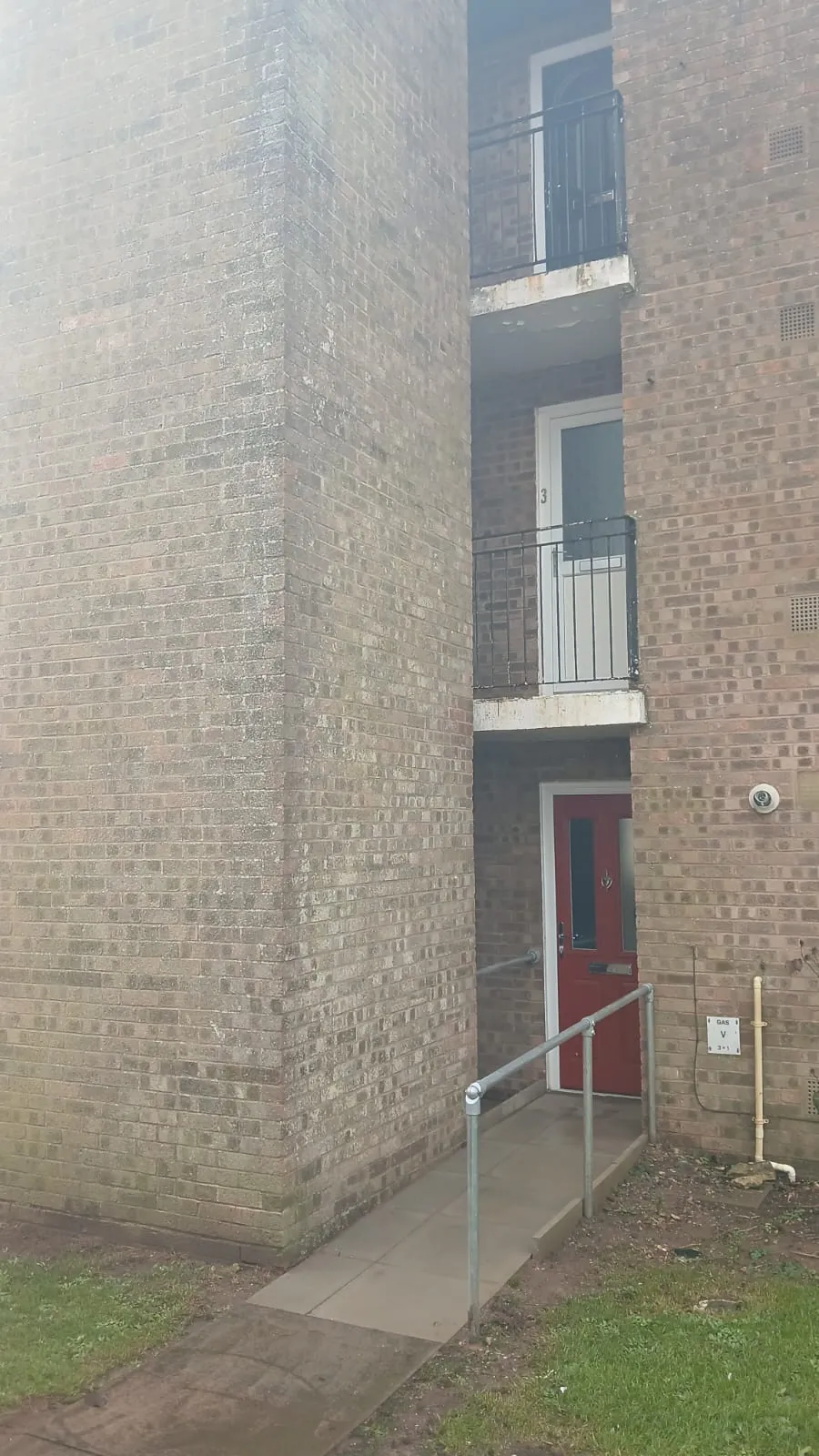
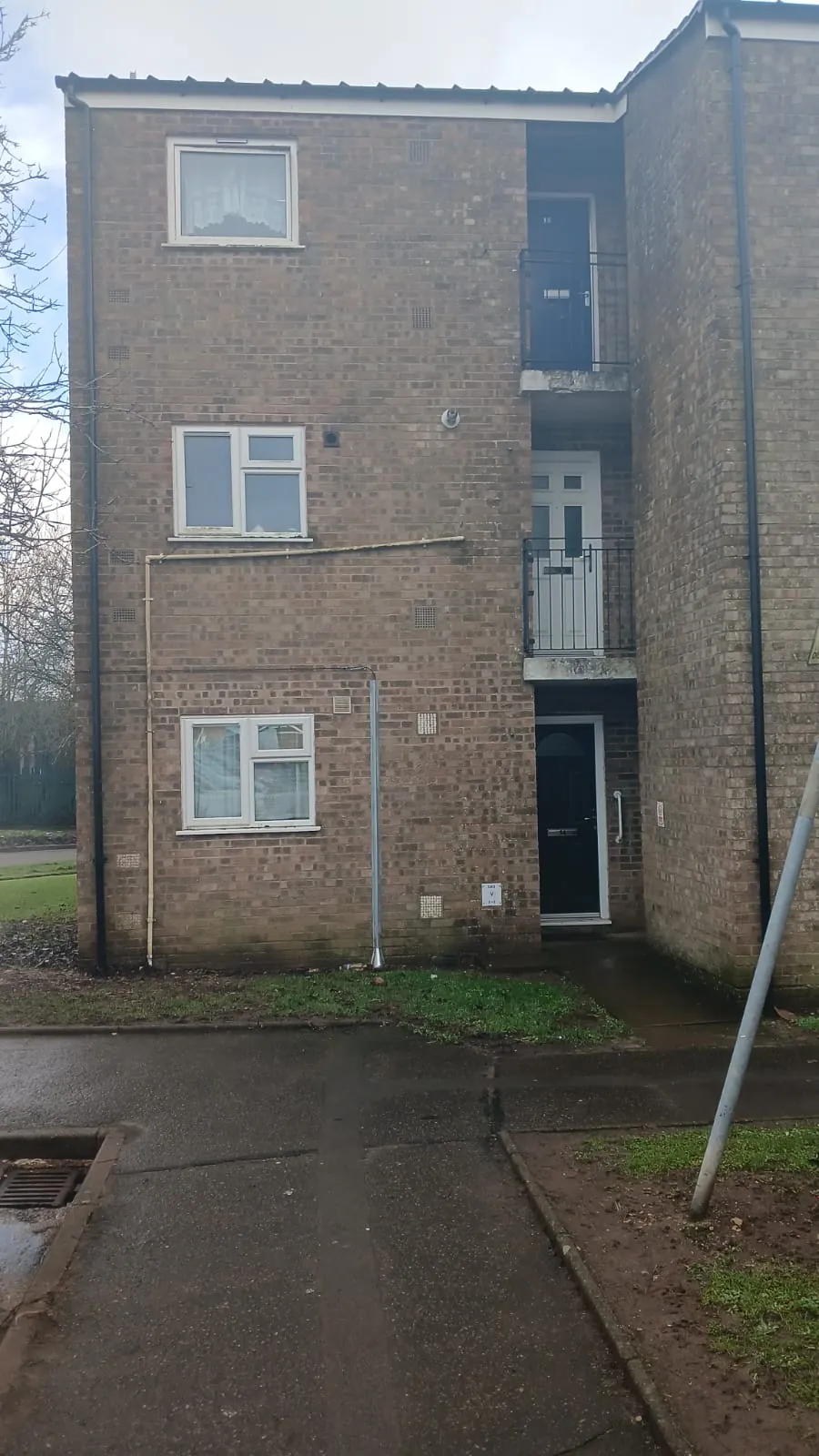
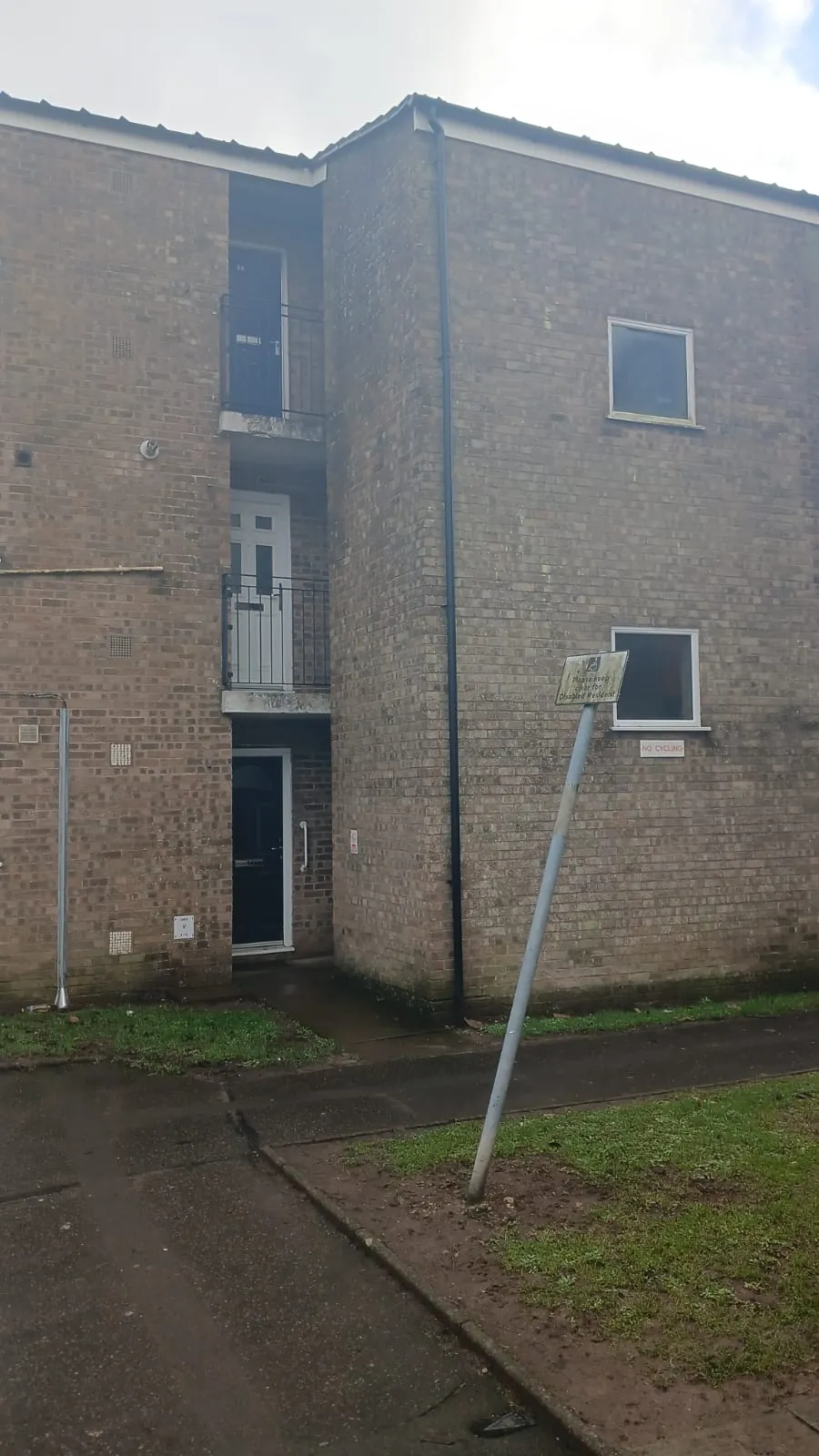
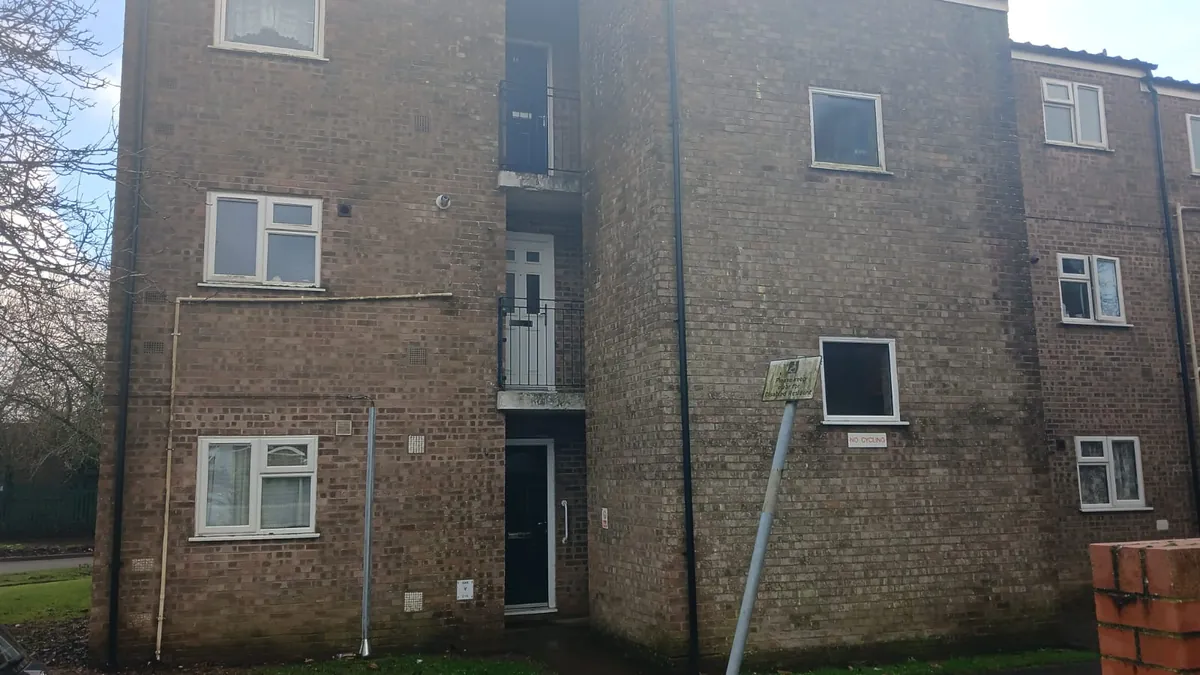
In March 2026, we recorded the cleaning of the multi-surface exterior of a residential apartment block in Northampton. If we had to use just one word to describe the project, “complex” would be it. Our team had to clean the buff brick facades across several elevations, interior brick undercroft passageways, concrete stairwells, balcony ledges, front porches and concrete pathways - ideally in just one coordinated visit.
The project was typical of what we do for housing associations, local councils, and residential block management companies. One visit, one team, one quote, one written report - but every exterior surface cleaned. Nothing the residents see coming in and out of the building was missed.
The project in a nutshell
- Client type: Residential block management / housing association contract
- Location: Northampton, Northamptonshire (multi-storey apartment block)
- When: March 2026
- What surfaces we cleaned:
- Buff brick exterior facades (multiple elevations)
- Brick undercroft passageways and entrance areas
- Concrete stairwells and steps
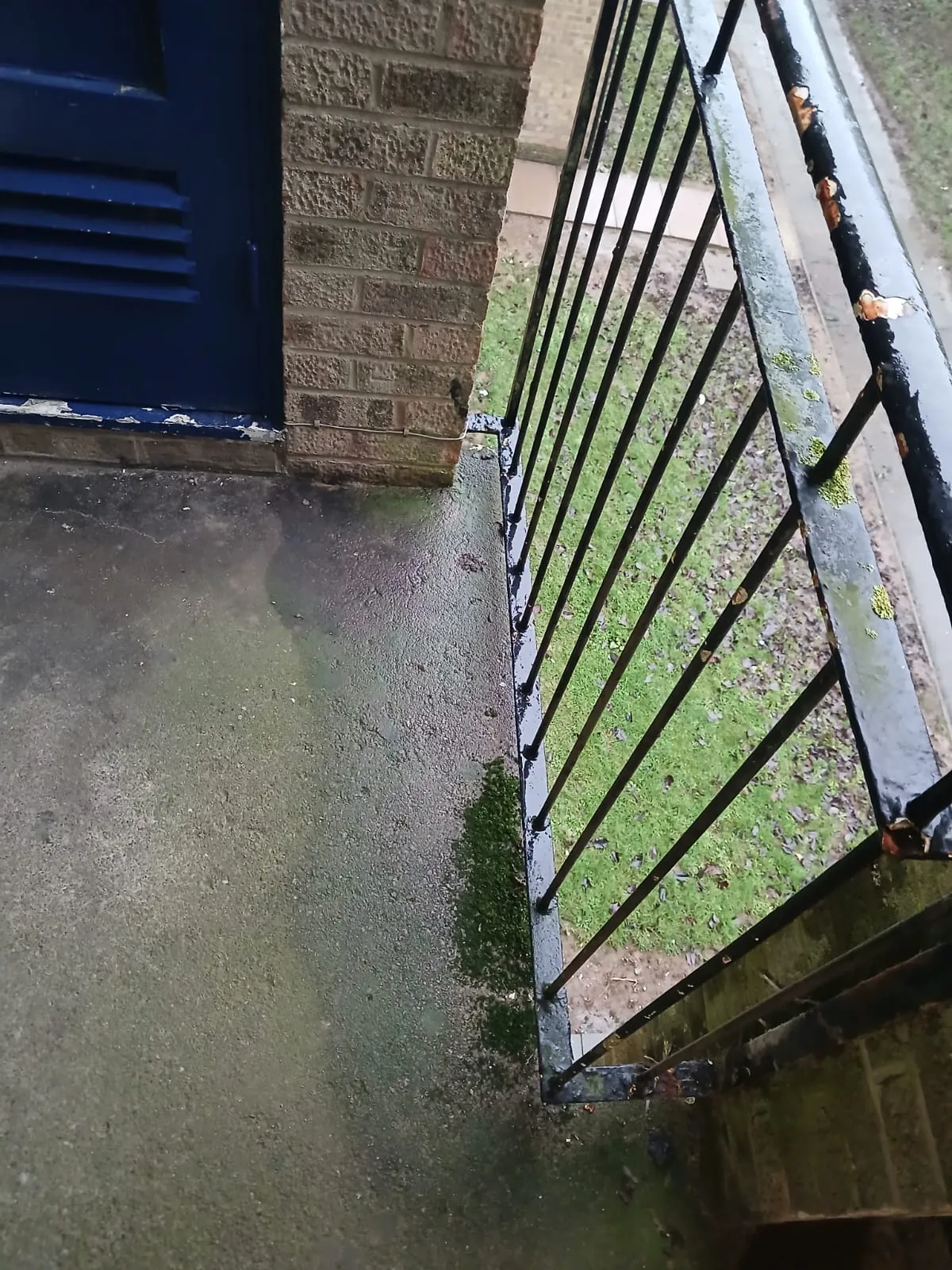
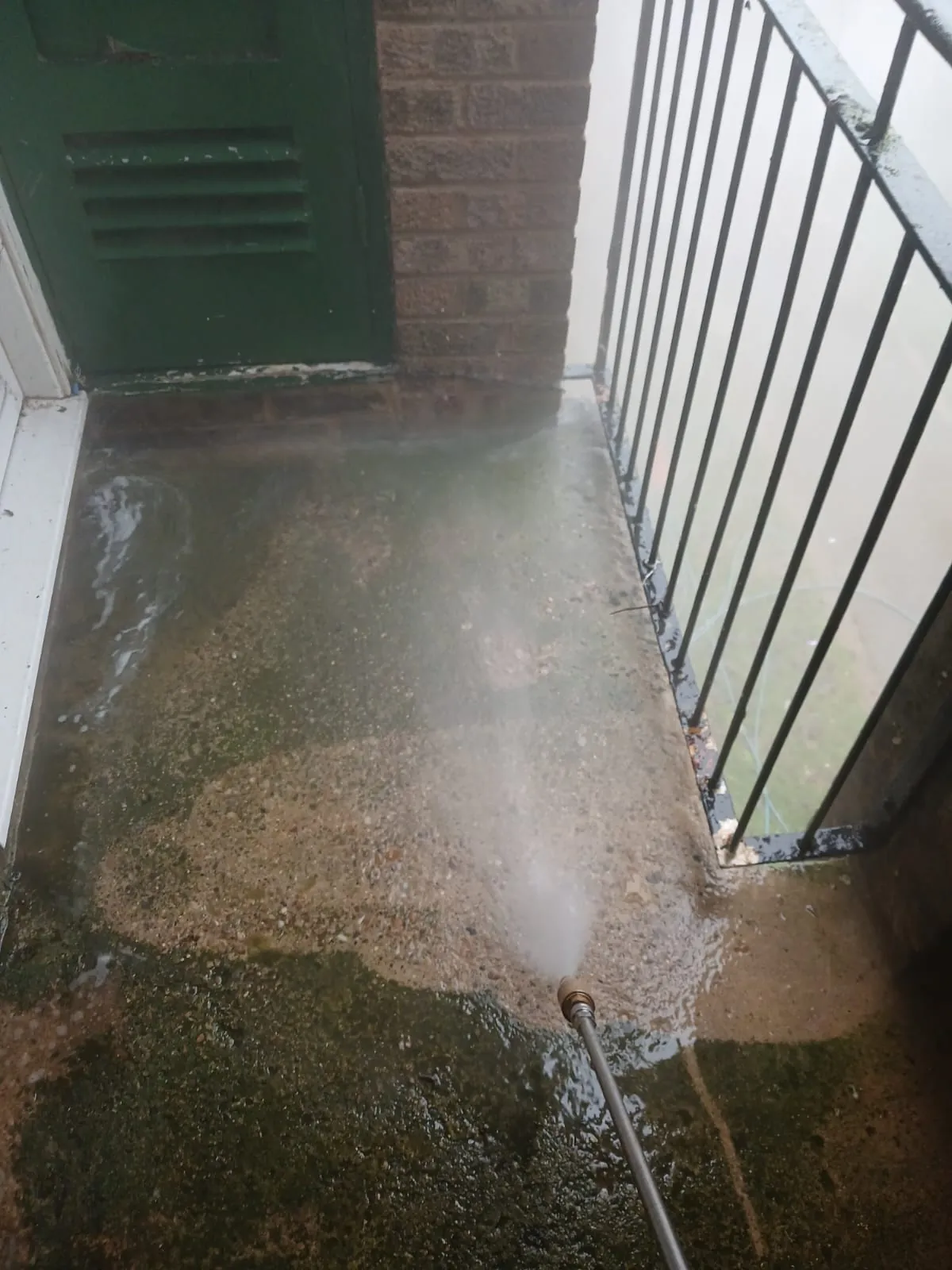
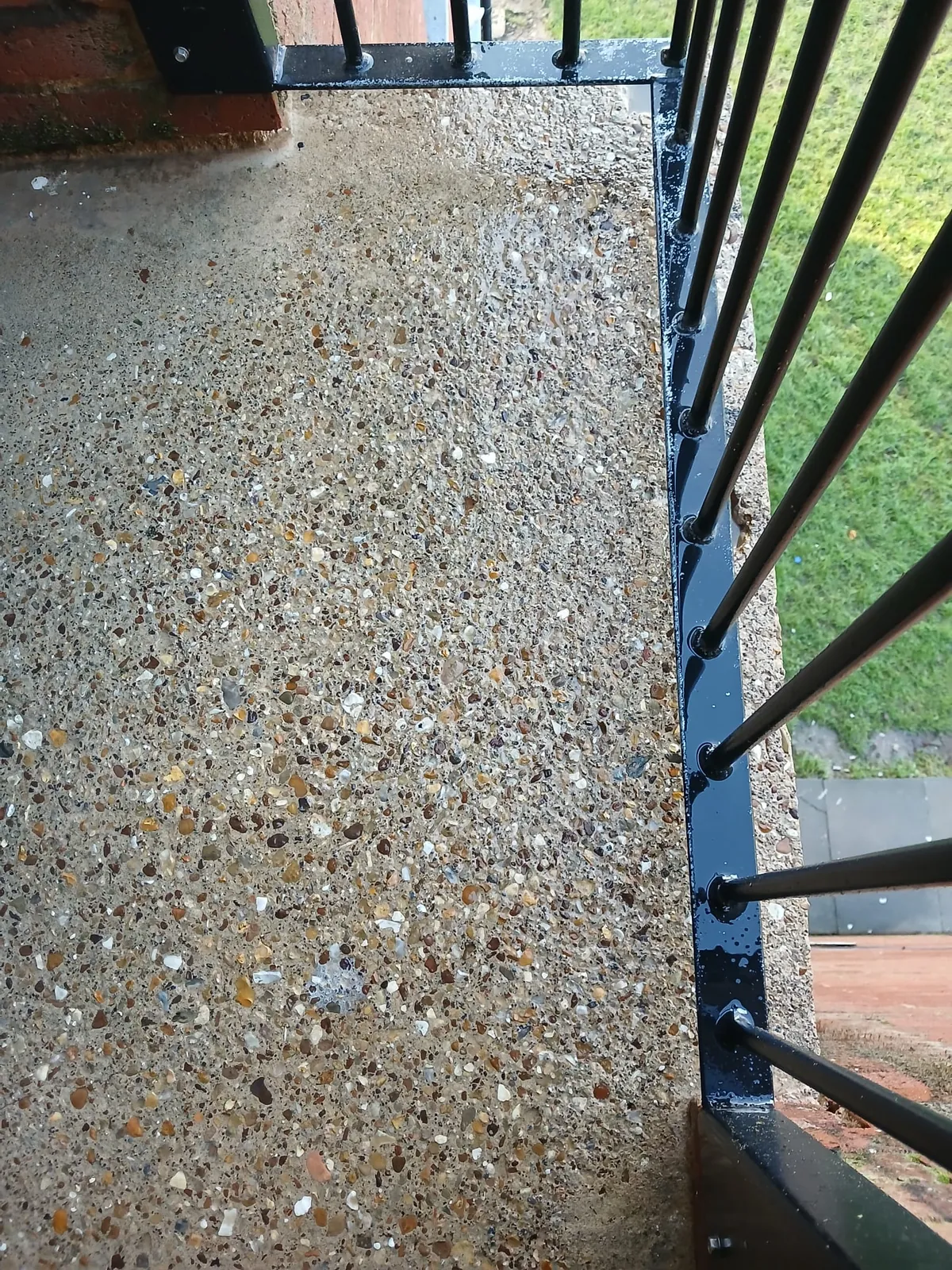
- Concrete balcony ledges and exposed aggregate landings
- Front porches, doorsteps and entrance thresholds
- Concrete pathways and access ramps
- Red brick walls with UPVC windows
- How did we do it: On the brick facades we used soft washing with sodium hypochlorite. We refreshed concrete surfaces with hot-water pressure washing and applied DDAC biocide treatment throughout.
- Access: We worked from ground level using telescopic poles and accessed upper elevations with ladders.
- We provided documentation: Full RAMS, COSHH data sheets, and a written report with before-and-after photos.
The biggest hurdle
We have enough experience to know that cleaning managed blocks is not the same as cleaning a house exterior. The most obvious difference is that residents typically use the building while we clean. That means we can’t block access routes, stairwells, entrances, and walkways, and we can’t leave slippery wet concrete behind. Residents must still be able to use the access safely.
Another challenge is the sheer number of surface types in even a small area. We go from buff brick facades to concrete steps to sandstone pathways. Tricky, right? Not when your cleaning team is well-versed and on-site with the right tool kit.
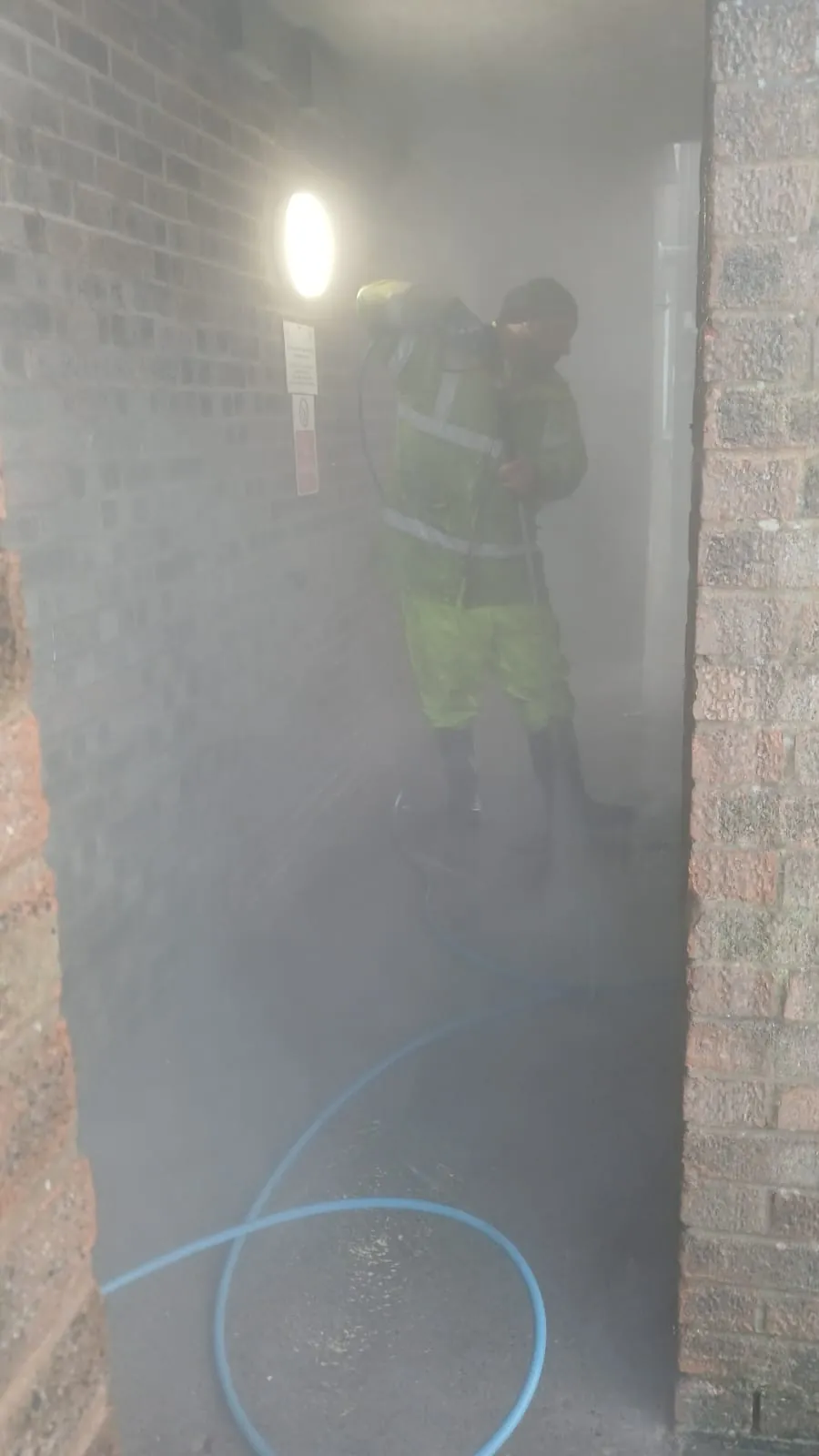
Inside undercrofts, spaces are confined. You don’t need to be a professional cleaner to understand that pressure washing inside a brick passageway produces a lot of mist, noise, and little to no visibility. PPE and proper ventilation are key - it’s hard to find another open-air job that needs them as much as this one.
There’s no point cleaning a communal area unless you do it evenly. Patchy work makes everything look “unfinished”, and complaints follow shortly after. Cleaning all surfaces to a consistent standard was vital to our results.
Last, but not least, block managers are sticklers for paperwork. RAMS, COSHH sheets, and photographic documentation of our work cannot be missing from their compliance files. Consider it done.
How did we tackle it?
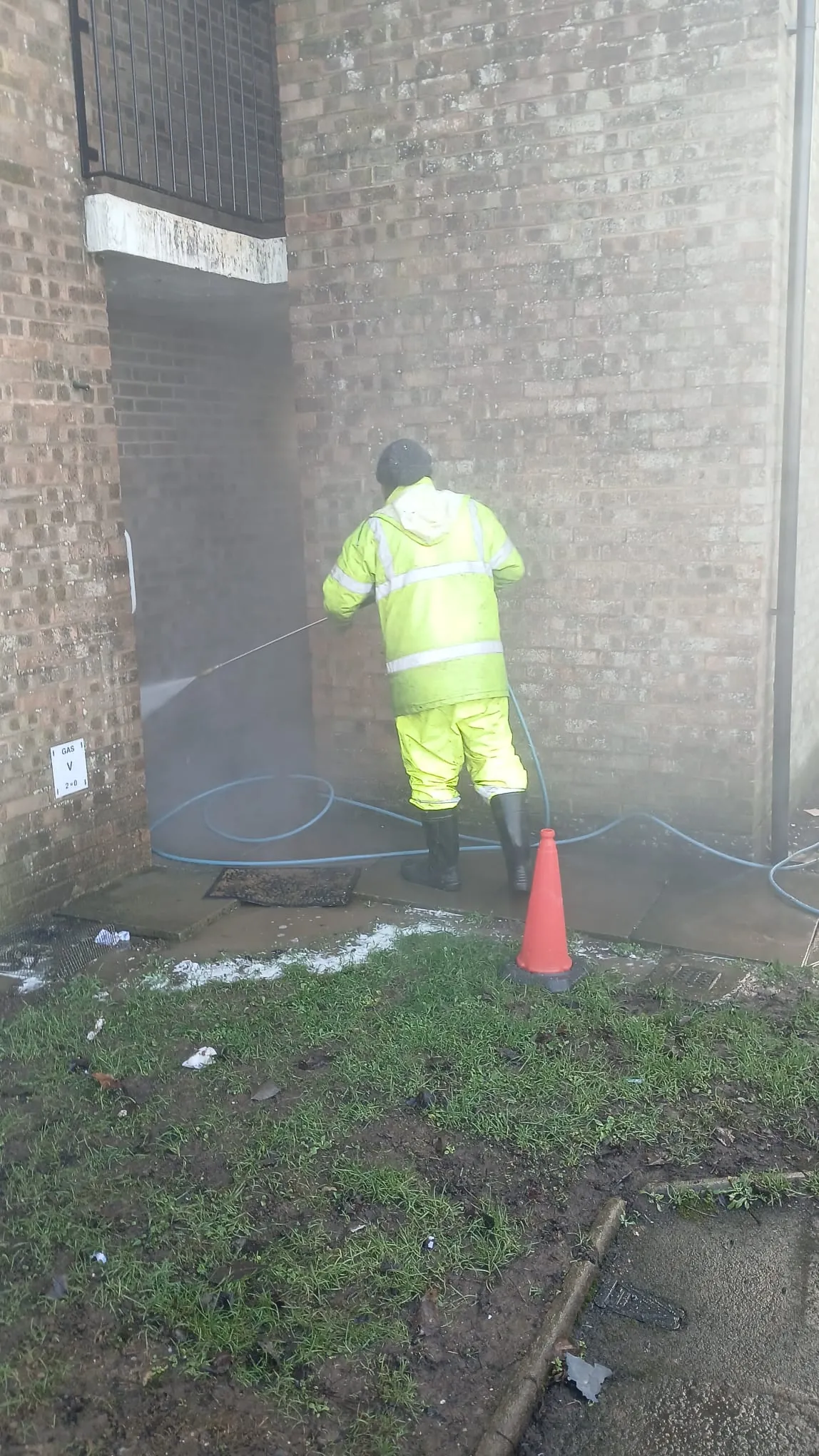
Being meticulous gives you a good start, so we planned the cleaning down to the smallest detail. We cleaned one elevation, stairwell and walkway at a time. Remember, residents still had to access the building - so we didn’t progress across the site, but through it, keeping dry surfaces ahead of us and wet ones behind.
We weren’t scarce with traffic cones, hoses, and warning signs - our team used plenty of them to mark the start of every zone. PPE on, water and power sources in place, and the on-site contact gave us the green light for the access routes.
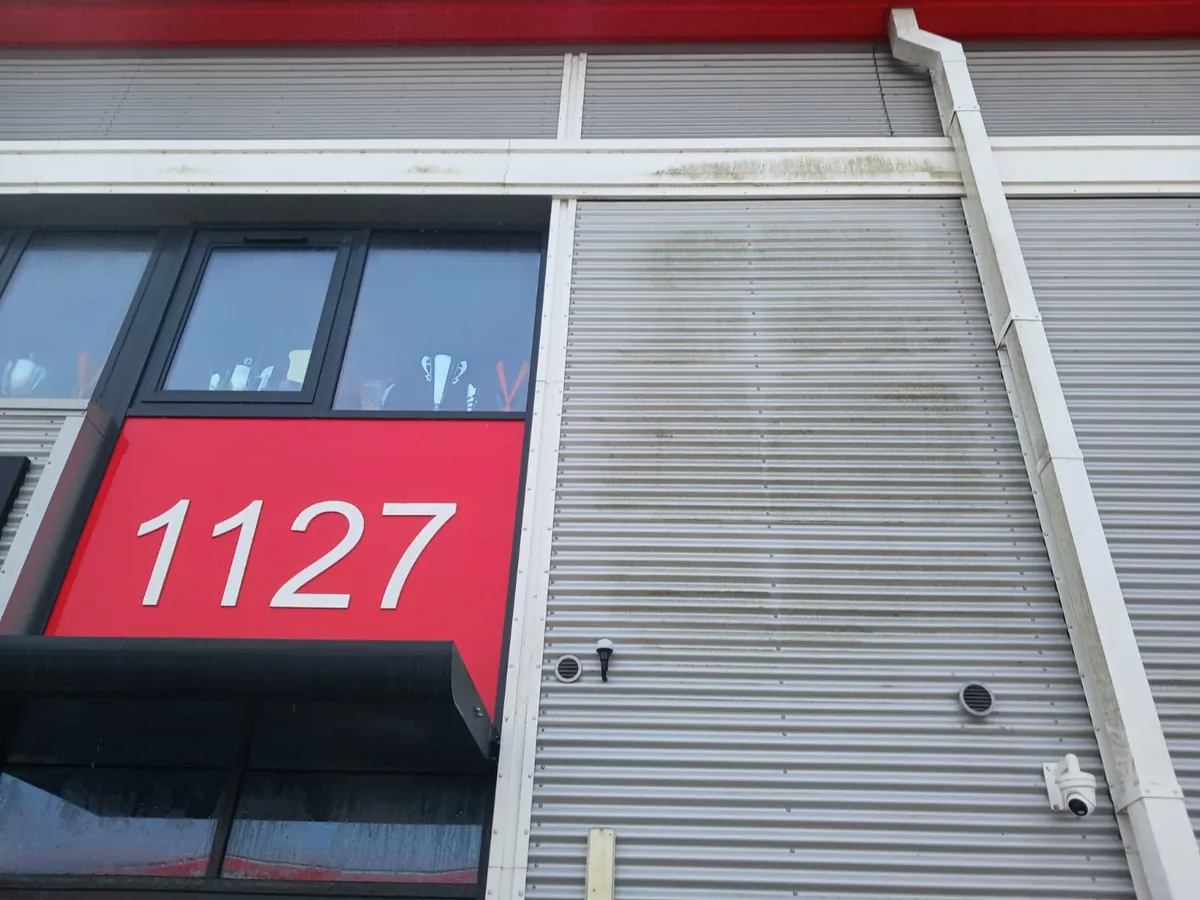
The buff brick facade cleaning began with a sodium hypochlorite solution applied at low pressure across the brick elevations. Then a break for dwell time - the solution needed time to break down years of algae, lichen and atmospheric soiling. Rinsing was no problem; we did it from ground level with telescopic equipment.
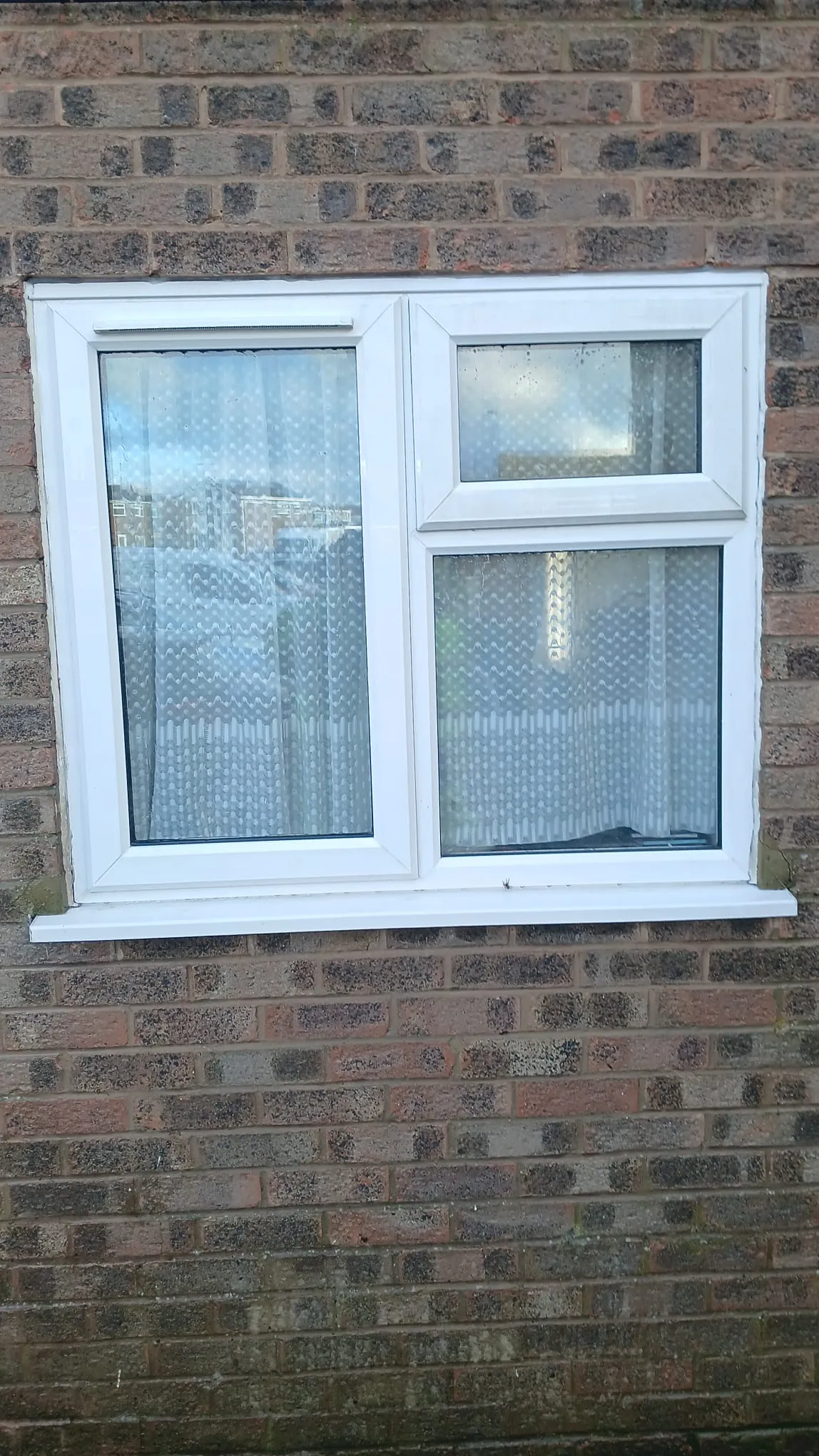
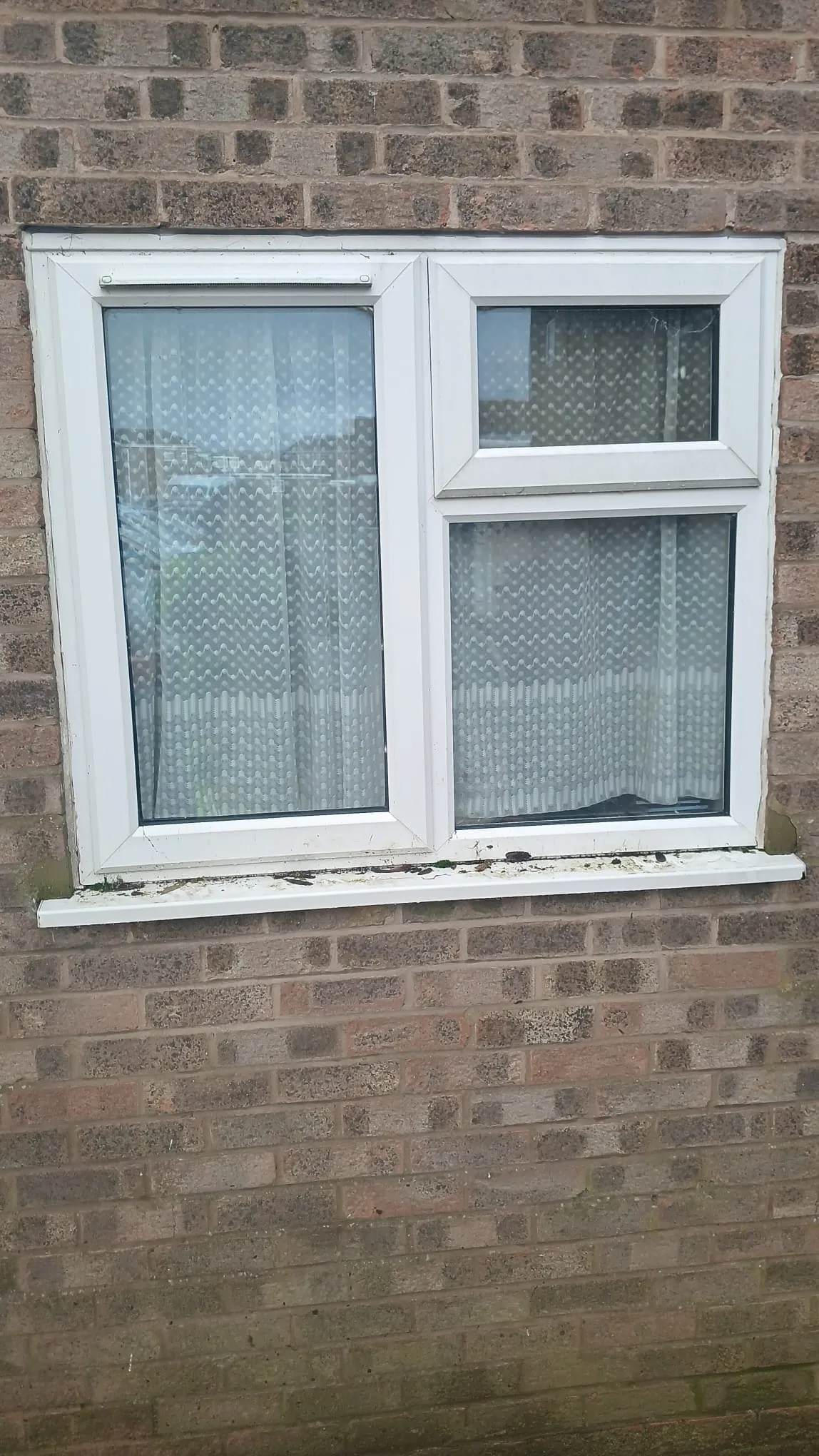
Red brick window surrounds also needed our attention. On the individual brick areas around the UPVC windows, algae had colonised the sills and lower brickwork. We handled it with a targeted soft wash.
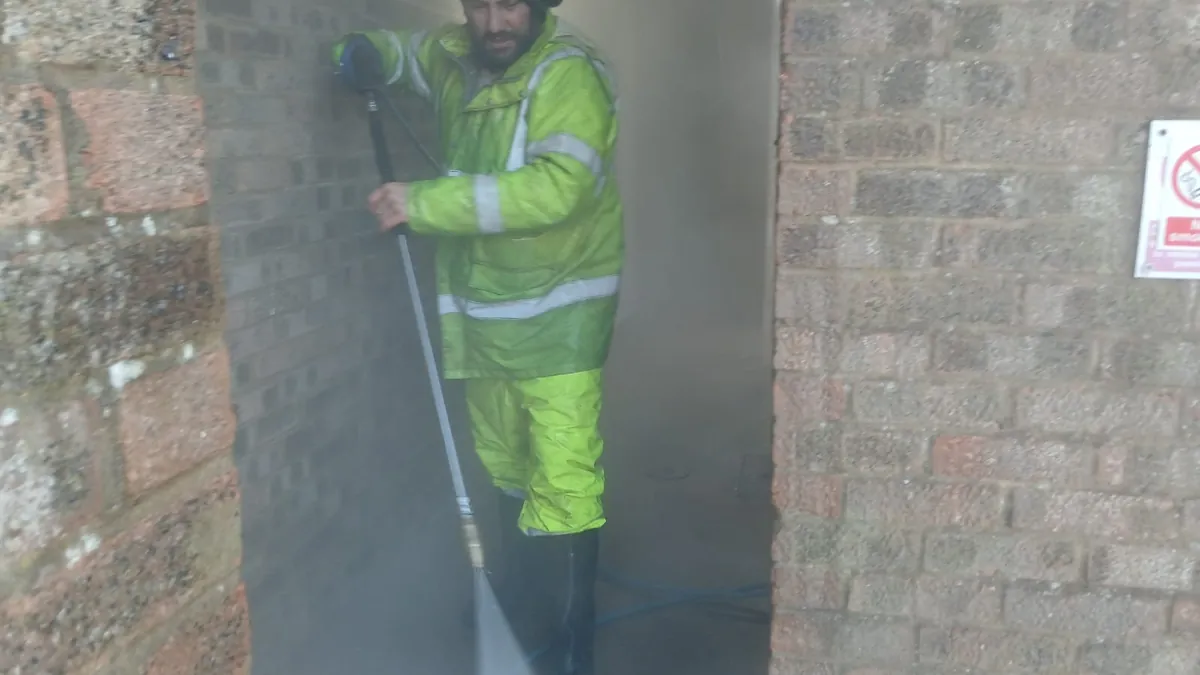
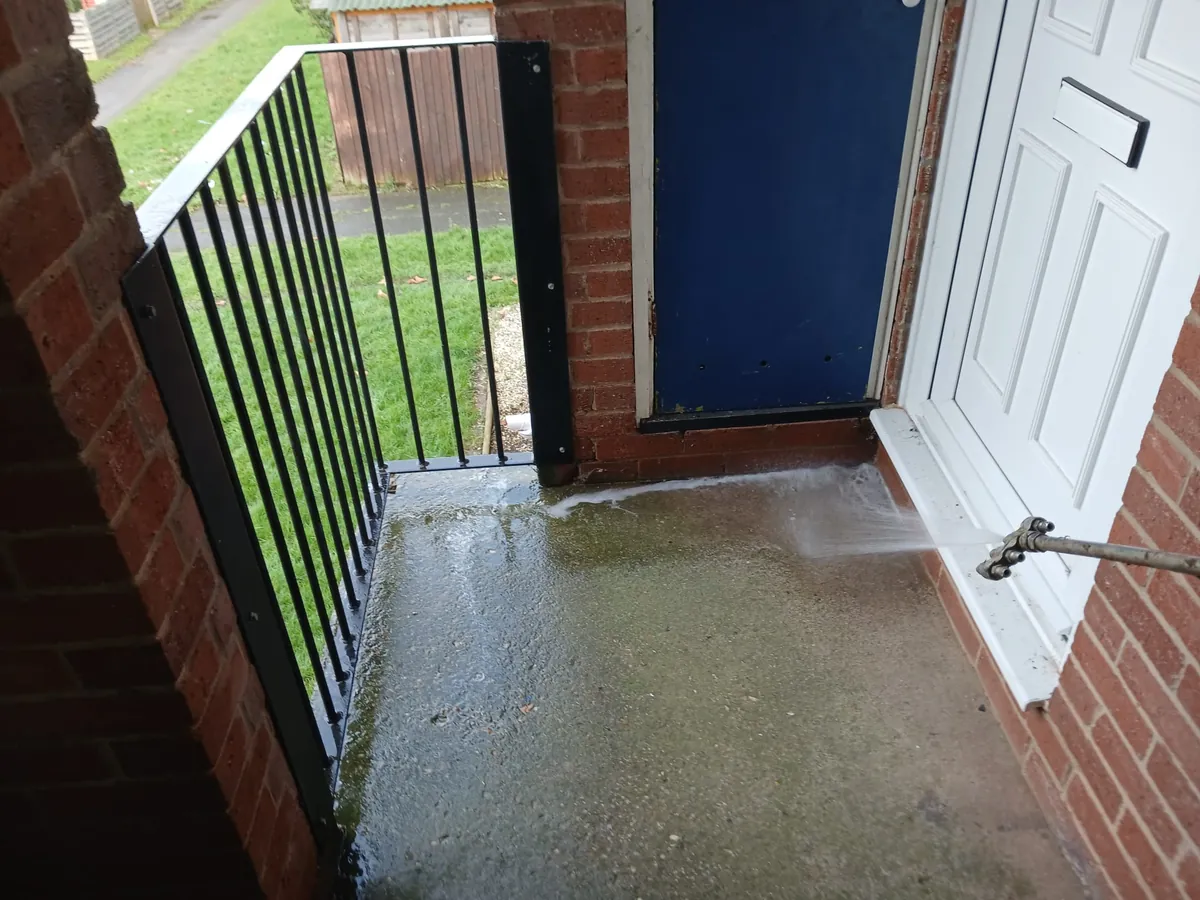
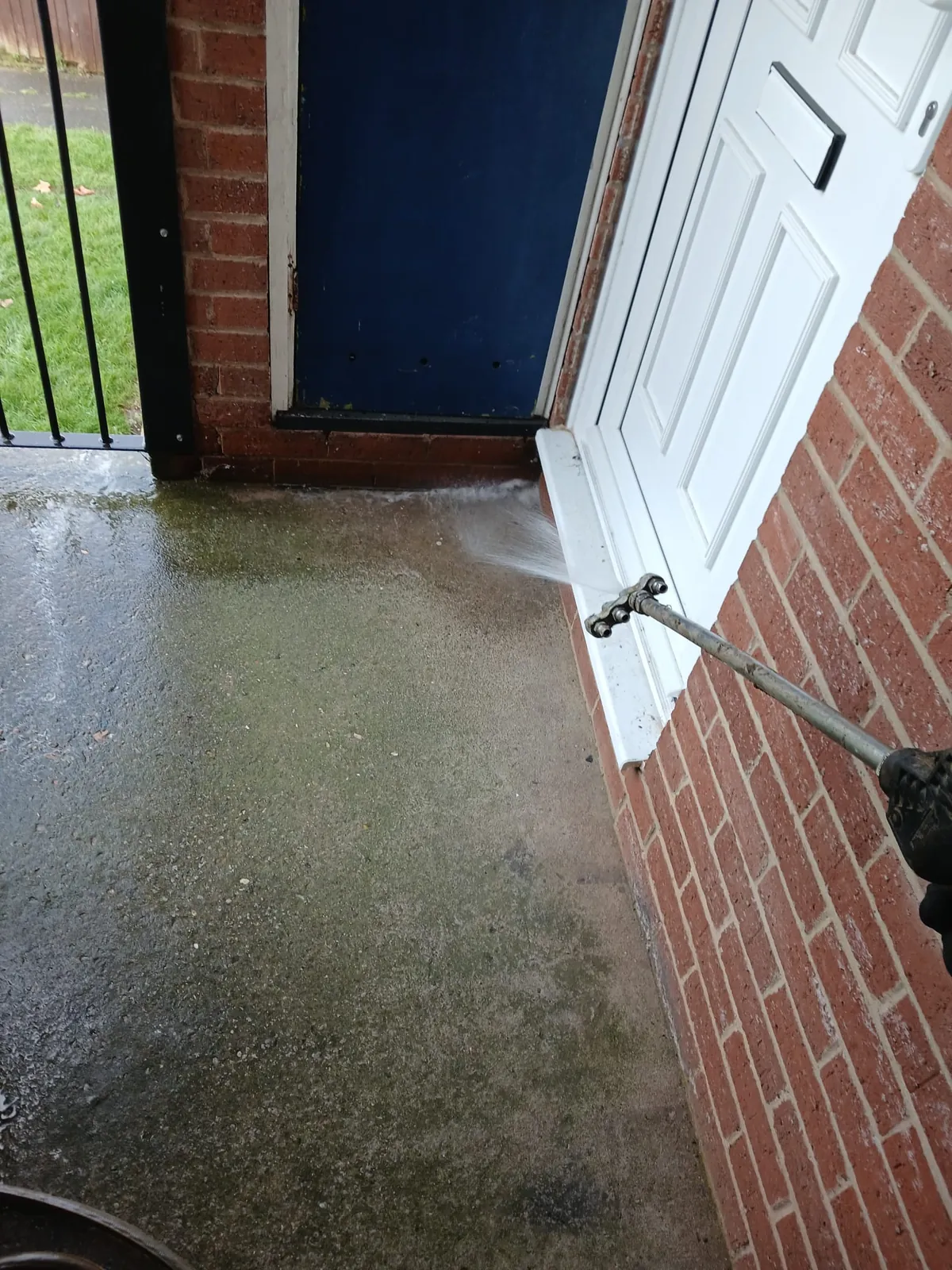
Inside the brick entrance areas, dirt was deeply embedded in the concrete floors and brick walls, so we turned to hot-water pressure washing to lift it. It was a confined space, so PPE and respiratory protection were essential.
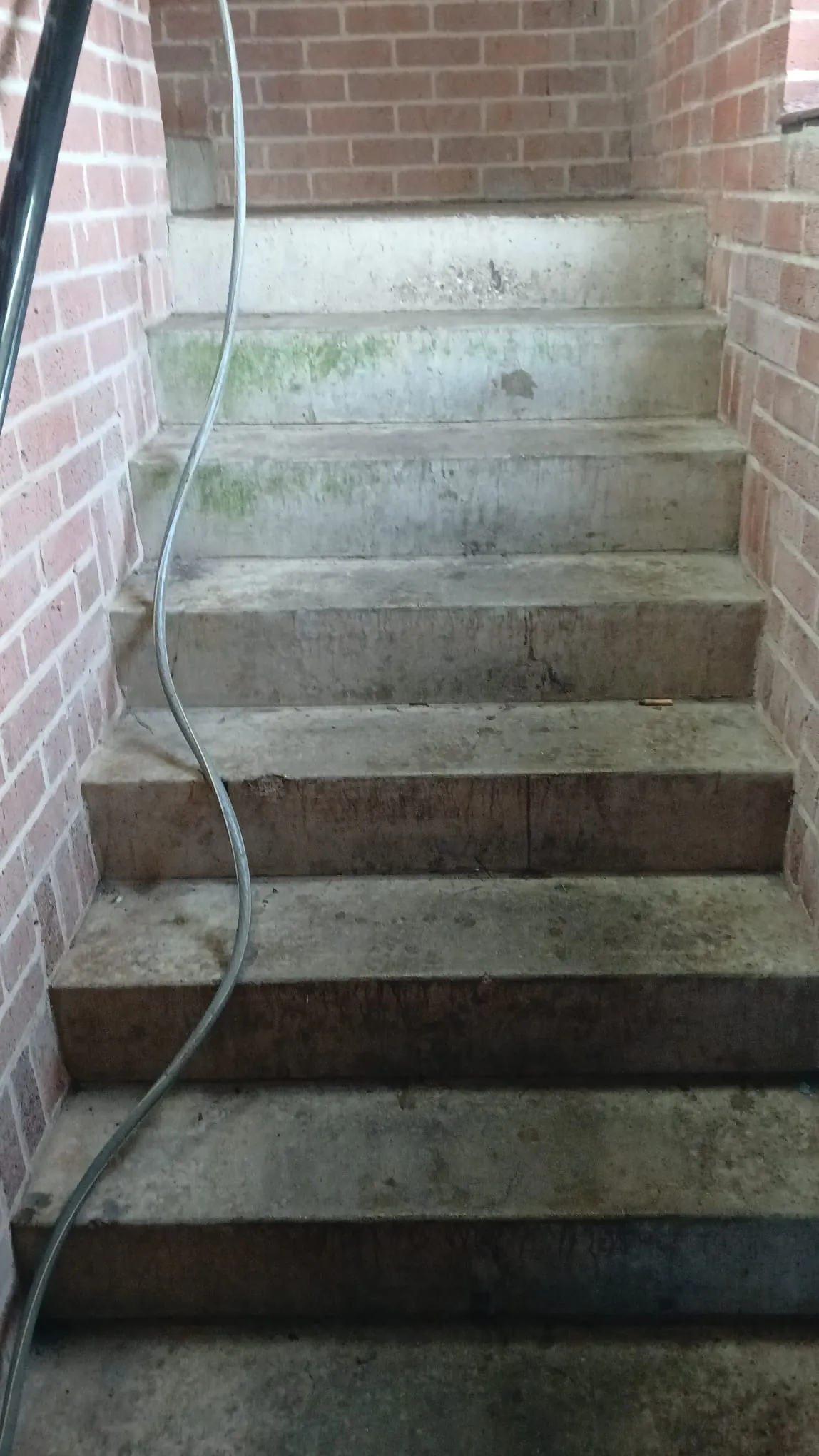
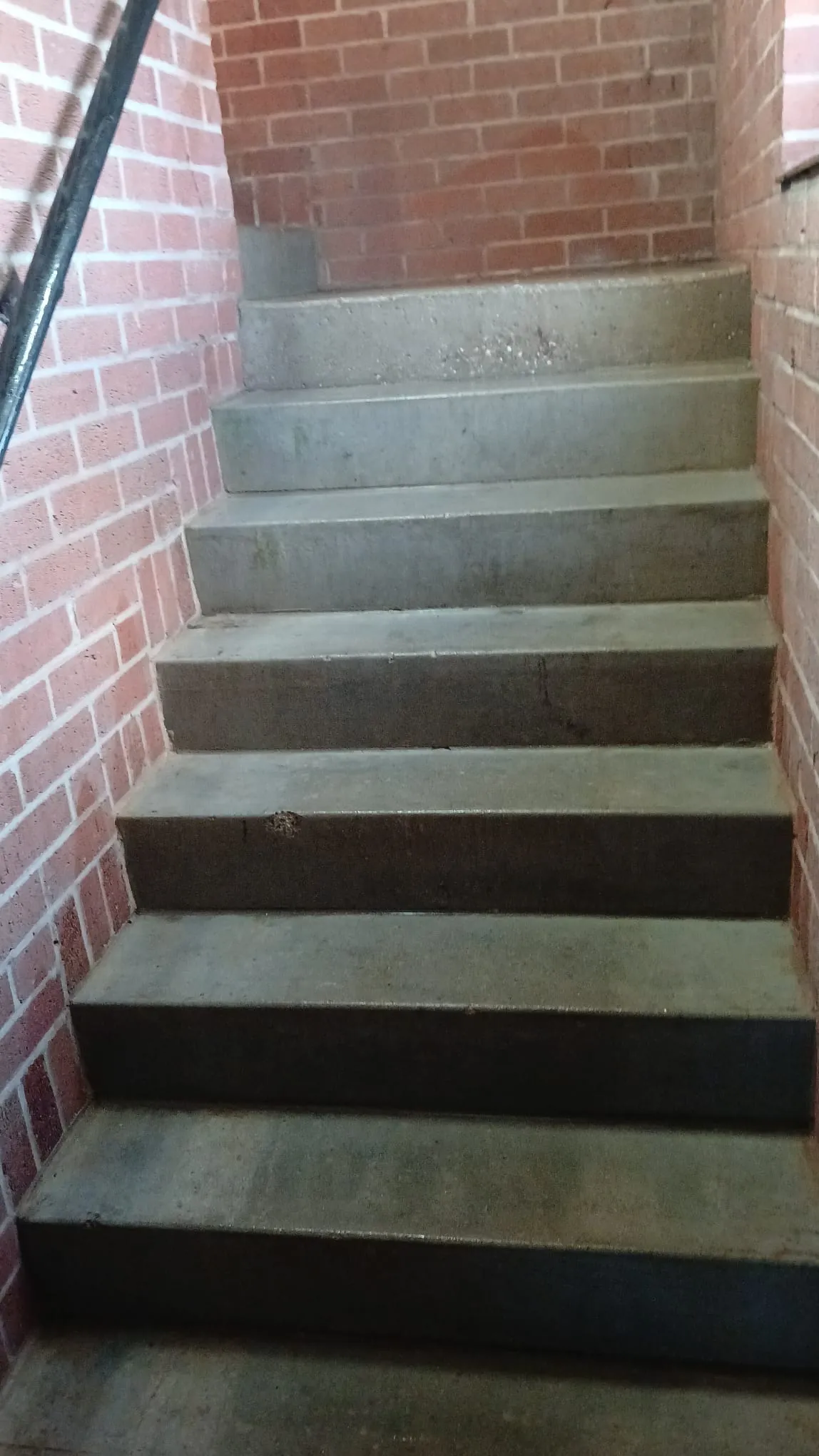
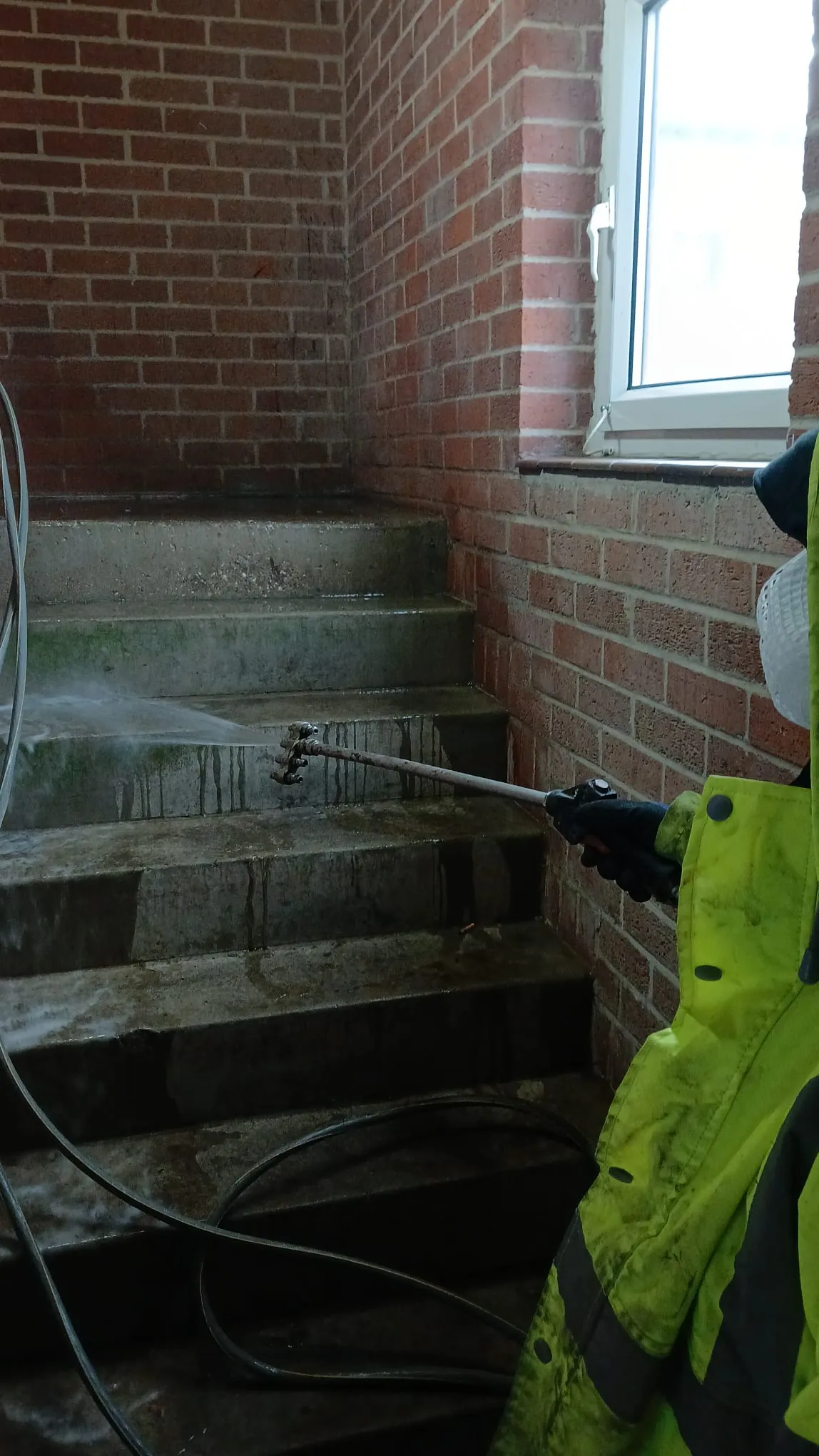
What better way to refresh stairwells and concrete steps than pressure washing them, step by step? Working top to bottom, we focused on removing all algae, moss, and black organic staining from risers and treads. Before moving on, our cleaners ran a thorough rinse.
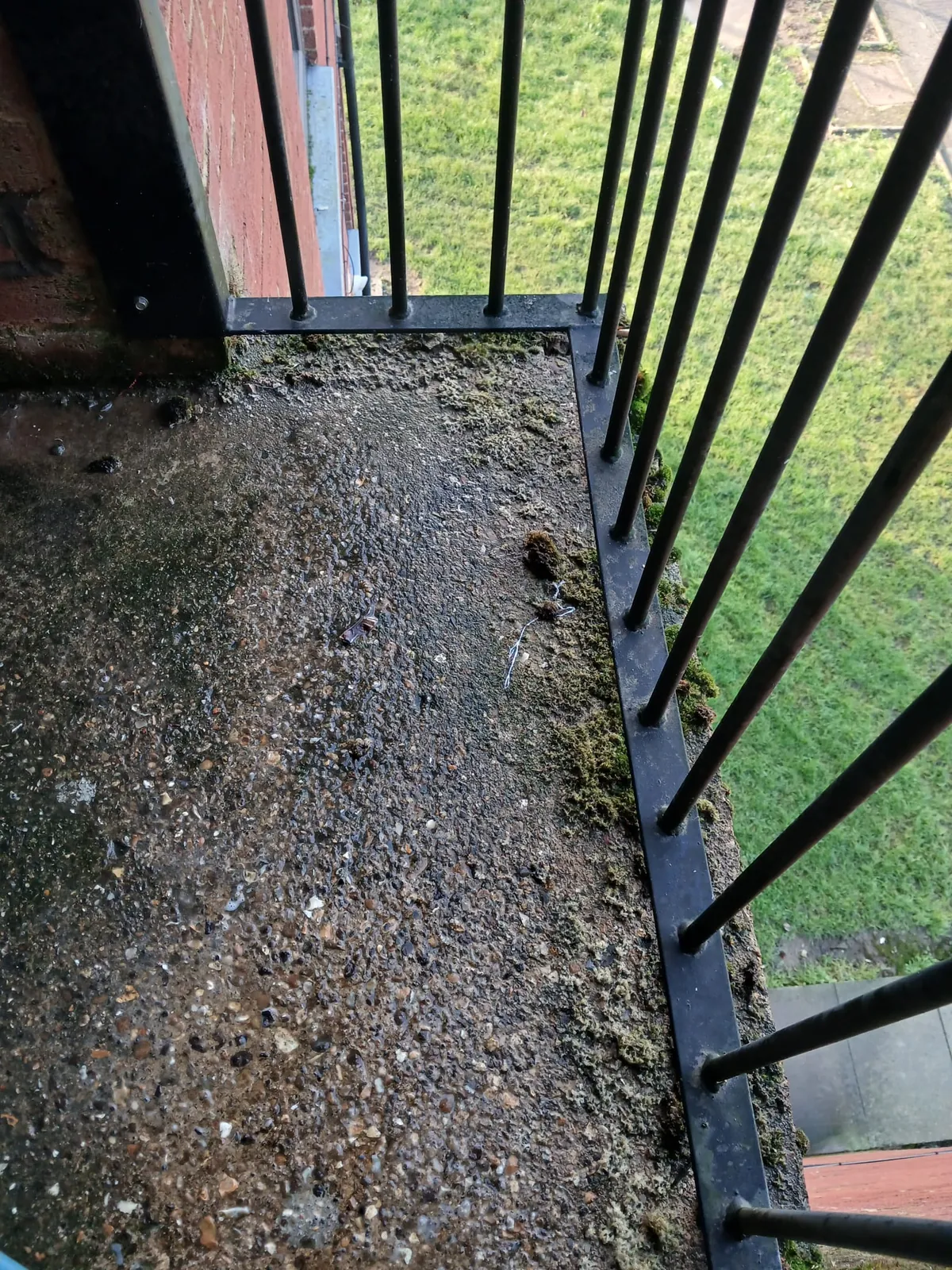
To clean balcony ledges, exposed aggregate landings, and front porch areas, we worked up close. There’s a nice feeling to cleaning exposed aggregate concrete - the bright, pebbled surface comes back like new in seconds.
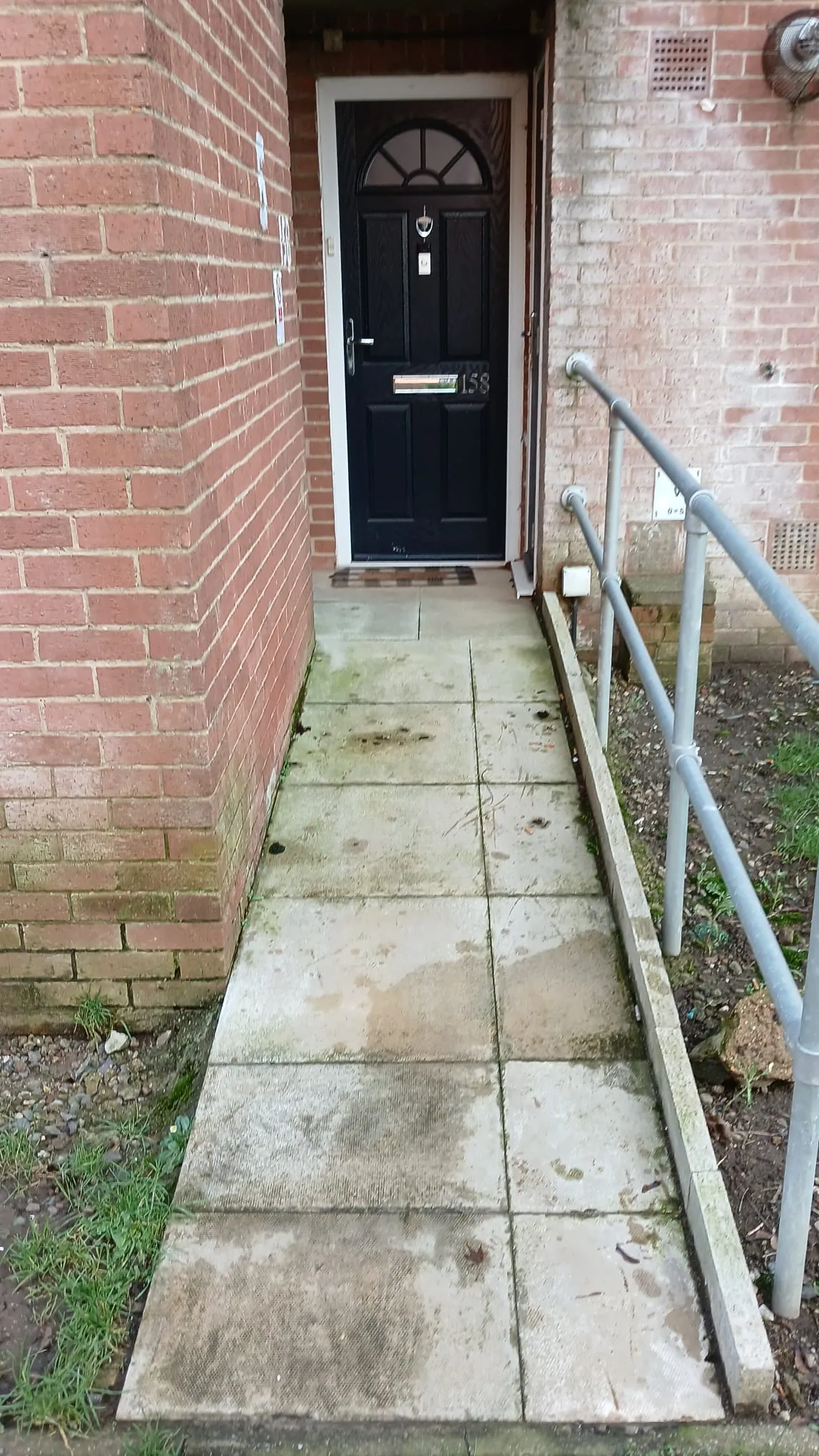
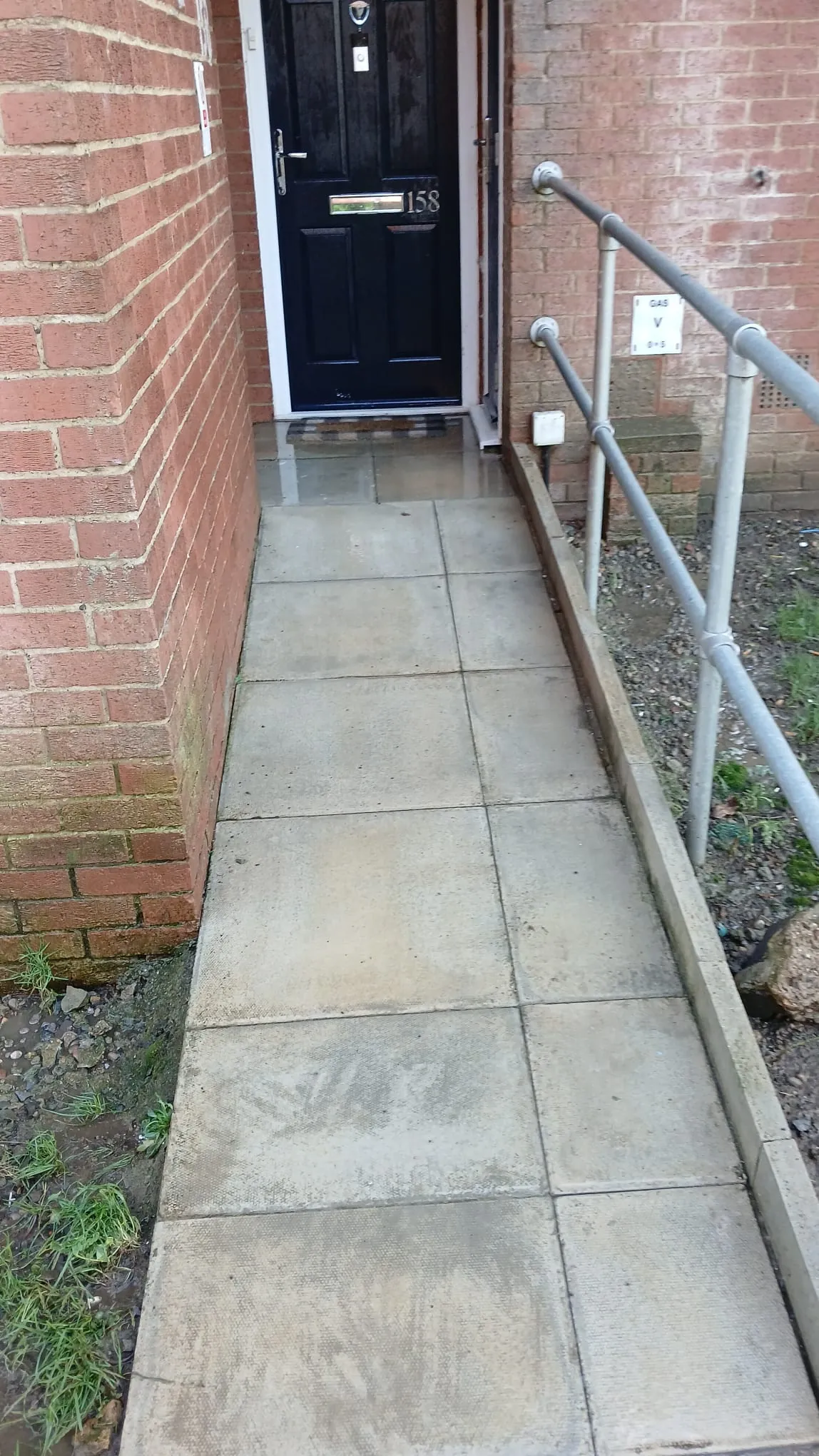
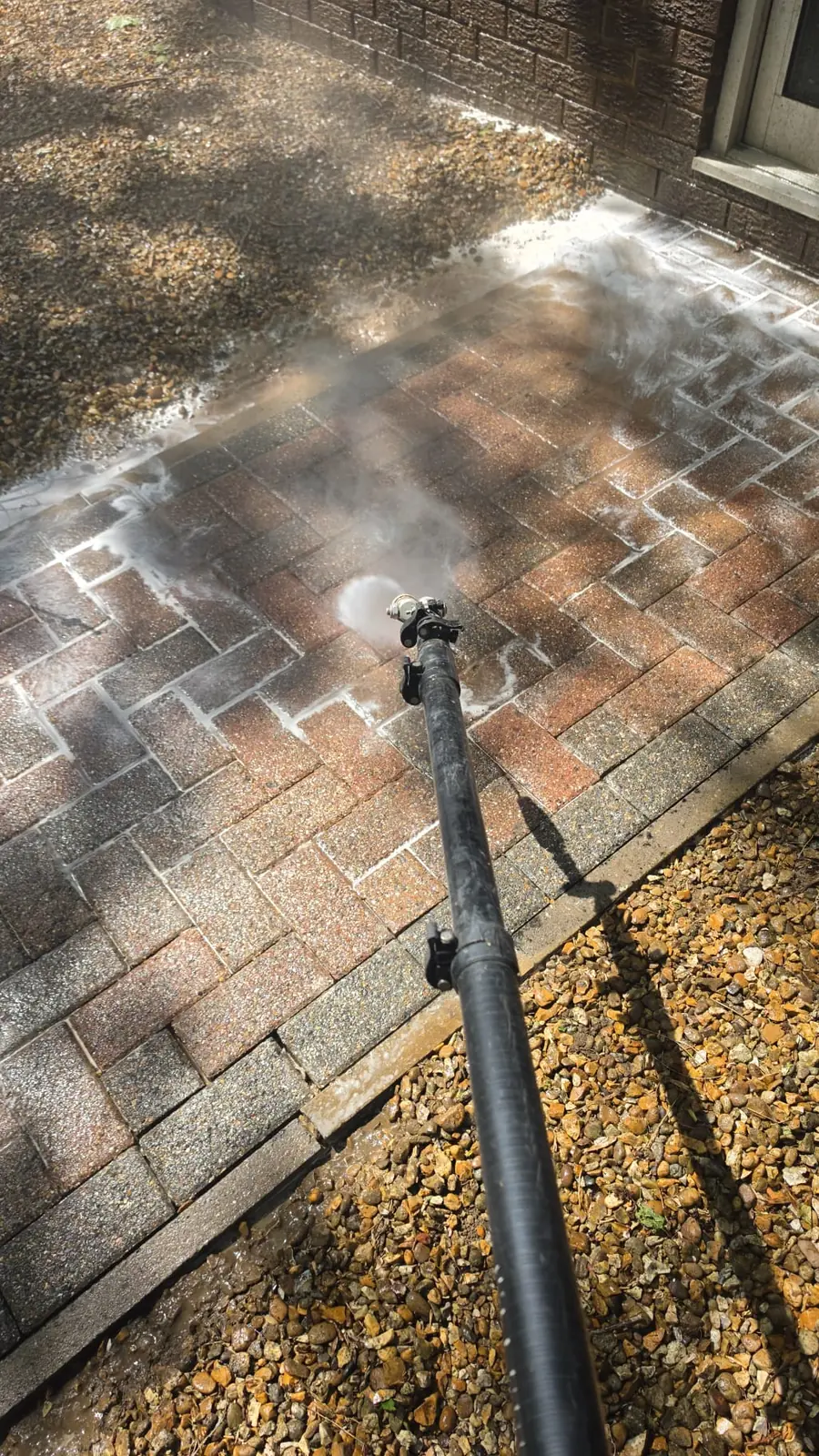
On the longer pathway sections, we wanted even coverage, so we used rotary surface cleaners. Door entrances and ramp surfaces were pressure washed one by one.
We care about our results and want them to last as long as possible, so we applied a DDAC biocide treatment across all cleaned surfaces. Algae and moss shouldn’t regrow anytime soon - the biocide penetrates deep into porous concrete and brick and continues working for 4 to 5 years.
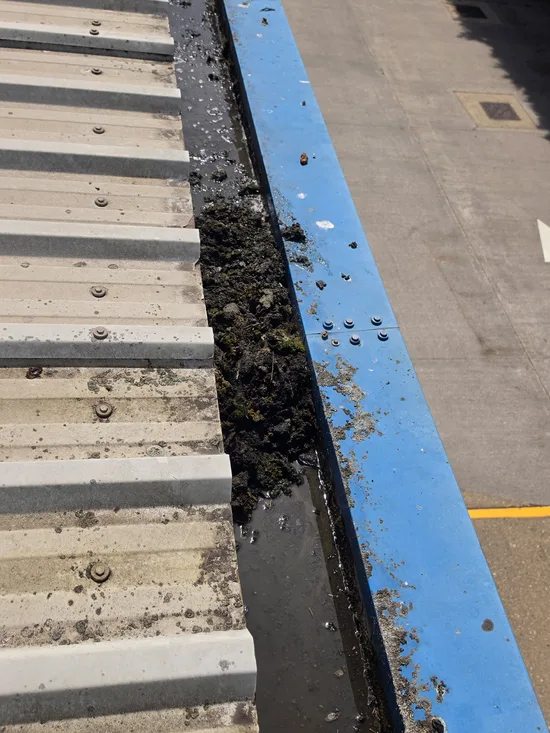
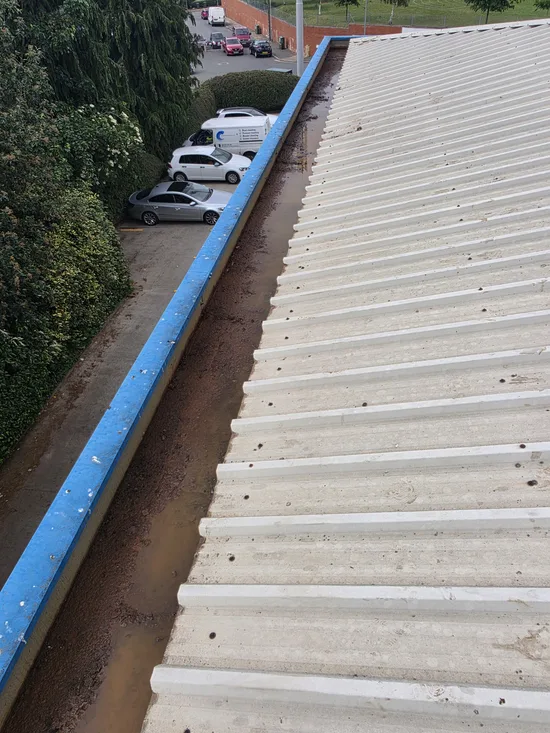
Together with the site contact, we concluded with a walk-around. And yes, maintenance issues were spotted and included in the written report: damaged flashing, cracked pointing, blocked drains - those kinds of things.
Residential Block Management Cleaning
We work with housing associations, local councils, and property management companies across Northamptonshire and beyond. Single visit, coordinated approach, full documentation. Call 07307 358765 for a free site survey.
Get a Free QuoteHere’s what we accomplished
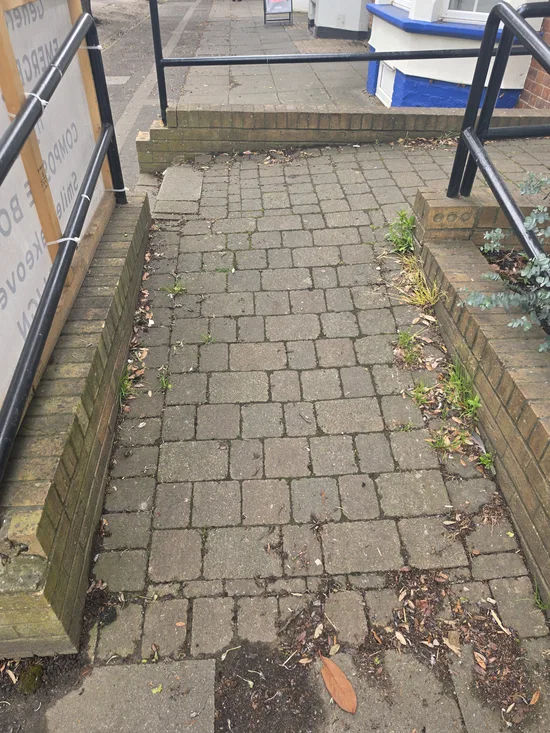
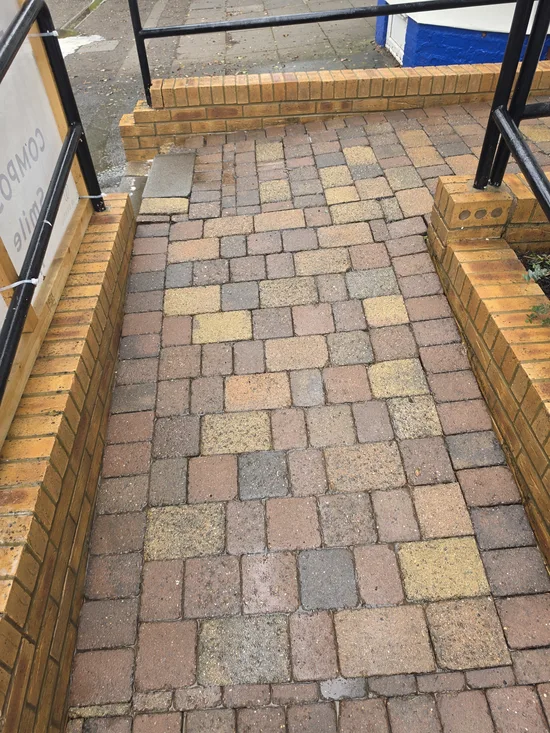
- Heavy algae and atmospheric staining gone, with the buff brick facades restored to their original colour
- Years of deeply set dirt and biological growth removed from the undercroft passageways
- All stairwells and concrete steps left more presentable and safer
- Balcony ledges and exposed aggregate landings looking like new
- All concrete pathways and access ramps cleaned to a uniform, attractive finish
- DDAC biocide applied throughout for 4 to 5 years of regrowth protection
- A written report handed over with before-and-after photos and the maintenance issues we discovered
- No disruption to resident access at any point during the work
Why This Matters for Block Managers
Communal exterior areas address two needs at once. They shape the building’s first impression on every visitor, renter or prospective buyer - and when neglected, it isn’t long before people start complaining. Tenants won’t hesitate to flag the dark streaks on brick facades, slippery steps covered in moss, or porches stained by algae. And if you’re planning to sell or rent, prices will drop if you don’t take action.
Have professionals clean the residential block every 12 to 18 months. A regular exterior cleaning contract keeps communal areas presentable, greatly reduces slip hazards, and sends residents the message that the block is being looked after. Unless you’re sitting on a pile of gold, cleaning will always be cheaper than replacing or repainting surfaces that haven’t been maintained.
Related Services
- Commercial Exterior Cleaning in Northampton - full commercial and block management services
- Council Housing Render Cleaning Programme - Northampton (2024-2025) - larger multi-block contract
- Pressure Washing - method detail for concrete, brick and hard surfaces
Project Images
Get Your Free Quote
Fill in the form below and we'll get back to you within 24 hours.