
Roof Cleaning in Extreme Weather Conditions: Challenges and Solutions for UK Climates
Published August 2024
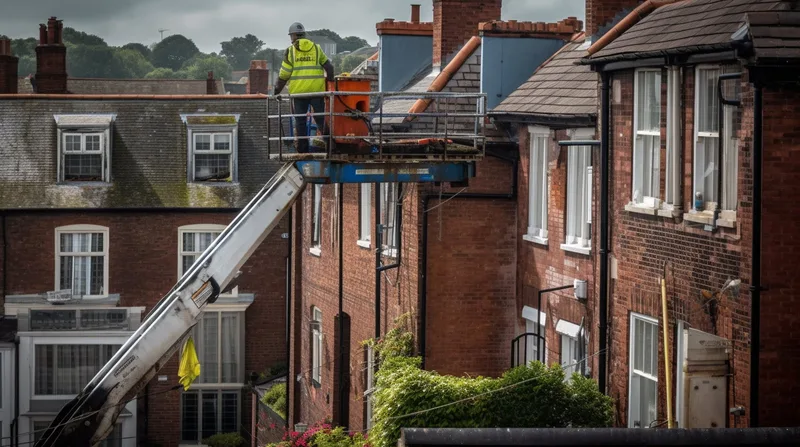
The UK's weather is famously unpredictable, and that unpredictability creates real challenges for roof cleaning. Rain, wind, frost, temperature swings, and seasonal storms all affect when and how roofs can be safely and effectively cleaned. Professional roof cleaners work with the weather rather than against it, adapting their methods, timing, and safety measures to deliver results regardless of what the British climate throws at them.
Key Takeaways
- UK weather directly impacts roof condition - rainfall, wind, frost, and temperature variations each cause specific types of damage that require professional attention.
- Cleaning in adverse weather is dangerous - slippery surfaces, electrical hazards, poor visibility, and equipment issues make professional expertise essential.
- Different weather demands different methods - dry, wet, cold, and warm conditions each require specific cleaning techniques and equipment choices.
- Safety is non-negotiable at height - PPE, harnesses, fall arrest systems, and continuous weather monitoring are standard for professional roof cleaning.
- Spring and autumn are the ideal cleaning windows - mild temperatures, moderate rainfall, and sufficient daylight make April-May and September-October the best months for roof cleaning.
A Brief Look at UK Climates and How They Affect Roofs
Understanding how UK weather patterns affect roofing materials is essential for planning effective cleaning and maintenance. Each element of the climate attacks roofs in a different way.
Rainfall
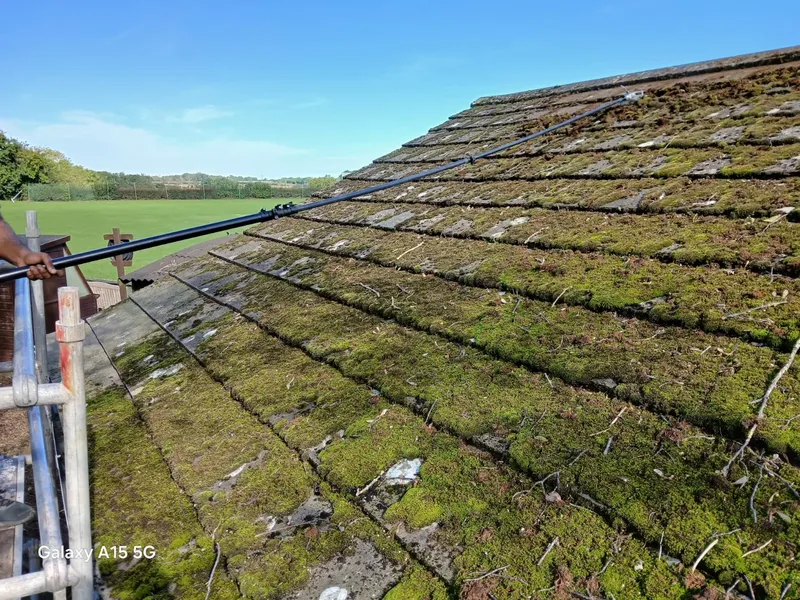
The UK is famous for its rainfall, with various intensities and frequencies across various regions. Western areas, especially those exposed to Atlantic weather, experience more rainfall than eastern regions. Heavy rain saturates surfaces causing moisture penetration and water damage. Long-term moisture exposure encourages moss, algae, and lichen growth, altering roofing material integrity. Blocked gutters and poor drainage compound the problem, allowing water to pool and seep beneath tiles.
Wind
Wind patterns affected by the Jet Stream and ocean currents create strong coastal and highland winds. High winds pose a risk to roof structures, especially if roofing materials aren't secured. Winds dislodge loose tiles and shingles, exposing underlying substrates to water infiltration. Even in inland areas like Northamptonshire, winter storms regularly bring gusts strong enough to lift ridge tiles and damage flashing.
Temperature Variations
Throughout the year, the temperatures are moderate in the UK, but variations occur between seasons. Temperature fluctuations cause cracks, warping, and deterioration of roof surfaces. The freeze-thaw cycle is particularly damaging - water enters small cracks during the day, freezes overnight, expands by up to 9%, and forces the crack wider. Over multiple cycles, this can split tiles, erode mortar, and compromise the roof's watertight seal.
Seasonal Changes
Autumn and winter bring stormy weather and rainfall, whereas spring and summer bring sunshine and mild temperatures. Autumn debris from trees affects drainage by clogging gutters and downpipes. Winter snow and ice add structural stress and create dangerous working conditions. Spring brings rapid biological growth as moss and algae accelerate in warmer, damp conditions. Summer heat dries out sealants and felt, causing brittleness and cracking.
- The UK receives an average of 1,154mm of rainfall per year, with some western regions exceeding 3,000mm. This persistent moisture is the primary driver of moss, algae, and lichen growth on roofs.
- The Met Office recorded over 40 named storms affecting the UK between 2019 and 2024, each capable of dislodging roof tiles and damaging flashings.
Why It Is Risky to Clean Roofs During Adverse Weather
Roof cleaning is inherently a high-risk activity due to working at height. When adverse weather is added to the equation, the risks multiply significantly.
Slippery Surfaces
Rain, snow, and ice on the roof surface create slippery surfaces. Even a thin film of moisture on clay or concrete tiles dramatically reduces grip. Moss-covered tiles are particularly treacherous when wet, as the organic layer becomes almost frictionless. Professional cleaners use anti-slip footwear and temporary walkway mats to manage this risk.
Electrical Hazards
Thunderstorms and heavy rains expose workers to power line contact and electrical risks. Water conducts electricity, and roof cleaning equipment - particularly pressure washers with metal lances - creates a direct conduction path. Work is never carried out during electrical storms, and safe distances from overhead power lines are always maintained.
Poor Visibility
Difficult weather conditions like heavy rain or fog will affect visibility. Reduced visibility makes it harder to see surface conditions, identify hazards, and maintain spatial awareness on a sloped surface at height. Professional teams will not start or continue work when visibility is compromised.
Equipment Malfunction
Rain, snow, and high winds can alter the equipment's performance. Pressure washers, pumps, and electrical connections are vulnerable to water ingress in heavy rain. High winds affect the accuracy and control of spray patterns, making it impossible to direct cleaning solutions precisely. Cold temperatures can freeze water in hoses and equipment, causing damage and delays.
Structural Damage
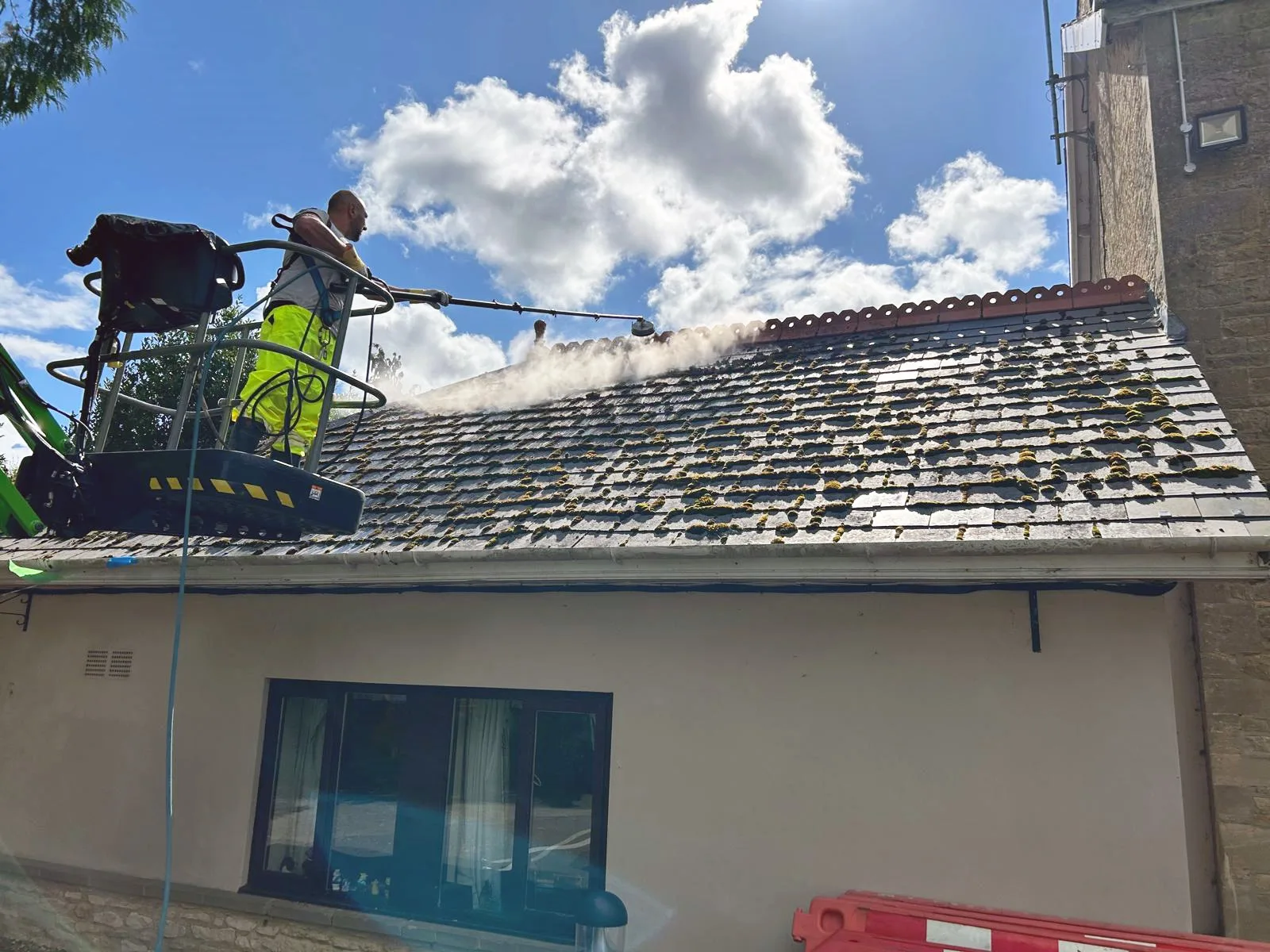
Cleaning during adverse weather conditions such as high winds or freeze-thaw cycles may aggravate current structural damage. Pressure washing a roof with existing cracks or loose tiles during cold weather can force water into gaps where it freezes and causes further deterioration. A professional pre-clean inspection identifies these vulnerabilities before work begins.
Water Damage
Heavy rainfall or snowmelt during roof cleaning will saturate roof surfaces, increasing the risk of water penetration through existing weak points. Combined with cleaning water, the total volume of water running across the roof and into drainage systems can overwhelm gutters and downpipes, causing overflow and potential water damage to walls and foundations.
Environmental Impact
Heavy rain during cleaning increases the risk of chemical runoff contaminating surrounding soil, gardens, and drainage systems. Professional cleaners use biodegradable products and manage runoff carefully, but heavy rainfall makes containment significantly more difficult.
Project Delays
Weather interruptions cause schedule disruptions and increased costs. A job planned for one day may stretch to two or three if weather windows are limited. Professional companies factor this into their scheduling and communicate clearly with customers about weather-dependent timelines.
Cleaning Methods for Various Weather Conditions
Professional roof cleaners adapt their methods and equipment to suit the conditions they're working in. No single approach works in every situation.
Dry Weather Cleaning
Dry conditions offer the widest range of cleaning options and the safest working environment.
- Manual cleaning - brushes, scrapers, and brooms are used to remove loose moss, lichen, and debris. This is often the first step before any chemical or water-based treatment.
- Blower equipment - leaf blowers and industrial air blowers remove dry debris from valleys, ridges, and gutters quickly and efficiently.
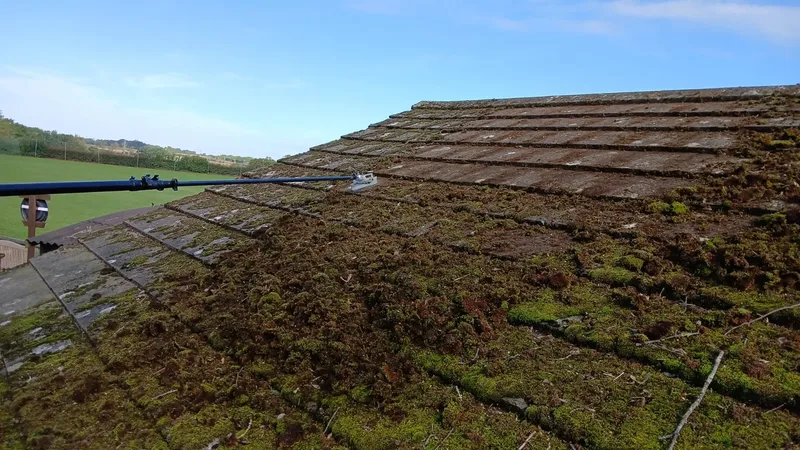
- Soft washing - low-pressure water combined with eco-friendly biocidal solutions is the preferred method for most UK roof types. The treatment kills moss, algae, and lichen at the root. Results continue to improve over weeks as dead growth is washed away naturally by rain.
Need Your Roof Cleaned?
We clean roofs across Northamptonshire and surrounding areas - clay tiles, concrete tiles, slate, flat roofs, and more. Every job includes a pre-clean inspection, the correct cleaning method for your roof type, biocide treatment, and gutter clearing. £5M public liability insurance, IPAF and CSCS certified. Call 07307 358765 or request a free quote online.
Get a Free QuoteWet Weather Cleaning
Persistent damp weather limits options but doesn't halt maintenance entirely.
- Preventive gutter maintenance - clearing gutters and downpipes during dry spells prevents blockages that cause problems during wet weather. This is one of the most effective preventive measures available.
- Surface treatments with moss inhibitors and biocides - biocidal treatments can be applied during dry windows between rain spells. Once applied, they continue working even in wet conditions, killing biological growth over the following weeks.
- Spot treatments during dry periods - targeted treatment of problem areas during brief dry windows keeps the worst growth under control until a full clean can be scheduled.
Cold Weather Cleaning
Winter conditions demand extra caution and specialised approaches.
- De-icing with heated pressure washing - heated water prevents freezing on contact and improves cleaning effectiveness in cold conditions. It also reduces the risk of ice formation on the roof surface during and after cleaning.
- Preventive measures - snow guards prevent sudden snow slides that damage gutters and endanger people below. Heating cables along gutters and eaves prevent ice dam formation. These measures are installed during dry conditions and provide ongoing winter protection.
Warm Weather Cleaning
Summer provides good conditions but requires awareness of heat-related issues.
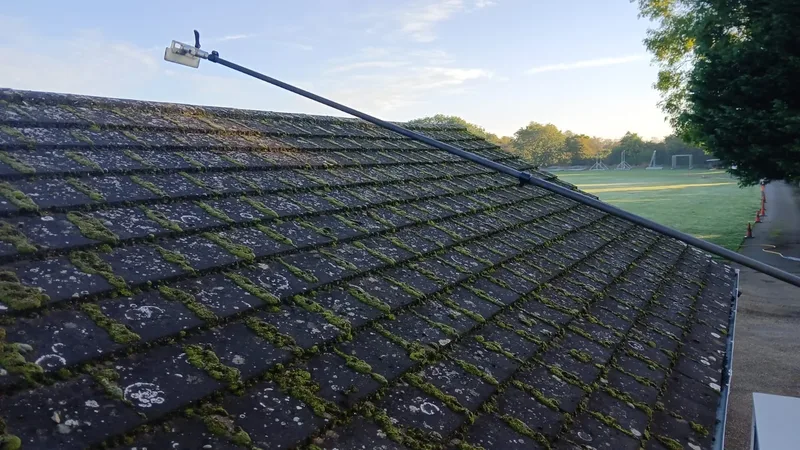
- Pressure washing for algae and moss removal - warm conditions are ideal for pressure washing, as surfaces dry quickly and cleaning solutions work effectively. However, very hot surfaces can cause solutions to evaporate before they've had time to work, so application technique must be adjusted.
- Thorough rinsing - removing all cleaning agents is essential to prevent chemical residue from degrading roofing materials in prolonged sun exposure.
Seasonal Cleaning Calendar
| Season | Priority Tasks | Conditions to Watch |
|---|---|---|
| Spring (March-May) | Full roof clean, moss removal, biocide treatment, gutter clear | Ideal conditions - mild and moderate rainfall |
| Summer (June-August) | Pressure washing, repairs, protective coatings | Heat may dry solutions too fast; adjust dwell times |
| Autumn (September-November) | Debris removal, gutter clearing, pre-winter inspection | Leaf fall, increasing rain, shortening daylight |
| Winter (December-February) | Emergency repairs, preventive gutter maintenance only | Frost, ice, snow, short daylight, high winds |
- Soft washing with biocide treatment is the most effective method for UK roofs. It kills moss and algae at the root, and the dead growth is gradually washed away by natural rainfall over the following 4-8 weeks.
- Avoid aggressive high-pressure washing on clay and concrete tiles - it can strip the protective surface layer, shorten the tile's lifespan, and void manufacturer warranties.
Protective Measures Professionals Use When Cleaning Roofs
Safety is the foundation of every professional roof cleaning operation. Here are the measures that protect workers, property, and the public.
Personal Protective Equipment (PPE)
Workers wear non-slip footwear with deep-tread soles, chemical-resistant gloves, eye protection, and hard hats. In cold conditions, thermal layers are added. In hot weather, sun protection and regular hydration breaks are mandatory. High-visibility clothing is worn at all times, especially when working near roads or public areas.
Harnesses and Fall Protection
The roof cleaners use safety harnesses and fall arrest systems when working at heights. These are anchored to secure points on the building structure or to temporary anchor systems installed before work begins. Fall protection is mandatory on any roof with a pitch or where the working edge is more than 2 metres above ground level.
Specialised Access Equipment
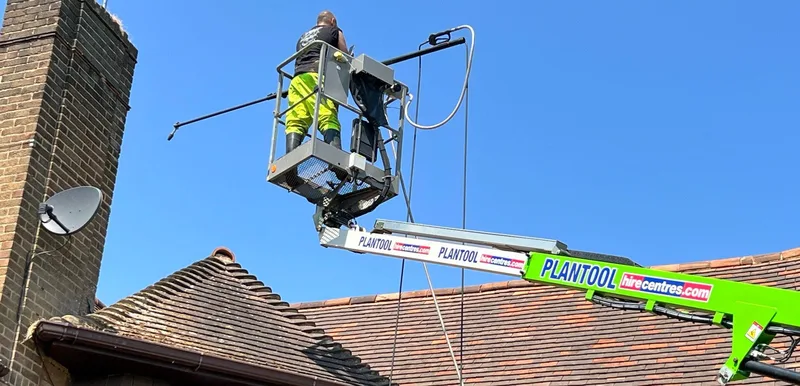
Aerial lifts (cherry pickers), scaffolding, and roof ladders provide safe access to all areas of the roof. Mobile elevated work platforms (MEWPs) are the preferred choice for many professional companies, as they provide a stable, enclosed working platform with fall protection built in. All equipment is regularly inspected and certified.
Weather Monitoring
The roof cleaners monitor weather forecasts and conditions to assess the risk before and during every job. Real-time weather apps and on-site observations are used continuously. If conditions change during a job - sudden gusts, heavy rain, or temperature drops - work is paused until conditions improve or rescheduled to another day.
Weatherproofing and Enclosures
On larger or multi-day jobs, temporary tents, tarps, or canopies create dry work environments over specific areas. These are particularly useful for protecting areas where tiles have been removed for cleaning or repair, preventing water ingress during the work.
Anti-Slip Surfaces
Temporary walkway mats and anti-slip coatings improve traction on roof surfaces during cleaning. These are placed along working routes and at ladder access points to reduce slip risk, particularly on smooth or moss-covered tiles.
Emergency Preparedness
Every professional team carries a site-specific risk assessment and emergency response plan. First aid equipment is on site, and all team members are trained in emergency procedures. For work at height, rescue plans are in place before work begins, detailing how a worker would be recovered from a fall arrest situation.
- Falls from height remain the single largest cause of workplace fatalities in the UK construction and maintenance sectors. Professional roof cleaners hold IPAF (International Powered Access Federation) and CSCS (Construction Skills Certification Scheme) qualifications to work safely at height.
- A professional roof cleaning company carries a minimum of £1M-£5M public liability insurance. Always ask for proof before allowing anyone onto your roof.
How Professionals Perform Roof Cleaning in Difficult Weather
When weather conditions are challenging, professional roof cleaners follow a structured three-phase approach: preparation, execution, and post-cleaning maintenance.
Preparation Phase
- Weather monitoring - identifying safe working windows using professional weather services and local observation. Jobs are scheduled for the best available conditions.
- Safety assessments - detecting hazards like unstable surfaces, damaged tiles, overhead power lines, and restricted access points. A full risk assessment is completed before anyone goes on the roof.
- Equipment inspection - ensuring all tools, pressure washers, hoses, and safety gear function properly and are suitable for the conditions. Cold-weather checks include testing heated equipment and verifying that water lines are not frozen.
- Surface preparation - clearing loose debris, cleaning gutters, and removing major moss buildup by hand before applying water or chemical treatments.
Execution Phase
- Following strict safety protocols - wearing full PPE, using harnesses and fall arrest systems, and maintaining safe exclusion zones below the working area.
- Selecting appropriate methods - choosing the right combination of manual removal, soft washing, or pressure washing based on the roof material, contamination type, and current weather conditions.
- Working methodically - cleaning from the highest point to the lowest, working with the pitch of the roof rather than against it. This ensures runoff carries debris downward and doesn't contaminate already-cleaned areas.
- Using eco-friendly cleaning solutions - biodegradable biocides and detergents that are effective in various temperatures and safe for surrounding gardens and drainage systems.
Post-Cleaning Maintenance
- Thorough rinsing - all cleaning agents are rinsed from the roof surface with clean water to prevent chemical residue from affecting tiles or surrounding areas.
- Gutter and drainage clearing - all gutters, downpipes, and ground-level drains are cleared of debris dislodged during cleaning. This is essential to prevent future water damage.
- Post-cleaning inspections - every section of the roof is inspected for any damage discovered or caused during cleaning. Loose tiles, cracked mortar, and damaged flashing are documented and reported to the homeowner.
- Preventive measures - moss inhibitor treatments and biocides are applied to slow regrowth. Gutter guards can be fitted to prevent future debris buildup.
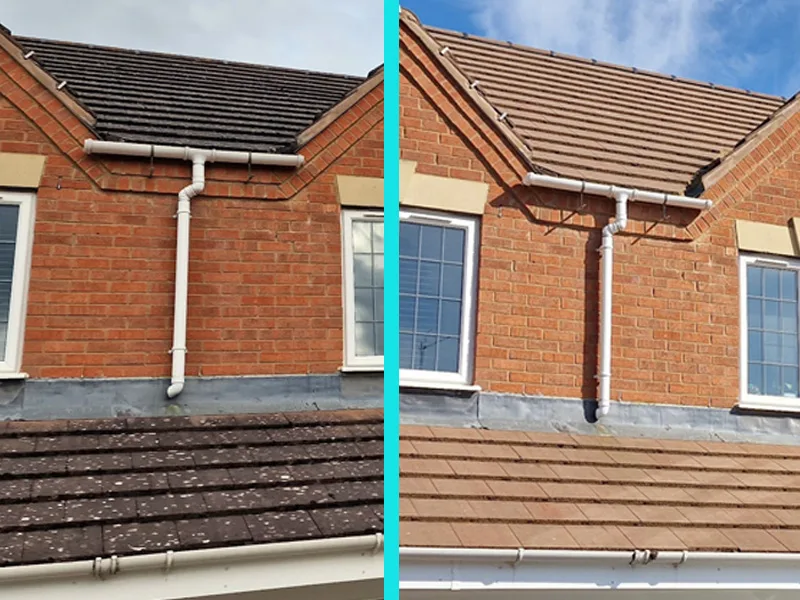
- Documentation - before-and-after photographs and a completion report are provided, documenting all activities, observations, and any recommended repairs.
Professional Roof Cleaning in Any Season
We clean roofs across Northamptonshire and surrounding areas year-round, adapting our methods and scheduling to suit the weather conditions. Clay tiles, concrete tiles, slate, flat roofs - every job includes a full inspection, the correct cleaning approach for your roof type, biocide treatment, and gutter clearing. £5M public liability insurance, IPAF and CSCS certified, no upfront deposits. Call 07307 358765 or request a free quote online.
Roof Cleaning Services