
Roof Biocide Treatment: How It Works on Industrial, Commercial and Residential Roofs
Published November 2026
Roof biocide treatment is a low-pressure soft-wash solution that kills moss, lichen, algae, and spores inside the roofing material, not just on the surface. It doesn’t clean immediately; once applied, rain activates it over the next weeks and months. On industrial roofs, heavy lichen may keep dying off for 6-12 months. Without biocide, regrowth happens in 12-18 months, while DDAC treatment stops regrowth for 4-5 years.
What a roof biocide actually does (kill vs inhibit)
There are two families of roof biocides, and ECS uses both, in the right order. The first family kills what’s visible; the second inhibits regrowth.
Sodium hypochlorite is diluted bleach and quickly kills visible growth. While it’s an oxidising agent that bleaches out the staining, it doesn’t offer durable protection. Tata Steel also recommends it for fungal staining on pre-painted steel, in a mix of a mix of 0.5% detergent, 3% trisodium phosphate, 25% sodium hypochlorite (5% available chlorine), and 71.5% water. We apply it at low pressure by spray or brush (Tata Steel, Colorcoat inspection and maintenance, 2023).
DDAC inhibits later regrowth. DDAC (didecyldimethylammonium chloride) is a quaternary ammonium compound. According to the University of Hertfordshire's AERU pesticide database, it's a broad-spectrum, non-systemic biocide that breaks down organisms' cell membranes and kills them. Since it seeps into the pores of roofing material, it stops regrowth for years. Many shop-bought "roof cleaner" products have Benzalkonium chloride, which is in the same quaternary ammonium family.
Hypochlorite clears existing growth and stains, while DDAC follows to protect the cleaned surface. The growth returns if you only use the first. Use only the second, and results on already established growth will show slowly. See the table for a side-by-side comparison:
| Sodium hypochlorite | DDAC (quaternary ammonium) | |
|---|---|---|
| What it does | Kills and bleaches existing growth | Kills growth and stops spores taking hold again |
| How fast | Visible effect soon after application | Works over weeks and months, activated by rain |
| Lasting protection | None | Typically 4-5 years on tiled roofs |
| Where we use it | Heavy staining and lichen, as a first step | Final treatment on roofs, cladding and hard surfaces |
| Watch out for | Corrosive to metals; must be diluted and kept off plants | Highly toxic to aquatic life; keep out of drains |
Why industrial and commercial roofs grow lichen
Managing an industrial or commercial site? The signs are probably visible: dark brown or black patches across the roof sheets, dirty skylights, and gutters that spill over every time it rains. The reasons for moss and lichen growth on these roofs differ from those on tiled houses.
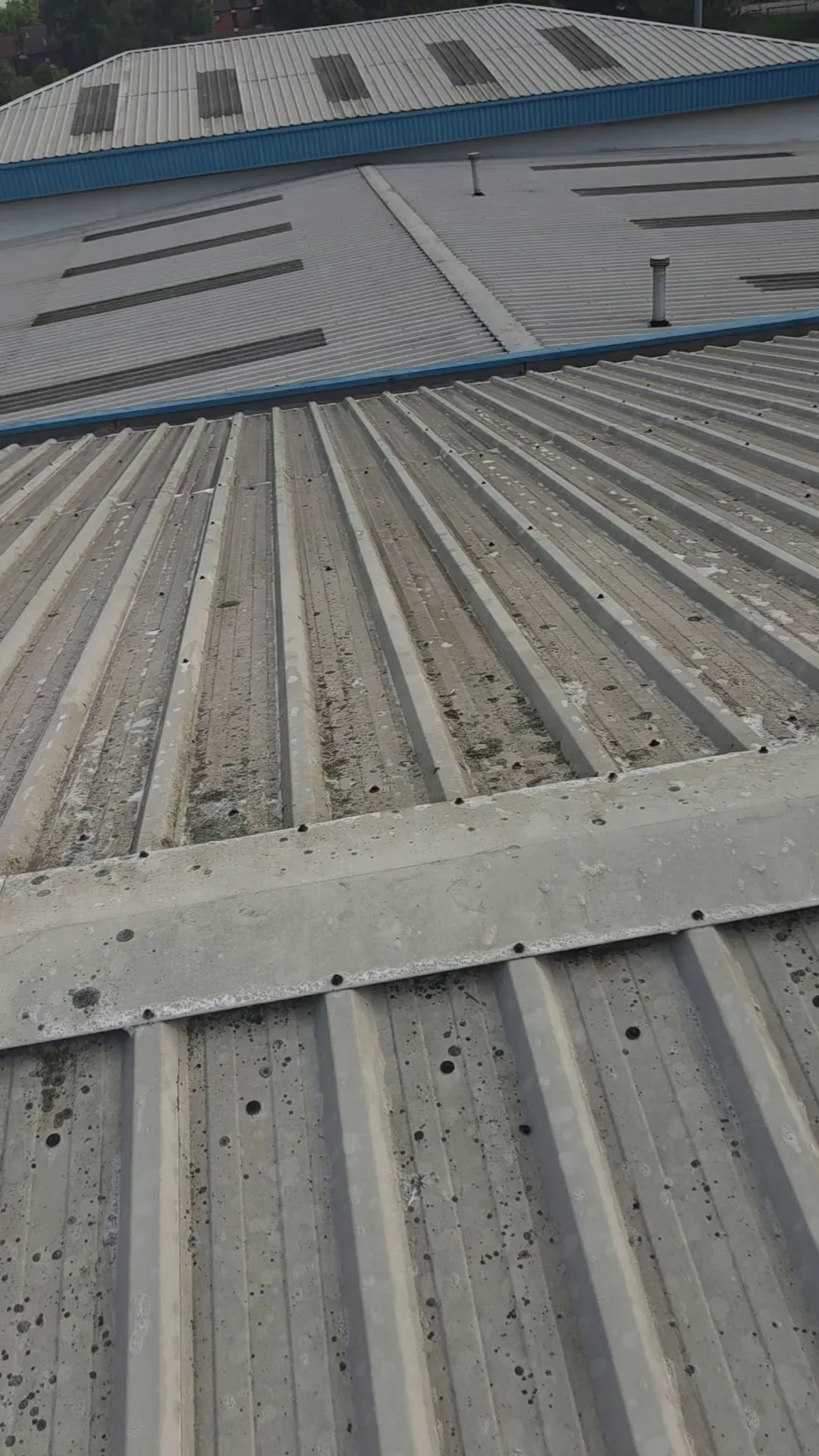
Most industrial roofs are corrugated or profiled metal sheets, sometimes pre-painted (such as Colorcoat), or fibre cement sheets. Additionally, many are shallow-pitched, so rainwater and dirt don’t run off as quickly and sit on the surface longer. Moisture and dirt together create the surface for lichen to take hold.
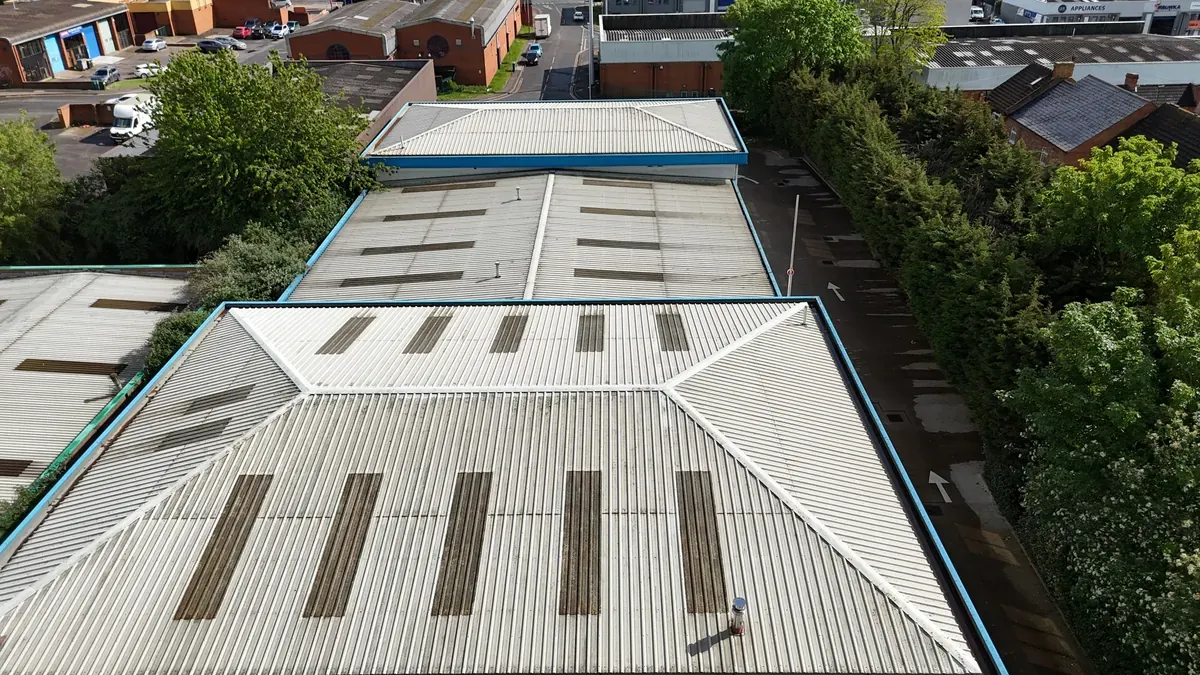
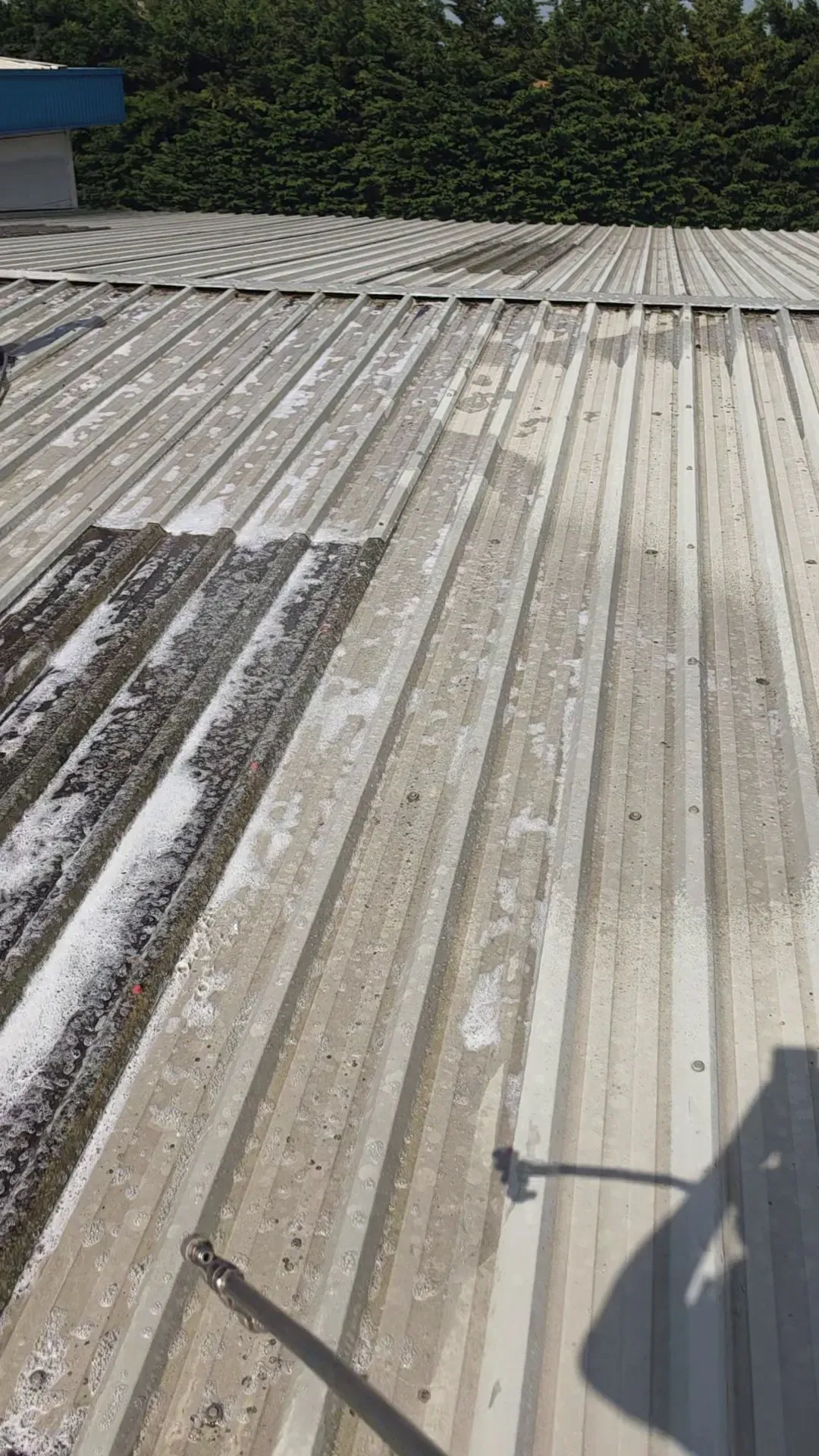
At Globus Medical in Northampton, difficult lichen covered all three corrugated-metal roof zones. Across the sheets and the skylight panes, dark brown and black staining was spreading. Moss and water clogged the gutters.
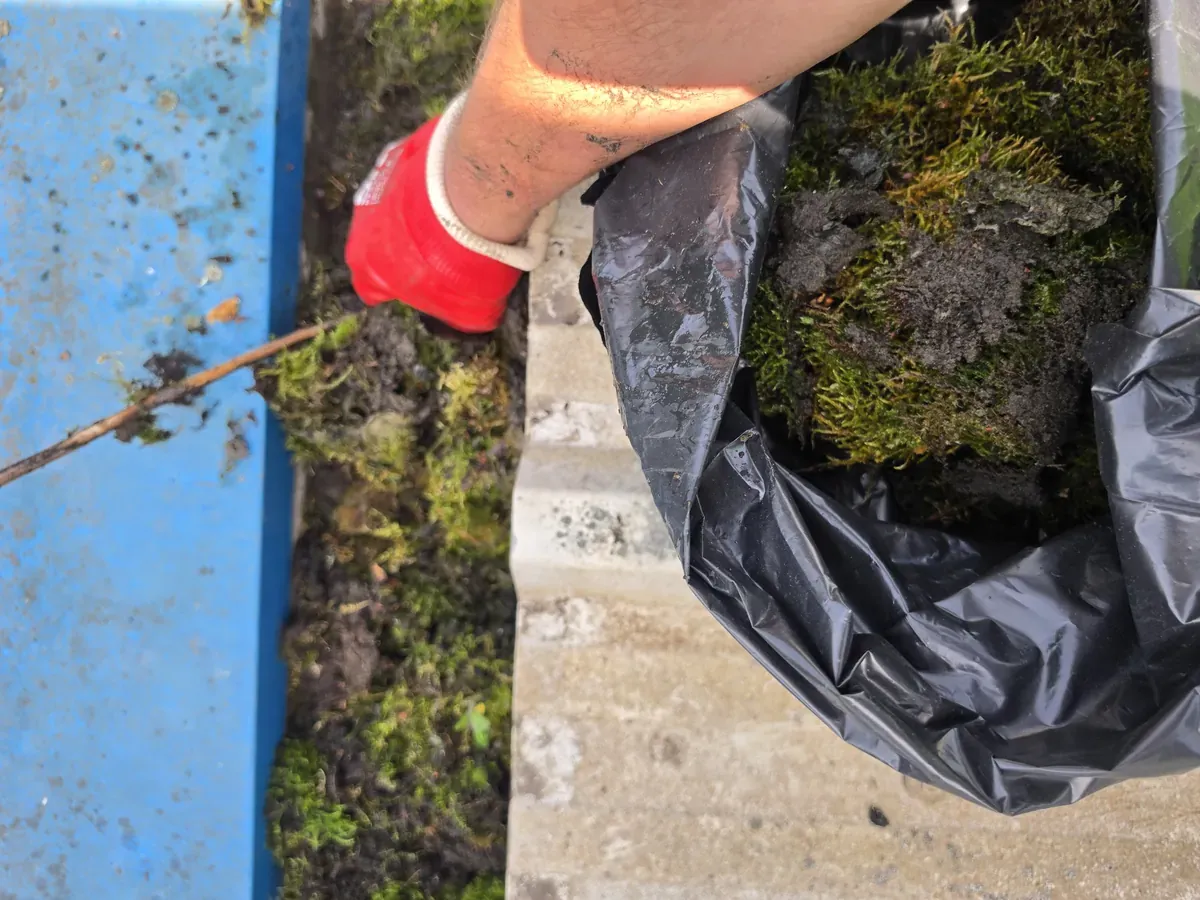
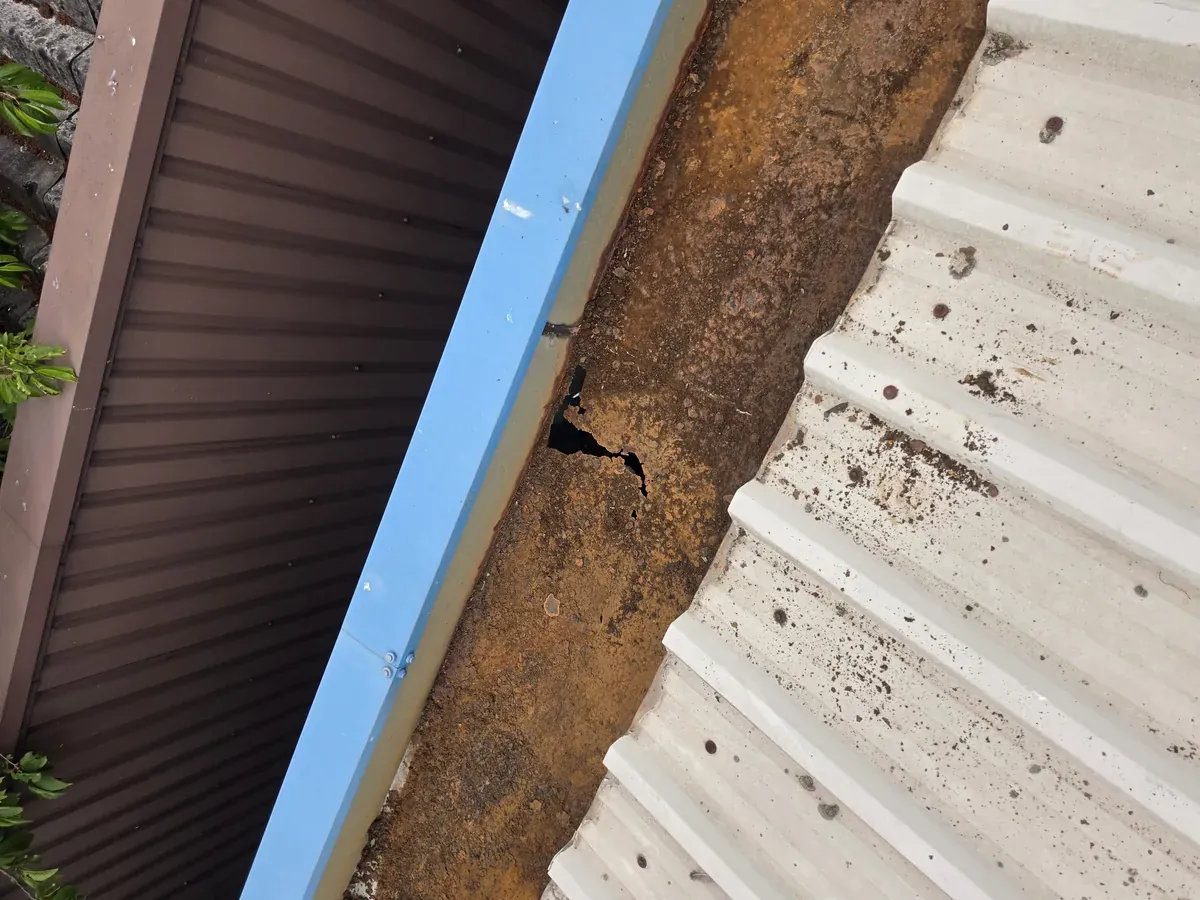
Not all parts of roofs are the same. Tata Steel notes that areas without rain wash pick up dirt and grow faster. These areas include the eaves, beneath solar panels, and above roller shutter doors. (Tata Steel, 2023). The damage comes later. Lichen and moss retain water on the metal surface, which washes into the gutters and eventually causes blockages. Water in the gutter accelerates rust. At Eurofins BLC, soil, moss, and small plants filled the gutters, and some sections were rusted and required replacement.
How we treat an industrial roof, step by step
The same process applies to every commercial job. Here’s how we did it with the Globus Medical roof treatment in Northampton.
- Drone survey before we quote. Before every large job, we fly a drone. At Globus, we did it two weeks before the cleaning, on 14 May 2026. No one had to climb up, and we saw all three roof zones and every gutter.
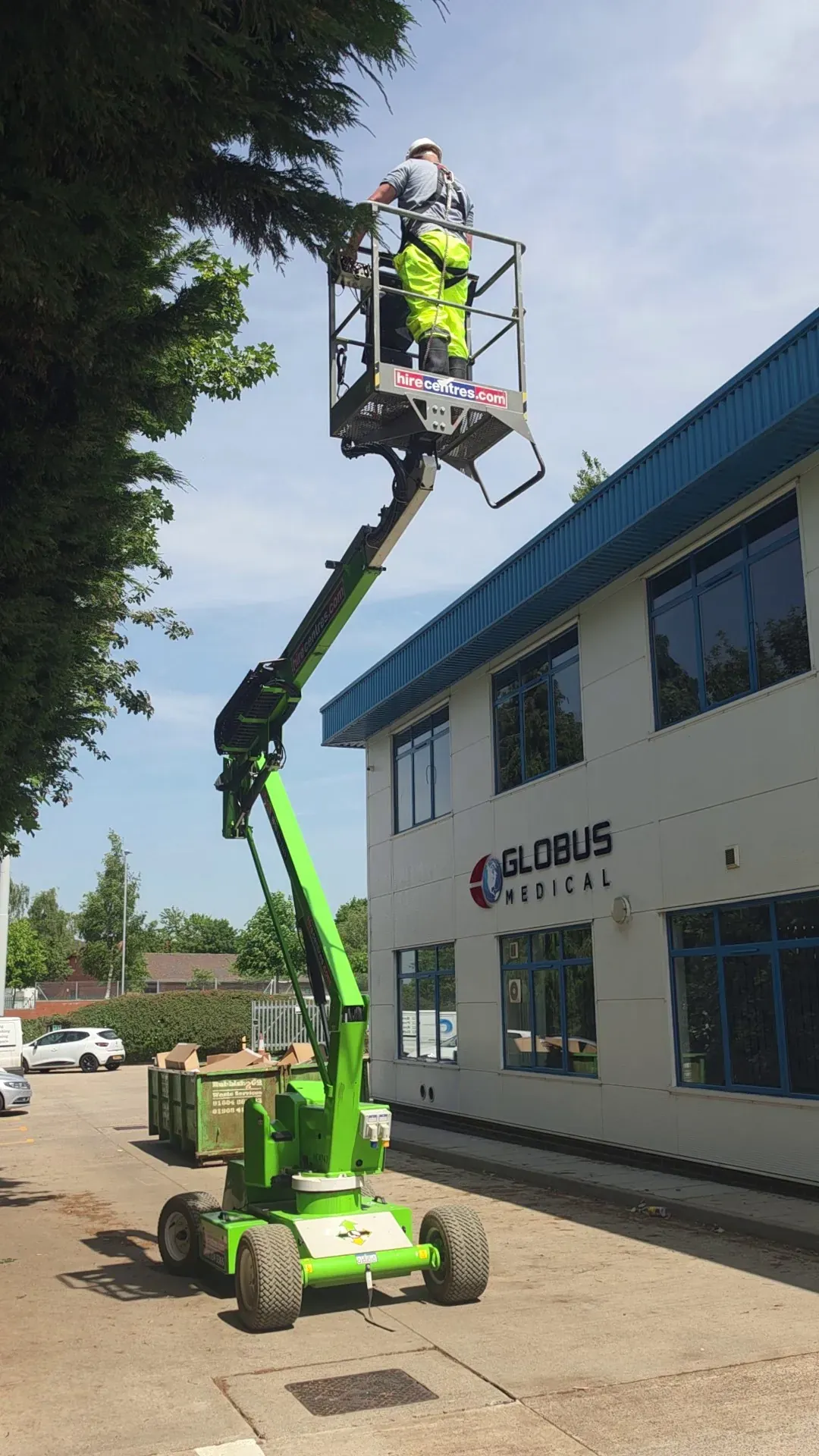
- Access from a cherry picker, never from the roof. Nobody had to stand on the sheets, as we worked from a MEWP (cherry picker). As the project page puts it: "Walking on corrugated metal roof sheets was out of the question." We hire and operate the machines ourselves, and Peter holds an IPAF PAL card, category 3b.
- Gutters cleared by hand. We start with a full gutter clearing. Instead of pushing moss and roots down the downpipes, we lift and bag them.
- Downpipes protected. To stop the solution from running into the drains, we cover the downpipes.
- Soft wash biocide application. We never pressure-wash the roof; we apply the biocide at low pressure. At Globus, the lichen was difficult, so we’ve used a 25:1 dilution.
- Product data sheets for your records. You'll receive technical data sheets for every product we use; use them for the building's COSHH register.
- Photo report. We offer each client photos and a method statement. At Globus, we photographed the rust and holes in the gutters. We’ve also advised on replacing them with stainless steel.
- Follow-up drone flight. We fly the drone again later to record the result. At Globus, this step is part of the plan.
Why we don't pressure wash a commercial roof
On a metal roof, pressure washing has more downsides than benefits. Not only can a high-pressure jet lift the coating at cut edges and scratches, but it can also push water under the sheet laps and into the fixings. Tata Steel's 2023 maintenance guidance for pre-finished steel completely advises against high-pressure jets. It recommends cleaning with a low-pressure spray or a soft brush, and avoiding staying on the roof as much as possible. (Tata Steel, 2023).
The risk is even higher with fibre cement. Because older sheets may contain asbestos, high pressure may dislodge the fibres (see section 6). The biocide doesn’t need pressure, as it works chemically. Rain activates it: we apply the biocide at low pressure, and the weather completes the job.
Asbestos cement roofs: check before anyone starts
Many roofs and walls of older industrial units still have corrugated fibre cement sheets. Some of these sheets contain asbestos. HSE guidance on finding asbestos in your building is clear: until a survey says otherwise, assume that there’s asbestos if your building was built or refurbished before 2000.
Look at the building’s asbestos register before anyone quotes for the roof. You should find out whether the roof sheets contain asbestos and what their current condition is.
Is there asbestos? HSE asbestos essentials sheet A12 on cleaning weathered asbestos cement roofing and cladding establishes how the work should be done:
- Only a specialist contractor with a system to pick up and filter the slurry should work on roofs.
- High-pressure jetting can only be used in exceptional circumstances.
- The biocide has to be applied with a low-pressure sprayer, on a wet surface.
- Nobody stands on the sheets. HSE notes: "AC roofs are always fragile and cannot bear weight."
Before we quote for an older building, we ask for the asbestos register.
Access: the roof is not a walkway
HSE's guidance is to see every roof as fragile until a competent person confirms otherwise. Typically, the rooflights are the weakest point. When covered by dirt and growth, they’re easy to miss. At Globus Medical, lichen also covered the skylights, one more reason not to walk on the roof. Typically, we work from a cherry picker (MEWP). When treating the roof and clearing the gutters, we do it from the basket. We only go onto an industrial roof once we’ve confirmed it’s non-fragile and put a lifeline or edge protection in place. Get the details in our guide on how to clean high-level cladding safely.
Need a Roof Biocide Treatment Quote?
On large roofs we start with a drone survey, then quote the treatment with a method statement and product data sheets. No upfront deposits, fully insured to £5 million, and backed by 114 five-star Google reviews. Call 07307 358765 for a free assessment.
Get a Free QuoteRun-off, drains and data sheets
The solution’s effect on the roof and on the lichen is just as important. DDAC is highly toxic to aquatic invertebrates and moderately toxic to fish; it’s also an irritant (AERU PPDB). Surface water drains run right into the environment, not to a treatment works. Anything that goes down the downpipes will eventually get into a stream or river.
So, we control the run-off at every step:
- Downpipes protected. Before treating the roof, we cover them. This way, the solution won’t get right into the drains.
- Gutter debris bagged. We remove moss, soil, and roots by hand and bag them. We don’t wash them down the pipes.
- Low-pressure application. With soft washing, biocide goes where necessary. No spray drift or excess liquid is draining off the roof.
We also provide technical data sheets for every product we use. You can use them for the building's COSHH assessment. Learn more about run-off and drains from our guide to cleaning products for cladding.
Before a roof biocide treatment, facilities managers should go over this checklist:
- Was the building built or refurbished before 2000? Check the asbestos register first.
- What's the roof made of: coated steel, aluminium, fibre cement? Check whether a manufacturer's guarantee sets cleaning conditions.
- Where are the rooflights? Mark them on the plan; they're the usual fragile point.
- Is there room for a cherry picker (MEWP), and will the ground take its weight?
- Where do the gutters and downpipes discharge: surface water drain, soakaway or interceptor?
- Do you need the product data sheets for your COSHH records? Ask for them before the job.
- Are there solar panels, plant or vents on the roof that need protecting or isolating?
- Can the work run around staff, deliveries and opening hours?
- Ask for a drone survey and a written report with photos, including gutter condition.
Residential roofs: tiles, slates and the three-stage clean
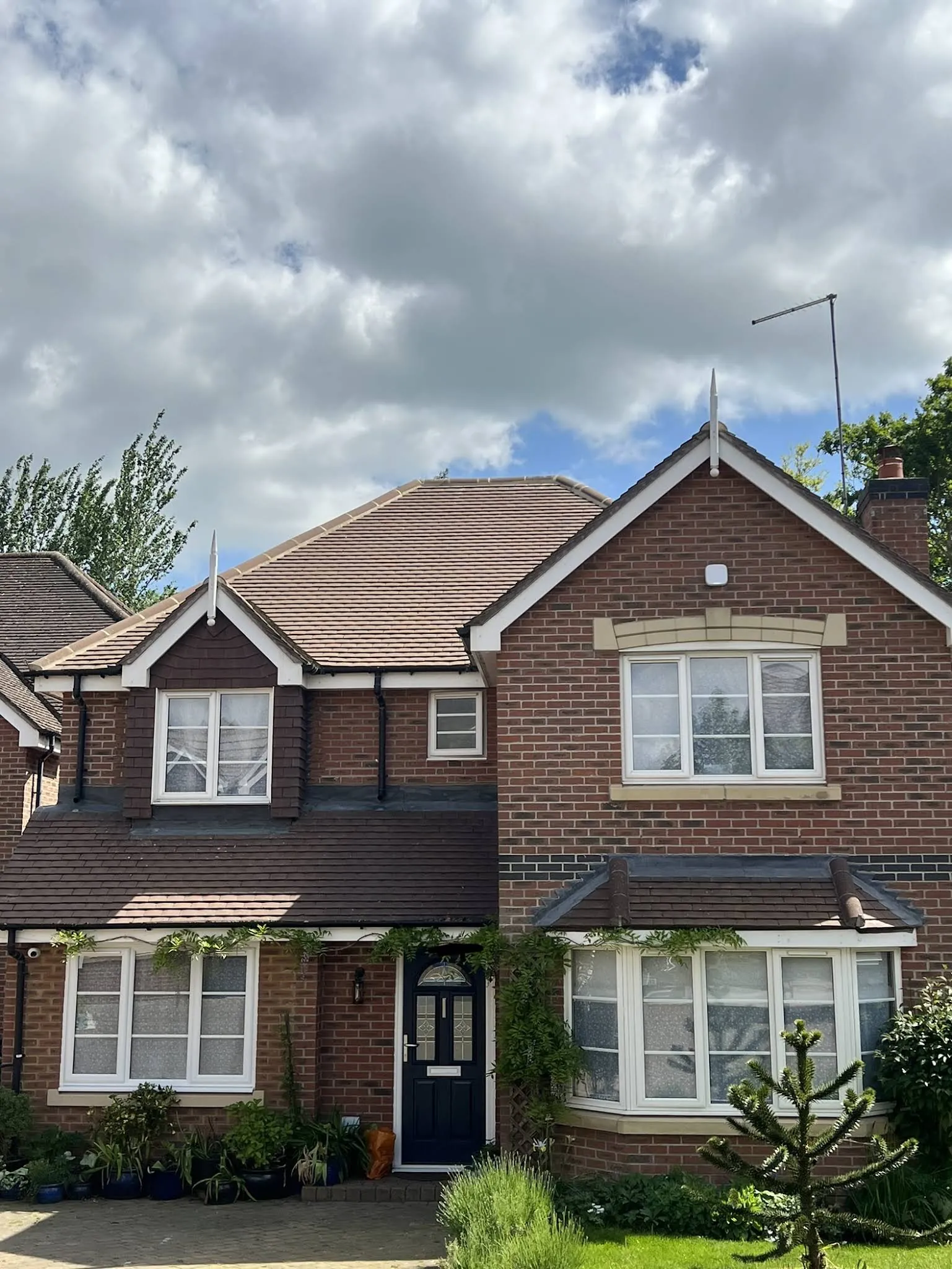
The job looks different on a house roof. The biocide does most of the work on an industrial metal roof with lichen over time. On a tiled roof, though, we have to start by hand removing the thick moss. Our roof cleaning and biocide treatment for homes includes three stages. Back in September 2025, we followed the same process on a mixed clay and concrete tile roof:
- Moss scraped off by hand. We start by removing the thick clumps. This way, the treatment reaches the tile underneath.
- Soft wash. We remove the leftover dirt and loose growth with low-pressure cleaning. This way, we don’t damage the tiles.
- DDAC biocide. The biocide seeps into the tile’s pores, stopping moss, lichen, and algae from regrowing for four to five years.
While rain activates the biocide, it’s more effective if applied on dry tiles. If the weather stops us applying it on the day, we come back at no extra charge. After treatment, the roof keeps improving for two to three months. Without a biocide, growth returns within 12 to 18 months.
Tiles can crack, so we never walk on them. To clean, we use a telescopic lance, or work from scaffolding or a cherry picker. See our guide to removing moss from roofs for more on moss.
How long does biocide take to work?
It takes weeks and months; it doesn’t happen overnight. Six to twelve months after treatment, the difficult lichen on a commercial roof will keep dying. That was our expectation for the Globus Medical roofs, where the biocide worked without any mechanical cleaning. With a tiled house roof that was cleaned first, the effects will be visible within two to three months.
Either way, rain will activate the biocide. The dead growth will darken and dry. Each shower will wash away a little more.
Because lichens adhere strongly to the surface, they die more slowly than moss or algae so that the effects will show gradually. Even after their death, some of their marks can still be seen. Here’s the full timeline:
| Time after treatment | Industrial metal roof, heavy lichen | Tiled house roof, cleaned first |
|---|---|---|
| Day of treatment | Biocide applied by low-pressure soft wash; no visible change yet | Moss scraped off, soft washed, DDAC applied |
| First rainfall | Rain activates the biocide | Rain activates the biocide |
| 2-3 months | Lichen dying back gradually | Most of the improvement visible |
| 6-12 months | Lichen still dying back and weathering off | Roof stays clean |
| Up to 4-5 years | Regrowth held back | Regrowth held back (DDAC) |
| Without biocide | - | Regrowth typically within 12-18 months |
How long does biocide treatment last?
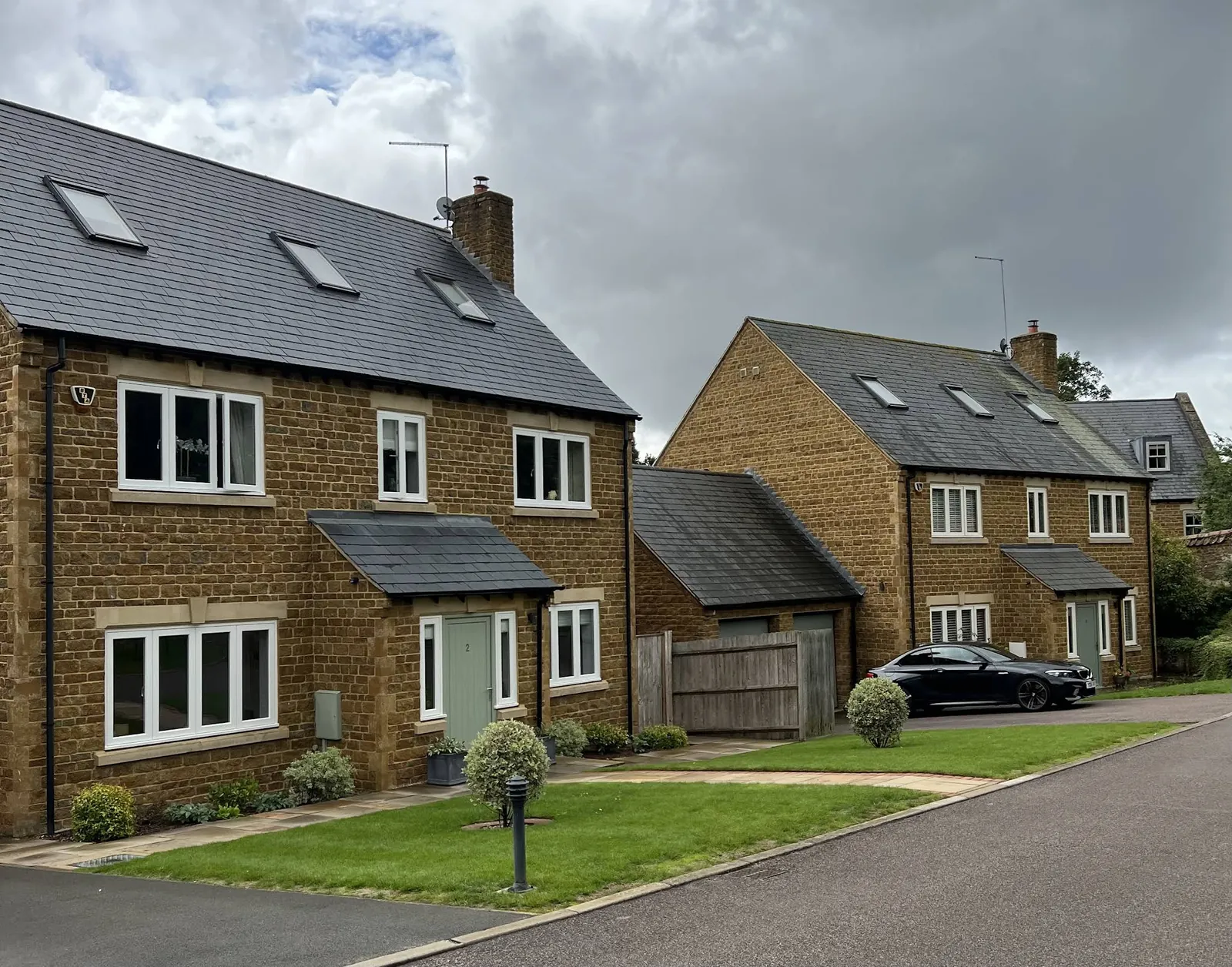
For four or five years. That's what we saw with a DDAC biocide treatment across our jobs: a tiled house roof in September 2025, a mossy roof in October 2024, and the cladding and car park at Silverstone. Clean without biocide, and growth will return within 12 to 18 months.
That window shortens under specific conditions:
- Overhanging trees; they bring shade, falling leaves and a constant supply of spores.
- North-facing slopes dry slower.
- Shallow pitches. They retain water and dirt, especially on industrial metal roofs.
- Blocked gutters allow water to collect against the roof.
- Areas rain doesn't wash, such as under solar panels and eaves, build up dirt faster.
On commercial buildings, routine maintenance may include biocide treatment. For pre-finished steel, Tata Steel recommends an inspection after the first year, then at the interval that inspection shows is needed (Tata Steel, 2023). Schedule the treatment into the same cycle; our guide on how often commercial cladding should be cleaned covers the walls. Both are included in our maintenance contracts for commercial exterior cleaning.
Is roof biocide legal in the UK?
Yes, as long as the product is authorised and used as the label says: roof biocides are legal in the UK. Biocidal products must be authorised under the GB Biocidal Products Regulation (GB BPR), which HSE regulates, as established in HSE's biocides guidance. Some masonry and tile treatments still fall within the former Control of Pesticides Regulations (COPR), also supervised by HSE.
All in all, the rules are set by the product label: the dilution, how long it stays in contact, and the weather conditions under which it can be applied. Moreover, we offer commercial clients the technical data sheets for every product we use (see "Run-off, drains and data sheets" above).
Get a Quote
Two to three months, on a cleaned tiled house roof. Roof biocide is activated by rain, so it works gradually. On an industrial metal roof with stubborn lichen, growth will continue to die off for six to twelve months. Lichen marks don’t go away as quickly as moss or algae.
It lasts for four to five years. Without a DDAC biocide treatment, moss, lichen, and algae will return within 12 to 18 months of cleaning. Certain conditions may shorten the period: north-facing slopes, overhanging trees, shallow pitches, blocked gutters, and areas without rain wash.
No. Tata Steel’s maintenance guidance for pre-finished steel advises against high-pressure jets. Instead, it recommends a low-pressure spray or soft brush. High pressure may remove the coating from cut edges and push water into fixings and under sheet laps. Older fibre cement sheets may contain asbestos, and high pressure may dislodge their fibres.
No. HSE advises seeing every roof as fragile until a competent person confirms otherwise. The weakest points are rooflights. Typically, we work from a cherry picker to treat the roof and clear the gutters. On an industrial roof, we only walk onto it once it’s confirmed as non-fragile, with lifeline or edge protection.
Not without precautions. DDAC is highly toxic to aquatic invertebrates. Runoff must be controlled, as surface water can enter the environment. Before treatment, we cover the downpipes and bag gutter debris. To avoid spray drift and excess liquid, we apply the biocide at low pressure.
Sodium hypochlorite is diluted bleach, while DDAC is a quaternary ammonium biocide. The first is an oxidising agent that kills visible growth quickly and lightens stains, but leaves no lasting protection. The second gets into the surface and inhibits regrowth for years.
On large roofs, every free site survey with ECS starts with a drone and a written quote the same day. We accompany commercial jobs with a method statement, before-and-after photos and product data sheets. We're IPAF and CSCS certified, carry £5M public liability insurance, and have ' . ecs_review_count() . ' five-star Google reviews. Maintenance contracts are available.
Learn more about our biocide treatment in Northampton. Call 07307 358765 or request your free quote.
Get a Free QuoteSources
- Tata Steel - Colorcoat inspection and maintenance guidance for pre-finished steel (2023)
- University of Hertfordshire, AERU Pesticide Properties Database - didecyldimethylammonium chloride (DDAC)
- HSE - Find out if asbestos could be present in your building
- HSE - Asbestos essentials a12: cleaning weathered asbestos cement roofing and cladding
- HSE - Biocides